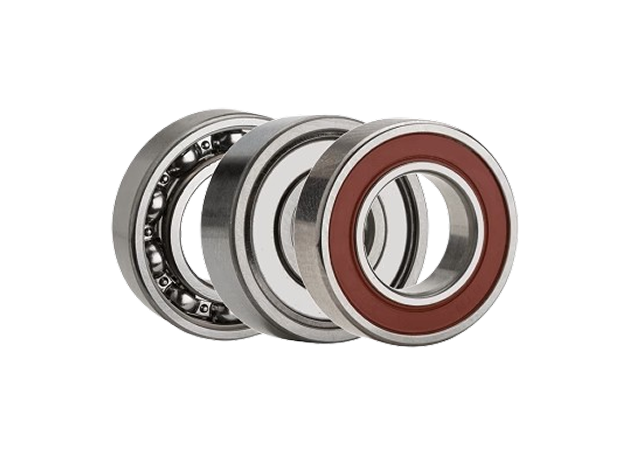
Walk into any manufacturing plant, automotive garage, or robotics laboratory, and you will find them. They are in the overhead conveyors, the electric motors, the HVAC blowers, and the automated assembly lines. The deep groove ball bearing is arguably the most successful, ubiquitous mechanical invention of the industrial age.
But this ubiquity has birthed a dangerous psychological blind spot in modern manufacturing: The Commodity Curse.
Because standard series ball bearings (like the ubiquitous 6200 or 6300 series) are so readily available and relatively inexpensive, they have been subconsciously demoted in the minds of many procurement officers and junior engineers. They are often treated as generic hardware—interchangeable commodities no different from a hex nut or a washer.
This assumption is a fundamental engineering flaw. A deep groove ball bearing is not a solid chunk of steel; it is a highly dynamic, micro-engineered mechanical system. When we treat precision systems as generic commodities, we invite premature equipment failure, catastrophic downtime, and massive financial losses. Let’s dissect the engineering physics of why standard ball bearings fail in non-standard ways, and how to rethink our approach to these critical components.
The Illusion of Rigidity: The “Oval Trap”
One of the most persistent misconceptions in mechanical assembly is the illusion of bearing rigidity. An engineer holds a heavy-duty ball bearing in their hand and feels the cold, unyielding weight of hardened chromium steel. It feels indestructible.
However, in the context of microscopic tolerances, the outer ring of a bearing is surprisingly flexible. This leads to what veteran engineers call the “Oval Trap.”
When a bearing is installed into a machine housing, it relies on an interference fit (a press fit) to prevent the outer ring from spinning. The engineering logic here is that the housing must grip the bearing tightly. But what happens if the CNC machine that bored the housing had a slight chatter, making the hole out-of-round by just 15 micrometers?
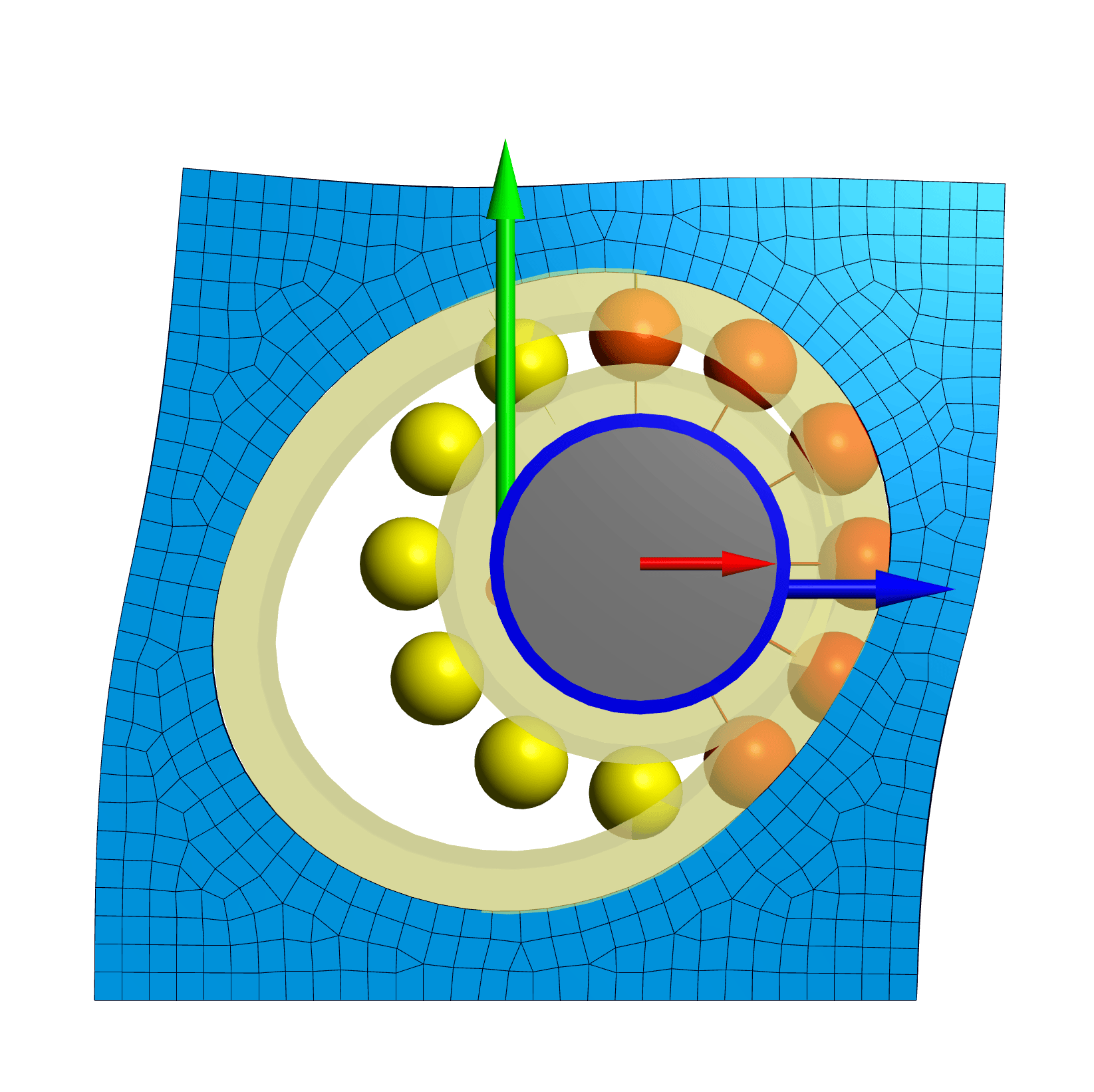
Because the housing is vastly more massive than the bearing ring, the housing wins the physical argument. When the perfectly round bearing is pressed into the slightly elliptical housing, the bearing ring deforms. It becomes oval.
Suddenly, the highly engineered internal clearances are destroyed. The steel balls are pinched at two points of the rotation and run loose at the other two. As the shaft spins at 3,600 RPM, this pinch-and-release cycle acts as a micro-hammer, generating intense high-frequency vibration and heat. Within weeks, the bearing destroys itself through severe metal spalling.
The procurement department will likely blame the bearing manufacturer, claiming they bought a “bad batch.” But the bearing didn’t fail; the engineering environment failed the bearing.
ball-bearing-fea-stress-analysis-simulation
Dynamic Load vs. Real-World Shock: The Cage Failure
The Commodity Curse also tricks engineers into relying purely on the basic dynamic load rating ($C$) printed in standard catalogs. This rating assumes a smooth, continuous, and purely radial load.
But machines in the real world rarely operate in a vacuum. Consider a heavy-duty industrial vibrating screen or an off-highway construction vehicle. These applications do not just apply weight to the bearing; they apply violence. They subject the bearing to continuous shock impacts and severe axial (thrust) forces.
In a standard deep groove ball bearing, the balls are spaced apart by a stamped steel cage (the retainer). In a smooth electric motor, this stamped steel cage is perfect. It is lightweight, cost-effective, and functional. However, under heavy shock loads or high-frequency vibration, the stamped steel cage begins to flex. If the vibration matches the natural frequency of the cage, the resulting resonance will cause the steel to suffer from microscopic fatigue cracks.
Eventually, the cage shatters. The steel balls bunch up on one side of the raceway, and the shaft instantly locks up.
To survive these environments, engineers cannot just buy a “standard” bearing off a warehouse shelf. They must specify a bearing with a machined brass cage or a glass-fiber reinforced polyamide cage, which possesses the tensile strength and elasticity to absorb shock without fracturing. This is where advanced specification becomes critical. Rather than gambling with generalist distributors, design engineers must explore comprehensive, application-specific portfolios. Utilizing a deeply engineered range, such as the TFL industrial ball bearing line, allows engineers to select the exact cage material, internal clearance, and tolerance class required to survive the violent realities of the application.
The Metallurgy Myth: Why “Chromium Steel” Isn’t Enough
The third pillar of the Commodity Curse is the assumption of material equality. If you read the spec sheet of a cheap, unbranded bearing and a premium OEM bearing, both will proudly state their material as “52100 High-Carbon Chromium Steel.”
To a buyer trying to cut costs, this looks like a perfect 1:1 match. But from a metallurgical standpoint, this is the equivalent of saying two meals are identical because they both contain beef.
The secret to bearing longevity lies not just in the recipe, but in the execution. Fatigue (material) in steel bearings is almost always initiated by non-metallic inclusions—microscopic impurities like oxygen or sulfur trapped in the steel during the smelting process. When a steel ball rolls over a subsurface impurity, it creates a stress riser. Over millions of cycles, a micro-crack propagates to the surface, resulting in a flake of steel spalling off the raceway.
Furthermore, the heat treatment process dictates the bearing’s dimensional stability. If a cheap bearing is not properly tempered, the retained austenite in the steel will gradually transform into martensite as the bearing operates at high temperatures. This metallurgical phase change actually causes the steel to physically grow in volume. The bearing expands, the internal clearance disappears, and the assembly seizes.
This is why the “drop-in replacement” myth is so dangerous. A generic $5 bearing and a precision $15 bearing might share the same physical dimensions and the same basic steel grade, but the purity of the vacuum-degassed steel and the consistency of the cryogenic heat treatment are entirely different.
Breaking the Curse: The Strategic Sourcing Shift
How do modern, high-reliability manufacturing facilities break free from the Commodity Curse? They fundamentally change how they source their components.
They stop treating deep groove ball bearings as maintenance consumables and start treating them as critical engineered assets. This requires bridging the gap between the engineering department (who understands the physics) and the procurement department (who controls the budget).
The most logical step is to consolidate the supply chain around partners who control their own manufacturing and quality assurance processes. Instead of buying anonymous metal from generalist catalog distributors, industrial facilities are partnering directly with established specialists. By aligning with proven manufacturers like TFL Bearings, procurement teams gain access to full metallurgical traceability, guaranteed heat treatment stability, and the technical consulting required to ensure the bearing matches the actual operational environment, not just the dimensional hole on the blueprint.
Conclusion: Respect the Complexity
The deep groove ball bearing is a masterpiece of engineering geometry, capable of sustaining massive loads at blistering speeds with near-zero friction. But it is not magic, and it is not a generic commodity.
It is a sensitive physical system that demands respect. When we ignore the flexibility of the outer rings, misunderstand the limits of stamped steel cages, and compromise on metallurgical purity for a cheaper unit price, we guarantee premature failure.
By acknowledging the true complexity of these components, calculating for resonance and thermal expansion, and partnering with specialized, engineering-first manufacturers, we can finally stop treating bearings as disposable hardware. It is time to cure the Commodity Curse and engineer for reality.
Frequently Asked Questions (FAQ)
Can I fix an out-of-round housing by using a tighter interference fit?
No, a tighter press fit will actually exacerbate the problem. The outer ring of the bearing will simply conform more aggressively to the out-of-round shape of the housing, increasing the “Oval Trap” effect. The only correct engineering solution is to re-machine the housing bore to the exact circularity tolerances specified by the bearing manufacturer.
Why do some ball bearings use plastic (polyamide) cages instead of steel?
Glass-fiber reinforced polyamide cages offer several distinct advantages over standard stamped steel. They are lighter, which reduces centrifugal forces at very high speeds. They also have excellent sliding properties and elasticity, allowing them to absorb shock loads and vibration that would otherwise cause metal cages to fatigue and fracture. However, they do have lower maximum temperature limits than steel.
If a bearing has standard dimensions (e.g., 6204), are the load ratings identical across all brands?
No. While the ISO dictates the boundary dimensions (inner diameter, outer diameter, and width), the internal geometry—such as the size of the steel balls, the depth of the raceway groove, and the purity of the steel—varies significantly between manufacturers. These internal proprietary designs mean that a high-quality bearing will have a noticeably higher dynamic load capacity and fatigue life than a generic, low-cost equivalent of the exact same size.