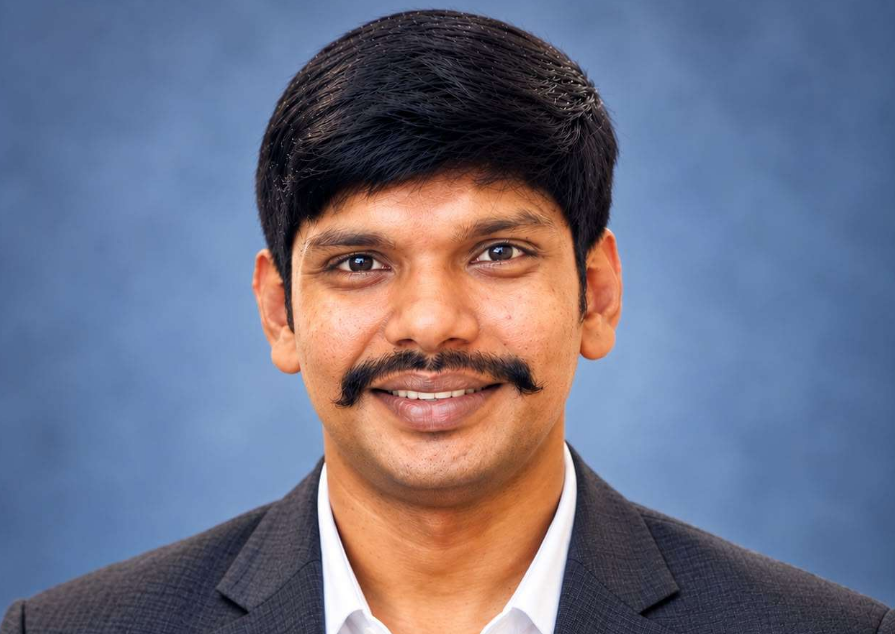
Image caption: Yashwanth Allaparthi | CCaaS & AI Solution Architect
A customer calls a bank about a payment. Another calls a hospital to schedule care. Someone else needs help after an online purchase. Each expects a straightforward conversation, but getting that conversation to the right place can require telephony, call flows, routing decisions, AI, customer records, and agent tools to work together in seconds.
Yashwanth Allaparthi works at that intersection.
With more than 11 years in contact center technology, he has progressed from L1, L2, and L3 production support into testing, development, business analysis, product ownership, and solution architecture. His experience gives him a perspective that reaches beyond a platform configuration: he considers how an interaction starts, what the customer experiences, what information the agent receives, and how the support team will investigate a problem after launch.
Understanding Every Path a Call Can Take
Yashwanth began his career supporting live contact center systems at Wells Fargo. Production incidents taught him that the symptom an agent reports is often only the end of a longer story. A call may enter through the correct telephone number but follow the wrong schedule. It may reach the intended queue but wait too long. An integration may fail before the agent sees the customer’s record.
That experience still informs his architecture work. He designs and troubleshoots inbound, outbound, in-queue, and secure call flows, with attention to what each one must accomplish.
An inbound flow needs to identify the caller’s intent and route the interaction according to business hours, customer information, and agent availability. An outbound flow needs appropriate dialing rules, contact-list controls, dispositions, and a clear way to measure results. In-queue design must account for wait treatment, priority, callbacks, and the point at which a different path serves the customer better. Secure flows require particular care when customers provide sensitive information: the interaction must protect that information while allowing the service journey to continue.
For Yashwanth, the difficult work lies in the exceptions. What happens on a holiday? What if no qualified agent is available? What if a customer-data lookup times out? What context survives a transfer? Those decisions determine whether a call-flow design works under real conditions.
Translating Customer Journeys Across CCaaS Platforms
Yashwanth has worked with Genesys Cloud, Genesys PureConnect, Genesys PureEngage, Five9, NICE CXone, Amazon Connect, Twilio Flex, Cisco UCCE and Webex Contact Center, RingCentral, Avaya, Talkdesk, Zoom Contact Center, and 8×8. His experience includes migration efforts involving Genesys Cloud, Five9, NICE CXone, and Amazon Connect.
A migration is more than moving menus from one application to another. Each platform represents queues, skills, schedules, data lookups, outbound rules, and reporting differently. Yashwanth works to identify the business reason behind each existing rule, then map that behavior into a design the new platform can support and the operations team can maintain.
At HCA Healthcare, he supported a move from Genesys PureConnect to Genesys Cloud involving users and permissions, queue and skill configuration, interaction flows, telephone-number validation, and testing. In another effort, he worked on translating Twilio Flex routing and IVR logic into Genesys Cloud Architect, including caller identification, business hours, queue priority, and decisions made before an interaction reaches an agent.
His work has also included validation in an environment with more than 300 call flows and 5,000 toll-free numbers. A program of that size demands disciplined inventories, test coverage, number mapping, cutover planning, and runbooks. One overlooked condition can change the experience of many callers.
Connecting the Contact Center to the Business
Routing a call correctly is only part of the solution. The agent also needs to know whom they are helping and what has already happened.
Yashwanth has worked on contact center integrations with Salesforce CRM, ServiceNow, and other enterprise applications so interaction data and relevant customer context can move between systems. That work includes examining how an incoming call identifies a customer, how a record appears on the agent desktop, how service information is retrieved, and what happens if the connected application responds slowly or fails.
He uses JavaScript and Python for scripting and automation, Power BI for reporting, and Postman, Swagger/OpenAPI, JSON, and SoapUI to test and inspect integrations. These tools help make technical behavior visible: what the contact center sent, what the connected system returned, and how the flow should respond.
His production support background makes resilience a design requirement. If a lookup fails, an agent still needs a way to serve the customer. If a transfer loses context, the team needs enough information to understand where it happened. Monitoring, error handling, and documentation are therefore part of the architecture.
Bringing AI into the Full Interaction
Yashwanth’s AI work and interests span conversational AI, voicebots, chatbots, Amazon Lex, Dialogflow, agent assistance, agent copilots, and intelligent routing. He is also focused on how LLMs and agentic AI can support more complex customer journeys when they are connected to reliable business systems and clear human oversight.
He sees several distinct opportunities. A virtual assistant can help a customer complete a routine request. Predictive routing can use available signals to inform where an interaction should go. An agent assistant or copilot can surface relevant knowledge, suggest next steps, or help summarize a conversation. Agentic AI may eventually coordinate several steps across approved systems to help resolve a request.
The value depends on how these capabilities behave together. A bot should recognize when it cannot help. A transfer should carry useful context to the human agent. AI-generated information should be checked against trusted sources and handled appropriately when customer information is involved. Agents need tools that support their judgment, not interrupt it.
In an earlier role, AI and agent-assistance initiatives were associated with a reported 30% to 40% reduction in average agent handle time. Yashwanth considers that an encouraging measure, while also asking whether customers received effective help and whether agents had the information they needed.
Leading from Requirements Through Production
Yashwanth has also acted in business analyst and product owner capacities. He has gathered requirements, mapped current and future processes, helped define scope and statements of work, and worked within Agile and Scrum teams to turn business needs into deliverable tasks.
That work requires coordination across business stakeholders, engineering, QA, compliance, vendors, and carriers. He has helped teams establish new environments, plan testing, review defects, prepare cutovers, and document how the solution will be supported. His experience across these stages helps him connect an executive goal—such as improving customer access or agent productivity—to the detailed decisions required to deliver it.
Earlier in his career, he received a Wells Fargo Excellence Award for his production support work. Today, the lesson from that work remains central to his approach as a CCaaS & AI Solution Architect: a design earns trust when it works for customers, gives agents useful context, and can be understood and supported by the people responsible for it.
The technology behind a customer conversation may be invisible. The quality of its engineering is not. Customers hear it in the route they take, the wait they experience, and whether the person who answers is ready to help.