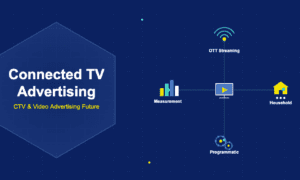
Streaming advertising revenue in the United States reached 34 billion dollars in 2025, more than doubling from 15.7 billion dollars just two years earlier. The explosive growth has been driven by the launch of advertising-supported tiers on Netflix, Disney Plus and other major platforms that previously operated as subscription-only services, dramatically expanding the available inventory for television-quality advertising delivered through connected television devices and streaming applications.
The streaming advertising surge represents the most significant transformation of the television advertising market since the introduction of cable television. For decades, television advertising operated through a stable system of upfront commitments and scatter market purchases, with advertisers buying impressions against program ratings estimated by Nielsen panels. The shift to streaming has introduced digital advertising capabilities including addressable targeting, real-time bidding, interactive ad formats and precise measurement to an industry that had resisted technological modernization for half a century.
The 34 billion dollar streaming advertising market is projected to grow to approximately 58 billion dollars by 2028, driven by continued cord-cutting, the expansion of ad-supported streaming content and the maturation of advertising technology infrastructure across streaming platforms. This growth trajectory implies that streaming will surpass linear television advertising revenue within the next three years, completing a generational shift in how Americans consume and are influenced by video advertising.
PwC’s analysis of financial services trends through 2025 highlights the convergence of technology and media as a defining dynamic, with data-driven personalisation becoming the primary competitive differentiator.
Data from Statista’s digital market outlook shows that global digital spending continues to grow at double-digit rates, with mobile channels accounting for an increasingly dominant share of total transactions.
The platform landscape for streaming advertising
Hulu remains the most established streaming advertising platform in the United States, having operated an ad-supported model since its launch. Hulu&’s advertising revenue is estimated at approximately 5.2 billion dollars in 2025, supported by its integration into Disney&’s broader advertising ecosystem. The platform&’s premium content library, which includes next-day broadcast network programming, creates advertising inventory that closely resembles traditional television advertising in quality and viewer attention levels.
Netflix&’s advertising business has grown with remarkable speed since the company launched its ad-supported tier in November 2022. Netflix&’s US advertising revenue is estimated at approximately 4.8 billion dollars in 2025, driven by the platform&’s massive subscriber base and the premium nature of its original content. The company has invested heavily in building advertising technology capabilities, including the development of a proprietary ad server that replaced its initial partnership with Microsoft&’s advertising platform.
YouTube&’s position as both a streaming platform and a social media advertising channel makes it the largest single source of streaming advertising revenue. YouTube&’s US advertising revenue, including YouTube TV and connected television viewing, is estimated at approximately 10 billion dollars when considering only streaming-quality viewing environments. The platform&’s YouTube TV service has become a meaningful advertising revenue contributor as cord-cutting accelerates and live sports programming attracts advertising premium pricing.
Amazon&’s streaming advertising presence spans multiple properties including Freevee, Thursday Night Football on Prime Video and advertising on Twitch. Amazon began introducing advertising to Prime Video in early 2024, creating a new advertising revenue stream from its approximately 167 million US Prime members. Amazon&’s streaming advertising revenue is estimated at 4.1 billion dollars in 2025, with significant growth expected as the company expands advertising load and develops targeting capabilities that leverage its e-commerce purchase data.
How streaming advertising differs from traditional television
Addressable targeting represents the most fundamental difference between streaming and traditional television advertising. While linear television ads are broadcast to all viewers of a program regardless of their characteristics, streaming platforms can serve different ads to different viewers watching the same content based on demographic profiles, viewing behavior, geographic location and other targeting criteria. This precision reduces wasted impressions and enables advertisers to reach specific audience segments that would be impossible to isolate through traditional television buying.
Frequency management is another capability that streaming advertising offers over traditional television. Streaming platforms can control how many times an individual viewer sees a specific advertisement within defined time periods, preventing the over-exposure that frustrates viewers and reduces advertising effectiveness. This capability addresses one of traditional television&’s most persistent problems, where heavy viewers of specific programs might see the same commercial dozens of times while light viewers never see it at all.
Interactive advertising formats unique to streaming environments create engagement opportunities that do not exist in traditional television. Pause ads, which display advertising messages when viewers pause content, generate impressions during moments of active viewer attention. QR code overlays enable viewers to interact with advertising using their smartphones. Shoppable television ads allow viewers to add products to shopping carts or visit advertiser websites directly from the streaming interface using their remote controls.
Measurement precision in streaming advertising far exceeds what is available in traditional television. Streaming platforms can report exact impression counts, completion rates, frequency distribution and, through partnerships with data providers, conversion metrics including website visits, app installs and offline purchases driven by streaming advertising exposure. This measurement granularity enables optimization at a pace and precision that traditional television measurement systems cannot match.
The economics reshaping streaming platforms
The introduction of advertising has fundamentally altered the business economics of streaming platforms. Netflix&’s ad-supported tier generates approximately 40 percent more revenue per user than its basic subscription tier when combining subscription and advertising revenue. This hybrid revenue model creates a financial incentive for streaming platforms to maintain or grow their ad-supported subscriber bases, as these viewers are actually more valuable on a per-user basis than subscribers who pay for ad-free experiences.
Advertising revenue has provided streaming platforms with a path to profitability that pure subscription models struggled to achieve. Disney Plus, which accumulated billions of dollars in losses during its initial years as a subscription-only service, has moved toward profitability in part through the growth of its advertising revenue. The economic reality is that advertising subsidizes lower subscription prices, expanding the total addressable market for streaming platforms while generating high-margin advertising revenue that improves overall business economics.
Content investment decisions are increasingly influenced by advertising revenue potential. Live sports programming, which commands premium advertising rates due to large simultaneous audiences and high viewer engagement, has become the most contested content category among streaming platforms. Amazon&’s Thursday Night Football, Apple TV Plus&’s Major League Soccer and Friday Night Baseball, and YouTube TV&’s NFL Sunday Ticket all reflect the advertising-driven value of live sports content in streaming environments.
The competitive dynamics of streaming advertising have driven rapid innovation in ad technology. Platforms that initially launched with basic advertising capabilities have invested heavily in building sophisticated ad tech stacks that support programmatic buying, dynamic ad insertion, advanced targeting and comprehensive measurement. This technology investment has been necessary to attract advertising budgets from brands accustomed to the capabilities offered by mature digital advertising platforms.
What the streaming advertising surge means for the broader market
The growth of streaming advertising is accelerating the decline of linear television advertising, which fell to approximately 56 billion dollars in 2025, down from 70 billion dollars in 2019. As streaming advertising capabilities improve and reach scales comparable to linear television, the economic rationale for maintaining large linear television advertising budgets diminishes. Brands are increasingly executing television strategies that prioritize streaming platforms for precision targeting while maintaining reduced linear television presence for broad reach among older demographics.
The convergence of streaming and digital advertising is creating new competitive dynamics for traditional digital advertising platforms. As streaming advertising offers targeting and measurement capabilities comparable to social media and display advertising but with the premium content environment of television, advertisers are evaluating streaming as an alternative to social media advertising for brand-building campaigns. This competition could moderate growth in social media advertising as streaming captures a larger share of video advertising budgets.
Agency holding companies and independent agencies are restructuring their operations to address the convergence of television and digital advertising. Traditional television buying teams and digital advertising specialists are being merged into unified video advertising groups that manage campaigns across linear television, streaming platforms, social video and digital video properties. This organizational transformation reflects the reality that the distinction between television advertising and digital advertising is rapidly dissolving.
The streaming advertising surge shows no signs of slowing as cord-cutting continues, new ad-supported content launches expand available inventory and advertising technology matures across platforms. By the end of the decade, streaming advertising is expected to represent the majority of all television advertising revenue in the United States, completing a transition that has reshaped how Americans experience television and how advertisers connect with audiences through the most impactful advertising medium. The connected television revolution has arrived, and its consequences for advertisers, platforms and consumers will continue to unfold throughout the remainder of the decade.