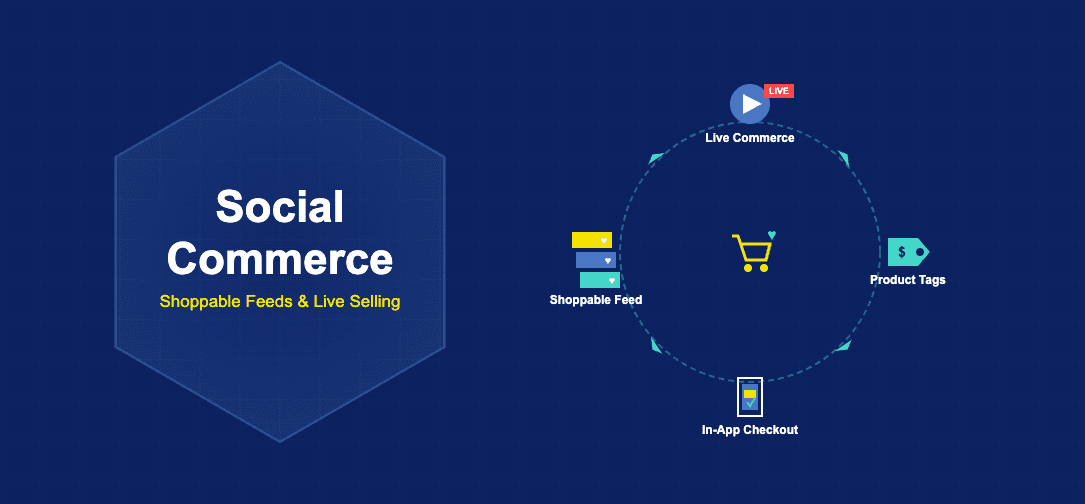
Social commerce has collapsed the distance between product discovery and purchase into a single, seamless interaction. A consumer scrolling through their Instagram feed sees a lifestyle image featuring a linen shirt, taps the product tag, reviews sizing details and customer photos, and completes checkout without ever leaving the app. The entire journey from awareness to transaction happens in under 90 seconds. This is not an edge case; it is the dominant shopping behaviour for an expanding segment of consumers, and the technology infrastructure powering these experiences has grown dramatically more sophisticated. In 2026, social commerce represents one of the fastest-growing segments of global e-commerce, and the platforms, tools, and strategies enabling it deserve serious examination from any marketing technology professional.
Market Scale and Growth Trajectory
Global social commerce sales reached $1.09 trillion in 2024 and are projected to surpass $1.88 trillion by 2028, according to Statista. China leads the market with social commerce accounting for more than 50 percent of all e-commerce transactions, driven by the deep integration of shopping features within WeChat, Douyin, and Xiaohongshu. In the United States, social commerce is growing at 25 percent year over year, with eMarketer projecting US social commerce sales will reach $145 billion by 2027.
The growth reflects a fundamental shift in consumer behaviour. Younger demographics, particularly Gen Z and younger millennials, increasingly prefer discovering products through social content rather than traditional search. A 2025 survey by Accenture found that 59 percent of social media users in this cohort have made a purchase directly through a social platform, and 44 percent reported discovering new brands exclusively through social feeds.
| Metric | Value | Source |
|---|---|---|
| Global Social Commerce Sales (2024) | $1.09 trillion | Statista |
| Projected Global Sales (2028) | $1.88 trillion | Statista |
| US Social Commerce Growth (YoY) | 25% | eMarketer |
| Gen Z Direct Social Purchases | 59% | Accenture |
| China Social Commerce Share of E-commerce | 50%+ | McKinsey |
| US Projected Social Commerce (2027) | $145 billion | eMarketer |
Platform-Native Shopping Infrastructure
Each major social platform has developed its own commerce infrastructure, creating distinct ecosystems that brands must navigate strategically.
TikTok Shop has emerged as the most disruptive social commerce platform in Western markets. Launched in the US in September 2023, it combines short-form video content with native checkout, enabling creators and brands to sell products directly within the content experience. TikTok Shop processed over $20 billion in gross merchandise value globally in 2024 and is scaling rapidly through its affiliate programme, which connects millions of creators with product listings for commission-based promotion.
Instagram Shopping provides product tagging in feed posts, stories, reels, and the dedicated shop tab. Meta has invested heavily in its commerce infrastructure, offering features like Collections for curated product groups, live shopping events, and integrated checkout that keeps the entire purchase journey within the Instagram ecosystem. The platform particularly excels for fashion, beauty, and lifestyle brands where visual storytelling drives purchase decisions.
Pinterest has evolved from an inspiration platform into a commerce engine through its Product Pins, which display real-time pricing and availability, and its visual search technology that allows users to find and purchase products from photos. Pinterest reports that 85 percent of its users come to the platform with purchase intent, making it the most commercially minded social network by user intent metrics.
YouTube Shopping integrates product shelves below videos, live shopping features, and affiliate tagging in Shorts. The platform leverages the trust dynamics of long-form video content, where detailed product reviews and demonstrations create purchase confidence that shorter formats struggle to match.\n\n
Live Commerce and Shoppable Video
Live commerce, the real-time combination of live video streaming and instant purchasing, has become the fastest-growing format within social commerce. In China, live commerce generates over $500 billion annually, and Western markets are adopting the format with increasing velocity. TikTok Live Shopping, Instagram Live Shopping, and dedicated platforms like Whatnot and Amazon Live enable brands and creators to showcase products, answer questions, and drive purchases in real time.
The format works because it combines entertainment, education, and urgency in a single experience. Limited-time offers, live-only discounts, and the social proof of watching other viewers purchase create conversion dynamics that static product pages cannot replicate. Brands report conversion rates of 10 to 30 percent during live shopping events, compared to standard e-commerce conversion rates of 2 to 3 percent.
Shoppable short-form video extends commerce beyond live events into on-demand content. TikTok, Instagram Reels, and YouTube Shorts all support product linking within video content, enabling viewers to purchase items featured in creator content with minimal friction. The integration of influencer marketing with shoppable video creates a powerful combination where authentic product recommendations convert directly within the content environment.
Technology Stack for Social Commerce Operations
Operating a social commerce programme at scale requires technology infrastructure that spans catalogue management, order fulfilment, customer service, and analytics across multiple platforms simultaneously.
| Function | Description | Key Platforms |
|---|---|---|
| Catalogue Syndication | Product feed management across platforms | Shopify, ChannelAdvisor, Feedonomics |
| Creator Management | Affiliate recruitment and tracking | CreatorIQ, Grin, impact.com |
| Live Commerce | Live stream production and shopping | Bambuser, Firework, CommentSold |
| Social Listening | Trend and sentiment monitoring | Sprout Social, Brandwatch, Meltwater |
| Analytics | Cross-platform performance measurement | Triple Whale, Northbeam, Rockerbox |
| Customer Service | Social inbox and response management | Gorgias, Zendesk, Intercom |
Shopify has established itself as the default commerce infrastructure for social selling, with native integrations across TikTok, Instagram, Facebook, Pinterest, and YouTube. Its unified product catalogue ensures consistent pricing, inventory, and product information across all social storefronts, while its checkout infrastructure handles payment processing and order management regardless of which platform originates the sale.
Attribution and Measurement Challenges
Measuring the true impact of social commerce presents significant challenges because the customer journey frequently spans multiple touchpoints across platforms. A consumer might discover a product through a TikTok video, research it via Instagram reviews, and ultimately purchase through a Google search. Traditional last-click attribution would credit the search channel, obscuring the critical role social content played in driving awareness and consideration.
Multi-touch attribution models that incorporate impression-level social data provide a more accurate picture, but privacy restrictions have made cross-platform tracking increasingly difficult. Post-purchase surveys asking customers where they first discovered a product have become a valuable supplementary signal, with brands like SKIMS and Glossier using self-reported attribution to validate their social commerce investments.
Platform-specific analytics provide depth within each ecosystem but lack cross-platform visibility. Third-party analytics platforms like Triple Whale and Northbeam attempt to stitch together cross-platform journeys using first-party data and statistical modelling, providing a more holistic view of social commerce performance.
Privacy, Trust, and the Creator Economy
The convergence of social commerce with the creator economy has created new dynamics around trust, authenticity, and disclosure. Consumers are more likely to purchase products recommended by creators they follow and trust than through brand-owned advertising. This trust dynamic makes creator partnerships the most effective acquisition channel for many direct-to-consumer brands, but it also creates reputational risks when partnerships feel inauthentic or when disclosure requirements are not met.
Regulatory requirements for influencer disclosure vary by jurisdiction but are trending toward stricter enforcement globally. The US Federal Trade Commission, the UK Advertising Standards Authority, and the European Commission have all increased scrutiny of social commerce disclosures, requiring clear labelling of paid partnerships, affiliate relationships, and gifted products.
What Comes Next for Social Commerce
The evolution of social commerce through 2027 will be shaped by augmented reality try-on experiences that reduce return rates, AI-powered product recommendation engines that surface relevant items based on content engagement patterns, and the continued maturation of in-app checkout infrastructure that eliminates friction from the purchase journey. The brands that succeed will be those that treat social platforms not as advertising channels with a buy button attached but as fully integrated commerce ecosystems where content, community, and commerce are inseparable.
Related reading: E-commerce Personalisation Technology: How AI-Driven Recommendations Are Transforming Online Retail
According to Deloitte’s industry outlook, more than 60 percent of large enterprises now allocate dedicated budgets to digital transformation initiatives, up from 35 percent in 2020.
Market analysis from Grand View Research projects that technology-driven market segments will continue expanding at compound annual growth rates between 15 and 25 percent through the end of the decade.