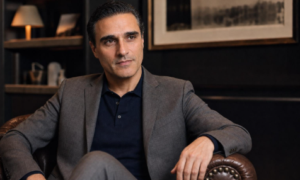
Healthcare innovation is often described in terms of the technology itself: the newest device, the latest procedure or the next breakthrough capable of changing how patients are treated. Sandesh Sukhlal, CEO of South African Medical Services, sees the equation differently. For him, technology matters most when it is placed in the hands of skilled clinicians who have the knowledge, confidence and support to use it well.
That belief has become central to the way SA Medical Services approaches cardiovascular care in South Africa. Rather than viewing the country’s healthcare system through the lens of what it lacks, Sukhlal focuses on what already exists: highly capable specialists, sophisticated clinical environments and a growing body of local expertise that can compete internationally when given access to the right tools and opportunities.
It is a perspective with particular relevance in cardiovascular medicine. Heart disease and stroke remain a major health challenge in South Africa, and the Heart and Stroke Foundation South Africa estimates that heart disease kills 225 South Africans every day. Against that backdrop, the conversation around medical innovation becomes more than one of product distribution. It becomes a question of how technology, training and clinical expertise can work together to improve patient care.
South African Medical Services operates in that intersection. The company supplies cardiovascular devices used in minimally invasive coronary procedures and describes its offering as an end to end solution for angiography and angioplasty. Its portfolio includes drug eluting stents, balloon catheters, cardiac accessories and other devices and consumables required in interventional cardiology. Yet the physical device is only one part of the company’s broader philosophy.
Sukhlal’s conviction is that South Africa does not need to look beyond its borders to find world class clinical talent. It already exists inside the country’s operating rooms, catheterisation laboratories and specialist practices. The opportunity, as he sees it, is to continue investing around those clinicians by connecting them with contemporary technology, education and exposure to advanced techniques.
That approach can be seen in SA Medical Services’ involvement in training and clinical collaboration. The company has facilitated chronic total occlusion, or CTO, proctoring involving Dr Abdul Mozid, a consultant cardiologist at Leeds General Infirmary in the United Kingdom, alongside South African cardiologists and hospital teams. Recent programmes have taken place across Durban, Cape Town and Gqeberha, giving local teams the opportunity to work through complex coronary cases within their own clinical environments.
CTO procedures are among the more demanding interventions in cardiology. They involve arteries that have been completely blocked for an extended period and can require specialised equipment, advanced techniques and considerable operator experience. Proctoring matters because expertise in procedures of this complexity is developed not simply through theory, but through exposure to real cases and collaboration between experienced clinicians.
For Sukhlal, the significance of these programmes goes beyond bringing an international expert into a South African cath lab. The larger objective is knowledge transfer. When specialists are able to deepen their expertise locally, the capability remains within the healthcare ecosystem long after a particular workshop has ended.
That distinction is important. Healthcare systems are not strengthened by technology alone. A sophisticated medical device without experienced clinicians, appropriate training and institutional support can only achieve so much. Likewise, exceptional clinicians need access to evolving technology if they are to continue expanding what is possible for patients. The most meaningful progress happens when both develop together.
It also changes the role of a medical technology business. Instead of acting simply as the link between a manufacturer and a hospital, companies in this sector can become part of a wider clinical ecosystem involving specialists, nurses, hospital groups, educators, international partners and patients. SA Medical Services’ relationship with Sahajanand Medical Technologies, for example, has extended into interventional cardiology education and professional development.
That model reflects an increasingly important idea in African healthcare: local capability and global innovation do not need to compete with one another. International technology can strengthen domestic healthcare precisely because it enables local specialists to do more, learn more and treat increasingly complex cases closer to home.
For Sukhlal, this is ultimately a story about confidence in South African people. Investing in local doctors and healthcare professionals means more than celebrating their talent. It means making sure that talent has the infrastructure, technology and continuing education required to reach its full potential.
The future of cardiac care will inevitably be shaped by new devices, new techniques and new forms of medical innovation. But Sukhlal’s philosophy suggests that the more consequential question may be who is empowered to use them.
For SA Medical Services, the answer starts at home. By connecting global medical technology with South African clinical expertise, the company is betting that better cardiac care does not come from choosing between innovation and people. It comes from bringing the two together, and ensuring that every advancement ultimately serves the outcome that matters most: a better chance for the patient.