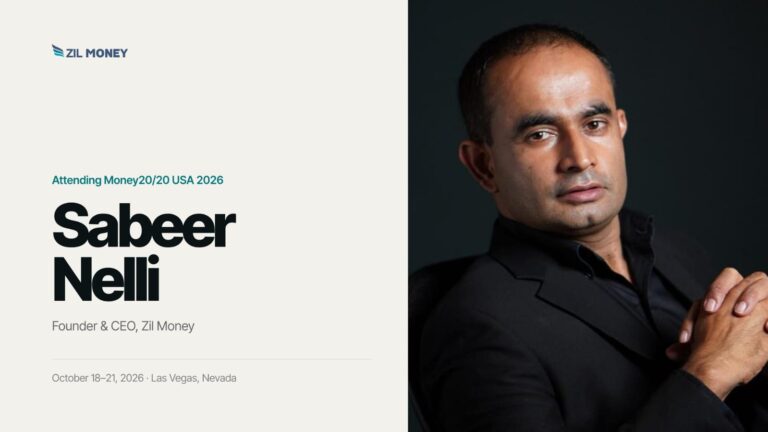
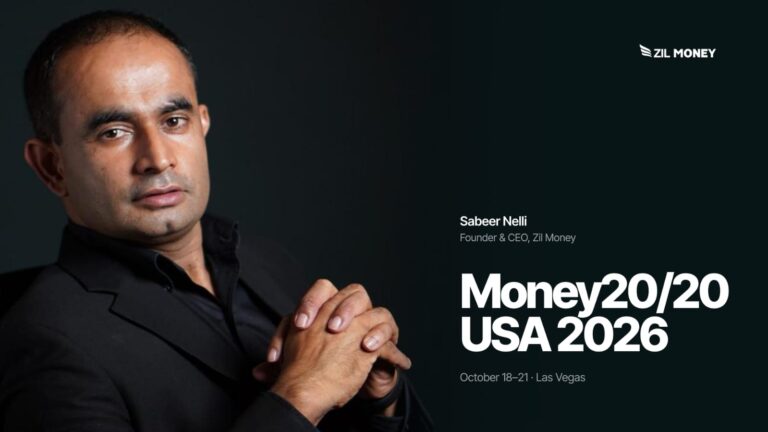
Sabeer Nelli Heads to Money20/20 USA 2026 as Businesses Rethink Payment Workflows


By Sabeer Nelli | Founder and CEO, Zil Money
Zil Money’s founder plans to connect with fintech leaders in Las Vegas to explore payment automation, financial controls, and the challenges businesses face when managing transactions.
A business payment does not end when the money is sent. Someone still needs to confirm the payment status, update financial records, and handle any problems that come up.
For companies that pay many vendors, these tasks can take time and effort. New payment technology can make transferring money easier, but businesses still need to manage everything that happens before and after each transaction.
These are among the issues Sabeer Nelli, founder and CEO of Zil Money, plans to explore at Money20/20 USA 2026. The event will take place October 18–21 at The Venetian in Las Vegas, bringing together professionals from banking, payments, and financial technology.
Nelli is interested in connecting with banking professionals, fintech founders, and payment providers to discuss how businesses can simplify payment operations while maintaining financial controls.
The Payment Problem Goes Beyond Sending Money
Consider a business that needs to pay 50 vendors at the end of the week.
Some vendors accept ACH transfers. Others prefer checks or wire payments. Before sending money, the finance team may need to review invoices, confirm payment details, and get approval.
Once payments are sent, the work continues. Employees need to know which transactions are complete, which are pending, and which require attention.
When payment information is spread across different systems, checking these details can become more difficult.
This example shows why faster payments do not always mean simpler operations. A payment may move quickly, but the business still needs accurate information and clear processes to manage it.
For companies handling many transactions, reducing these extra steps can be just as important as choosing a faster way to move money.
How Sabeer Nelli’s Business Experience Shaped His Approach
Nelli’s interest in financial technology grew from the payment challenges he faced while running Tyler Petroleum, a business he founded in 2005.
As operations expanded, managing payments to thousands of vendors became more demanding. Different vendors had different payment requirements, which meant working with ACH transfers, wire payments, mailed checks, and virtual cards.
Handling these payments across separate processes created additional work. These challenges later influenced Nelli’s decision to develop Zil Money, a financial technology platform focused on business payment management.
His experience highlights an important part of financial operations that can be easy to overlook.
For businesses, moving money is only one step. Companies also need to review payment requests, track transactions, resolve errors, and maintain accurate records.
Nelli’s planned discussions at Money20/20 USA reflect his interest in making these everyday tasks easier to manage.
Why Payment Automation Still Needs Human Oversight
Automation can help businesses reduce routine payment tasks. However, fewer manual steps should not mean fewer financial controls.
Companies still need to decide who can approve payments, how vendor information is verified, and what happens when a transaction looks unusual.
Recent industry research shows why these controls matter.
The 2026 Association for Financial Professionals Payments Fraud and Control Survey found that 76% of responding organizations experienced attempted or actual payment fraud in 2025. The survey included 465 corporate finance and treasury professionals.
This finding does not mean that 76% of all U.S. businesses suffered financial losses. It shows how widely attempted or actual fraud affected the organizations represented in the survey.
For finance teams, the challenge is to make payment processes more efficient without removing the checks needed to protect company funds.
For example, an automated approval process can help send payment requests to the right employee. Transaction tracking can help teams identify payments that are pending, rejected, or require further review.
However, unusual transactions, changes to vendor bank details, and potential fraud attempts may still require human attention.
Nelli plans to explore how technology can support these processes while helping businesses maintain appropriate financial oversight.
Why Payment Flexibility Matters to Businesses
Businesses do not always have the option to pay vendors using the same method.
A vendor may request an ACH transfer, while another may prefer a wire payment or check. The best method can depend on cost, timing, payment requirements, and the needs of the recipient.
Managing these differences requires more than offering several payment methods.
Businesses also need ways to track transactions, manage approvals, and keep financial records organized.
This is one of the areas Nelli is interested in discussing with payment providers and banking professionals at Money20/20 USA.
His focus includes how banks, fintech companies, and financial infrastructure providers can work together to make business payment processes easier to manage.
The discussion is not simply about which payment method is better. It is about helping businesses select suitable options while managing the work involved in each transaction.
Connecting Financial Technology With Everyday Business Needs
Financial technology continues to change how businesses send, receive, and manage money. Yet even with new tools, many financial tasks still require attention from employees.
A company may use accounting software to manage invoices, a banking platform to send payments, and another system to track financial activity.
When these systems do not work well together, employees may need to enter the same information more than once or check several places to understand a transaction’s status.
Better connections between financial tools can help reduce this work.
Nelli is interested in how financial institutions, payment providers, and fintech companies can improve these connections.
Another important consideration is security. Making payment processes simpler should not make it harder for businesses to review transactions, manage access, or identify suspicious activity.
These practical concerns are among the topics he plans to explore during the event.
What Sabeer Nelli Plans to Discuss at Money20/20 USA 2026
Money20/20 USA brings together professionals working in banking, payments, financial services, and technology.
For Nelli, attending the event offers an opportunity to exchange ideas with people who develop and manage financial systems.
His areas of interest include business payment operations, payment automation, choosing suitable payment methods, banking partnerships, and fraud prevention.
These topics are closely connected. A business may have access to several payment methods, but managing them effectively also requires clear processes, reliable information, and appropriate financial controls.
Nelli is particularly interested in learning how different organizations approach these challenges and sharing perspectives from his experience managing business payments.
Professionals attending the event who are interested in payment technology, financial infrastructure, or business payment operations can connect with Sabeer Nelli at Money20/20 USA 2026 to discuss relevant topics and meeting opportunities.
What Businesses Can Learn From These Payment Challenges
Companies do not need to adopt every new financial technology to improve their payment processes.
A useful starting point is to review how a payment moves through the business, from receiving an invoice to recording the completed transaction.
For example, a finance team can examine where employees enter information more than once, which payments require manual approval, and how errors are identified.
The team can also review who is allowed to change vendor payment details and how those changes are verified.
These checks can help businesses identify tasks that may benefit from automation and areas where stronger controls are needed.
As Nelli prepares to attend Money20/20 USA 2026, these everyday challenges remain central to his interest in financial technology.
The future of business payments is not only about moving money faster. It is also about making the entire payment process easier to manage, more reliable, and better suited to how businesses actually work.