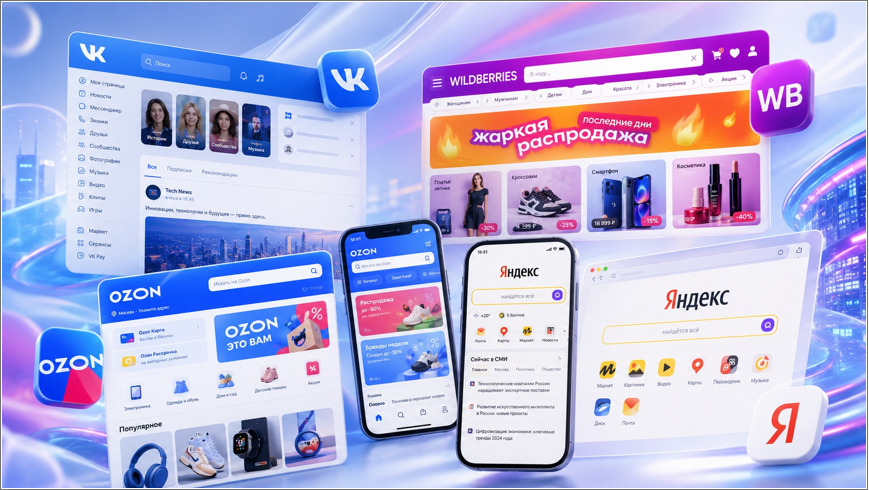
The Russian internet is not just a language segment of the global web. It is a large local market with its own marketplaces, social networks, classified sites, review platforms, forums, payment habits, search behavior, and regional access rules. For companies that sell into Russia, monitor Russian platforms, manage local accounts, or collect public market data, viewing the web from a Russian location is often not optional. It is part of doing the work properly.
That is why many teams still look for reliable Russian proxy servers when they need stable access to Russian websites. A Russian IP address can make a major difference when foreign connections are slowed down, challenged more often, blocked by regional rules, or treated as suspicious during repeated access.
This demand comes from different types of users. Some are Russian-speaking customers who search in Google because proxy-related visibility can be limited in local search channels. Others are international teams with clear business reasons to work with Russian websites: product research, price checks, social media operations, ad testing, account access, brand monitoring, SEO checks, or public web data collection.
In other words, Russian proxies are not only a technical tool. For many businesses, they are a practical way to see the Russian web in the same way a local user sees it.
Russia Is Still a Large Local Digital Market
Even with political, payment, and access barriers, the Russian web remains commercially important. Marketplaces continue to host millions of product listings. Social platforms still carry brand pages, public groups, ads, comments, and customer conversations. Local review sites and forums continue to influence buying decisions. Classified platforms and regional portals remain useful sources of public information.
For a foreign business, this creates a simple problem: the market may still matter, but access from abroad may not be stable enough for daily work.
A page can load differently from a non-Russian IP. A marketplace may show different product availability. A website may apply stronger checks to foreign traffic. A social platform may treat an account login as unusual when the location changes too often. A monitoring script may work during a small test but fail once the number of requests grows.
Russian proxies help reduce this mismatch. They allow teams to work through Russian IP addresses, making access more local, more predictable, and more suitable for repeated tasks.
Who Needs Russian Proxies?
The use cases are more varied than many people assume.
An e-commerce team may need to track product prices across Russian marketplaces. This can include monitoring competitors, checking discounts, watching stock changes, or reviewing how sellers position similar products.
A brand protection team may need to find unauthorized listings, fake products, copied descriptions, or suspicious seller pages. If the target audience is in Russia, checking these pages through a Russian IP can give a more realistic view.
A marketing agency may need to manage VK pages, test ad placements, review public posts, or check how landing pages appear to Russian users. The same applies to teams working with other Russian-speaking communities, forums, and local platforms.
SEO specialists may want to check Russian-language Google search results from a Russian location. This is especially relevant when trying to rank English pages for less competitive proxy-related terms while still attracting users who search for Russian proxy access.
Travel companies, logistics platforms, fintech teams, and data analysts may also need local access. They might check public pricing, availability, regional pages, service restrictions, or public user feedback.
QA teams have another practical reason. If a company has Russian users, it needs to test whether its website, app, forms, login pages, checkout, and support flows work properly for visitors connecting from Russia.
Why Foreign IPs Can Create Problems
Most websites do not judge traffic only by the content of a request. They also look at where the visitor comes from, how often requests arrive, what IP reputation looks like, and whether the behavior fits normal user patterns.
A foreign IP may work fine for casual browsing. But business tasks often involve repeated access. Price monitoring, marketplace research, public data collection, SEO checks, and ad verification can require many page loads. At that point, location and IP quality become much more important.
Foreign data center IPs may trigger more checks. Some Russian websites may block or slow down visitors from abroad. Others may return incomplete results, show regional warnings, or make repeated access difficult.
This is why free proxy lists are usually a poor choice. They may look attractive, but they are often slow, overloaded, abused, and already blocked on many platforms. A free proxy that opens one page once is not a serious solution for business work.
Reliable Russian proxies are different because the goal is not just to “get any IP.” The goal is to get access that is fast enough, stable enough, and local enough for the task.
Marketplaces and Price Monitoring
Marketplaces are one of the strongest use cases for Russian proxies.
Teams may need to check product pages, prices, stock levels, delivery conditions, seller ratings, reviews, and search positions. These details can change often, and they may not appear the same way from every location.
For example, a company selling consumer electronics may want to compare its prices with Russian competitors. A cosmetics brand may need to monitor unauthorized sellers. A distributor may want to check whether local partners follow pricing rules. A marketplace analyst may need to track how product rankings shift over time.
Without Russian IP access, the data may be noisy. Some pages may fail. Some results may not appear. Some requests may be challenged more often. For small checks, this is annoying. For larger monitoring tasks, it can damage the quality of the whole dataset.
Russian proxies make this work more predictable by giving tools and browsers a local route into the market.
Social Platforms, Ads, and Account Work
Russian social platforms are another area where stable access matters.
Agencies and companies may need to manage existing pages, review ad campaigns, respond to public comments, inspect groups, or check how posts appear to local users. When the work is tied to a Russian audience, a Russian IP can reduce the gap between what the team sees and what the audience sees.
This is especially relevant for account access. Social platforms often pay attention to login location. If an account is used for Russian business activity but constantly accessed through foreign IPs, this can create extra checks or interruptions.
A Russian proxy does not replace good account hygiene, secure credentials, or platform rules. But it can make normal work smoother when a team needs a stable local connection.
Why Stability Matters More Than Large Numbers
Proxy marketing often focuses on big IP pools. Millions of IPs may sound impressive, but many Russian proxy use cases do not require endless rotation.
A social media account may need a consistent IP. A QA test may need repeatable conditions. A marketplace monitoring task may need speed and fewer failed requests. An SEO specialist may need to check search results from a fixed country location.
In these cases, stability matters more than raw quantity.
Users should ask practical questions: Does the proxy show a Russian location? Does it support the tools I use? Is it fast enough? Can it handle repeated work? Does it support HTTP or SOCKS5? Is the pricing realistic for daily use?
A smaller set of stable proxies can be more useful than a huge pool that fails too often.
Affordable Access Still Matters
Not every company needs an expensive enterprise data platform. Many teams have direct tasks: open Russian websites, check public pages, manage local accounts, test ads, verify search results, or monitor prices.
For these users, affordable Russian proxies can be the right fit. The goal is not to buy the most complex system. The goal is to get reliable local access without turning a simple workflow into a large monthly expense.
This is especially true for small businesses, SEO consultants, SMM teams, marketplace sellers, and analysts who need working Russian IPs but do not need a full enterprise package.
Price still matters, but the cheapest random option is rarely the best one. A good proxy provider should offer clear proxy formats, stable IPs, useful protocols, and pricing that makes sense for the amount of work being done.
Common Mistakes When Buying Russian Proxies
The first mistake is choosing free proxies. They are slow, unstable, and widely abused. For business work, they usually cost more time than they save.
The second mistake is choosing the wrong proxy type. Rotating proxies can be useful for some scraping and research tasks, but they are not always suitable for account access or longer sessions. Static proxies are often better when consistency matters.
The third mistake is focusing only on IP count. A large number of weak IPs is less valuable than a smaller number of stable, properly located IPs.
Another mistake is ignoring protocol support. Many tools, browsers, and automation systems require HTTP or SOCKS5. If setup is unclear or proxy formats are awkward, the user loses time before the real work even begins.
Finally, buyers should think about the task first. Price monitoring, SEO checks, social media access, QA testing, and public data collection may each need a slightly different setup.
Final Thoughts
Russian proxies remain useful because the Russian web remains a separate and active digital market. Businesses still need to check marketplaces, monitor prices, manage social pages, test ads, review public content, and verify how websites behave for Russian users.
For teams working from abroad, foreign IPs can create friction. Pages may load differently, access may be limited, and repeated requests may fail more often. A stable Russian IP can make this work more predictable.
The best proxy setup is not always the biggest or most expensive one. For many users, the right choice is simple: legitimate Russian IP addresses, good speed, support for common protocols, stable access, and a price that fits routine business tasks.That is why Russian proxies continue to have a clear role for companies, agencies, and analysts that need practical access to the Russian web.