
Role of Technology in Modern Security Systems

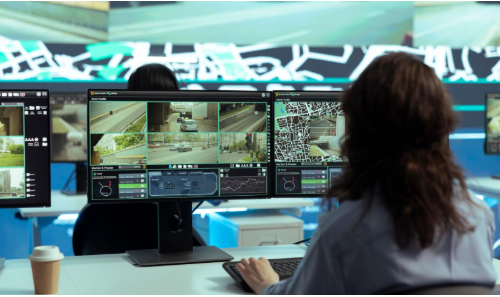
Security problems rarely announce themselves in advance. A side door left unsecured, an outdated camera, or one ignored alert can quickly turn into a costly operational issue. For homeowners, business owners, and public facilities, technology in security systems has moved protection beyond simply reacting after an incident. The focus now is on identifying risks earlier, verifying activity faster, and responding with better information.
Investment trends reflect that shift. Gartner projects worldwide end-user spending on information security to reach $213 billion in 2025, up from $193 billion in 2024. Gartner’s security spending forecast shows how seriously organizations are treating security modernization.
Understanding the role of technology in security is therefore less about chasing the newest device and more about building systems that improve visibility, access control, incident response, and long-term resilience.
How Modern Security Systems Have Evolved
Security systems once depended primarily on physical barriers such as locks, gates, fences, and guards. Those controls still matter, but they provide limited information once something goes wrong. Electronic alarms and traditional CCTV improved the situation by recording activity and generating alerts, yet they still depended heavily on someone reviewing information or responding manually.
The biggest change came when security technologies began working together. Cameras, alarms, user records, and access control systems can now contribute to a broader operational picture by connecting identity, entry events, video, and alerts. This gives teams more context when reviewing who entered a space, when the event occurred, and whether anything unusual happened around the same time.
From Standalone Devices to Connected Security
Modern security systems increasingly operate as coordinated environments rather than isolated products. A forced door can trigger nearby cameras, generate an alert, log the event, and notify security personnel within seconds. The improvement is not simply technological sophistication. It is the ability to reduce the time between detecting an event and understanding what action is needed.
This is particularly useful for organizations modernizing older facilities. Replacing every controller, reader, camera, and alarm at the same time can be expensive and disruptive. A phased approach allows teams to upgrade higher-risk areas first while preserving parts of the existing infrastructure that still perform reliably.
The Core Technologies Behind Modern Security
Strong protection usually depends on several technologies working together. Surveillance, access management, intrusion detection, analytics, and networked devices each address a different security challenge. Their real value appears when information from one system helps another provide better context.
AI-Enabled Video Surveillance
Traditional cameras mainly recorded evidence. Modern video platforms can do much more by identifying movement patterns, detecting loitering, reading license plates, identifying activity in restricted areas, and generating real-time notifications when programmed conditions are met.
This can reduce the amount of footage teams need to review manually. Instead of watching hours of video, operators can focus on events that have already been flagged as unusual. Higher-resolution imaging, improved low-light performance, and remote access also make recorded footage more useful during incident review.
AI should still support human decision-making rather than replace it. Poorly configured analytics can create excessive alerts, while well-tuned systems can help security personnel concentrate on events that actually require attention.
Smarter Access Management
Access control technology determines who should enter a space, when access should be allowed, and which areas require stronger restrictions. Modern systems may support mobile credentials, biometric verification, multi-factor authentication, and centrally managed permissions.
These tools help reduce the weaknesses associated with shared keys, easily copied PINs, or credentials that remain active after an employee leaves. Permissions can be tied to roles, schedules, locations, or temporary assignments, making access easier to manage as organizations change.
For workplaces, healthcare facilities, schools, warehouses, and other controlled environments, better identity verification can improve both security and accountability.
Intrusion Detection and Automated Alerts
Intrusion systems are also becoming more intelligent. Instead of relying only on basic motion detection, newer sensors can identify glass breakage, unusual sound patterns, door tampering, or unexpected movement.
Those signals can trigger multiple actions. Lights may activate, doors may change status, video may begin recording, and security teams may receive direct alerts. The practical advantage is speed. Security becomes more effective when the system can identify an issue and help responders understand it before the situation escalates.
Technology Helps Security Teams Move Beyond Prevention
Modern security is not only about stopping unauthorized activity. Technology also helps teams analyze patterns, understand risk, and improve future response.
The Security Industry Association reported that predictive data analytics is becoming increasingly important across the market. According to its 2025 Security Megatrends research, 81% of security manufacturers and solution providers said predictive analytics was a meaningful or very meaningful part of their current or upcoming products and solutions. SIA’s Security Megatrends findings highlight how strongly the industry is moving toward data-driven security.
Advanced Analytics Improve Decision-Making
Analytics can help identify patterns that are difficult to notice manually. Repeated failed entry attempts, unusual after-hours movement, recurring door alarms, or changes in normal activity may reveal issues before they become major incidents.
These systems can also help security teams prioritize their workload. Instead of treating every alert as equally important, analytics can help highlight events that are unusual based on time, location, user behavior, or previous activity.
That does not mean algorithms should make every security decision automatically. Human review remains essential when an event is ambiguous, sensitive, or potentially serious.
IoT Makes Security More Responsive
The Internet of Things has expanded what security systems can monitor and control. Connected locks, cameras, lights, environmental sensors, alarms, and building systems can exchange signals and respond together.
A single event can therefore create a coordinated response. A door forced open after hours might trigger cameras, activate lighting, send a mobile notification, and record related sensor activity in one workflow.
The advantage is context. Security teams no longer need to manually compare separate systems just to understand what happened.
Smart Security in Everyday Operations
For everyday users, smart security solutions also improve convenience. Authorized users can check doors remotely, review camera activity, grant temporary access, and receive alerts without being physically present.
These functions are useful for businesses with multiple locations, property managers overseeing distributed sites, and homeowners who need remote visibility. Convenience should still be backed by clear policies, secure credentials, and strong network protection.
Connected systems are only as reliable as the security around them.
Cybersecurity and Physical Security Are Now Linked
Modern physical security systems depend heavily on networks, software, and connected devices. That means physical security can no longer be managed separately from cybersecurity.
An internet-connected camera with weak credentials can become an entry point into a network. An outdated controller may expose vulnerabilities. A stolen mobile credential could create both a physical and digital security problem if permissions are not removed quickly.
Organizations should therefore apply cybersecurity practices to security infrastructure itself.
Important controls include:
- Strong passwords and multi-factor authentication
- Regular firmware and software updates
- Role-based administrator permissions
- Secure network segmentation
- Encrypted communications
- Credential lifecycle management
- Routine reviews of active users and devices
These measures may seem basic, but basic security controls are often where preventable weaknesses appear first.
AI, Cloud, and Edge Computing Are Changing Security Operations
Several security technology advancements are helping organizations improve response speed and manage larger systems more efficiently.
AI and Machine Learning
AI can process access logs, video streams, and sensor activity faster than human operators reviewing multiple systems independently. It may help identify repeated entry failures, abnormal crowd behavior, suspicious movement, or unusual activity outside normal operating hours.
Its value increases when rules are tuned to the actual environment. A system configured for a warehouse should not behave exactly like one designed for an office lobby or hospital.
Cloud-Based Platforms
Cloud security platforms give administrators centralized access to users, video, policies, and alerts across multiple sites. That can simplify updates, reporting, and remote management.
Cloud systems can also reduce the need to maintain separate management infrastructure at every location. However, organizations should still consider connectivity, compliance, resilience, and data protection before moving critical security functions entirely off-site.
Edge Computing
Edge computing processes information closer to the device where an event occurs. This can reduce delay when a camera, sensor, or door controller needs to make a rapid decision.
It is especially useful in locations where network connectivity is inconsistent or where sending every event to a central platform would create unnecessary bandwidth demands.
For many organizations, a combination of cloud management and local edge processing creates a more balanced security architecture.
Identity Has Become a Central Security Challenge
Security systems increasingly need stronger proof of identity because keys, cards, and PINs alone can be lost, copied, or shared.
Modern authentication may use mobile credentials, biometrics, multi-factor checks, device information, location, or behavioral context. Zero-trust approaches take this further by assuming that no person or device should automatically be trusted simply because access was granted previously.
The idea is straightforward: each request should be evaluated according to risk and policy.
For sensitive spaces, additional verification can make it harder for one compromised credential to create unrestricted access.
Final Thoughts
The role of technology in security has expanded far beyond alarms, locks, and recorded video. Modern systems combine access management, AI-enabled surveillance, intrusion detection, connected devices, analytics, cloud platforms, and edge processing to create faster and more informed security operations.
The strongest systems are not necessarily the ones with the most technology. They are the ones where each tool solves a clear problem, integrates effectively, and can be managed securely over time.
Organizations should begin with their actual risks, modernize high-priority areas first, and choose technology that can evolve as threats, buildings, and operating requirements change.
Better security is not about buying every new device. It is about using technology deliberately to see risk sooner, make better decisions, and respond with greater confidence.
Frequently Asked Questions About Modern Security Technology
What is an example of security technology?
AI-enabled video surveillance is one common example. These cameras can detect activity, flag unusual behavior, send alerts, and store footage for investigation. Other examples include biometric readers, smart locks, intrusion sensors, mobile credentials, and cloud-based security management platforms.
What are the five main roles of technology in security?
Technology helps security teams monitor activity, control access, detect unusual behavior, alert responders, and analyze information after an incident. Together, these functions improve visibility, accountability, response speed, and overall protection.
How does access control work with other security technologies?
Access control can share information with cameras, alarms, visitor systems, and management platforms. When someone enters a secured area, related systems may record video, log the event, apply access policies, or generate alerts when activity appears unusual.






Comment