
Riding an Electric Dirt Bike on Sand What Changes Beneath the Tires

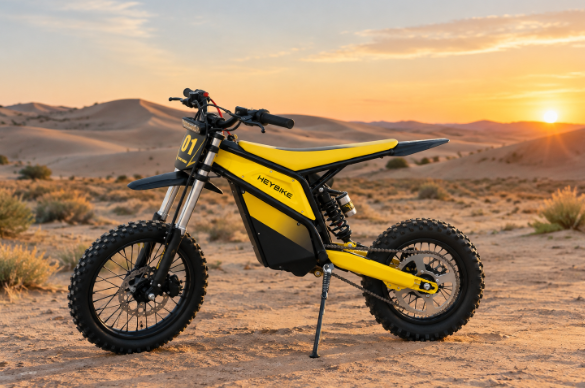
Sand can transform a familiar electric dirt bike into a machine that feels unfamiliar within a few meters. The wheels sink, the surface shifts, and steering becomes less precise than on firm dirt. A bike that moves easily along a compacted track may need considerably more effort to travel through loose ground.
That does not make sand an impossible riding surface. It makes it a distinct condition that calls for suitable access, preparation, and progressive learning. Understanding what changes beneath the tires is more useful than treating every sandy area as an invitation to open the throttle.
Not all sand behaves the same way
Firm, shallow sand over a stable base is different from deep loose dunes. Moisture, grain size, slope, and the condition of the underlying ground all affect how the tires interact with it. The description sandy trail tells only part of the story.
As the tire moves, loose material deforms and is pushed aside. The bike spends energy doing that work in addition to moving the rider. This can increase resistance and change how quickly speed drops when the throttle is reduced.
The front wheel may also follow grooves or deflect as the surface shifts. A rider who expects the same steering feel as hard-packed dirt can respond too abruptly. Begin on manageable ground with appropriate instruction rather than making deep sand the first off-road lesson.
Permission comes before preparation
A beach, dune system, or sandy access road may look rideable while being closed to motorized vehicles. Coastal areas can have habitat protections, seasonal closures, and local rules that differ from inland riding venues. Check the land manager’s requirements for the particular machine.
An electric motor does not turn a motorcycle-style vehicle into a bicycle for access purposes. Low noise is pleasant, but it does not establish permission. Use designated facilities or routes that explicitly allow the activity.
Avoid protected vegetation and other areas outside the permitted route. Dunes can be vulnerable to damage, and tracks across apparently open ground may affect more than the riding surface. A suitable place to learn makes the session easier to plan and less likely to be cut short.
Tire changes are not a shortcut around suitability
Tread and approved fitment matter, but changing a tire cannot make every bike suitable for every sandy environment. Paddle tires and other specialized equipment can create compatibility and loading questions. Follow the machine manufacturer’s guidance before considering such changes.
There is also no universal sand pressure that should be copied across electric dirt bikes. Tire construction, wheel arrangement, load, speed, and the maker’s limits all matter. An excessively low pressure can introduce damage or retention problems rather than solving handling.
Use the specified setup as a starting point and seek model-appropriate advice. If a venue provides instruction, ask what conditions and equipment are suitable for the bike. An experienced rider’s setting on a larger machine is not necessarily relevant to a compact one.
Expect the energy demand to change
Loose ground can require sustained output even when the speed looks modest. Wheel slip spends energy without producing the same forward progress as solid traction. Heat and the extra demand can affect the ride differently from a short session on firm ground.
Riders exploring the V1 through Heybike Sports should check intended use and official operating guidance before planning a sandy outing. Use a conservative route and an accessible return point rather than assuming a published maximum range applies to deep loose terrain.
Watch the bike’s indicators and follow any warning instructions. If the system limits output or shows a fault, do not keep trying to force progress. Reducing demands or ending the session can be more sensible than repeated attempts through a section the machine is struggling to manage.
Keep the first session simple
Choose a permitted area with good visibility and manageable conditions. An instructor can help with posture and smooth control inputs suited to the surface. Avoid learning beside traffic, other riders, steep faces, or obstacles hidden by loose material.
When choosing an electric dirt bike, think about the terrain used most often. Occasional shallow sandy sections and regular deep-dune riding are different purchase requirements. The right question is whether the specific machine fits the activity, not whether every electric dirt bike can ride on sand.
Allow room for slowing and stopping. Sand can conceal ruts, debris, and sudden changes in firmness. It also makes walking or pushing a bike more tiring, which is another reason to begin near a practical exit rather than far from help.
Clean with the environment in mind
After riding, inspect areas where grit has accumulated and follow the approved cleaning method. Abrasive particles around moving parts deserve attention. Avoid forcing material into bearings or electrical connections with unsuitable washing methods.
Coastal exposure adds salt to the equation. Follow the manufacturer’s care instructions and keep the charging equipment in an appropriate dry environment. Do not connect a damp or contaminated charging port simply because the riding session has ended.
Sand rewards a realistic plan. Start with permitted terrain, a compatible setup, and skills developed in manageable conditions. Then treat the surface as something to learn, rather than a challenge that more power alone will resolve.







Comment