QHR is opening a wider release of its Headset and Headset Pro and outlining a product roadmap that runs machine learning directly on the device for use in loud working environments.
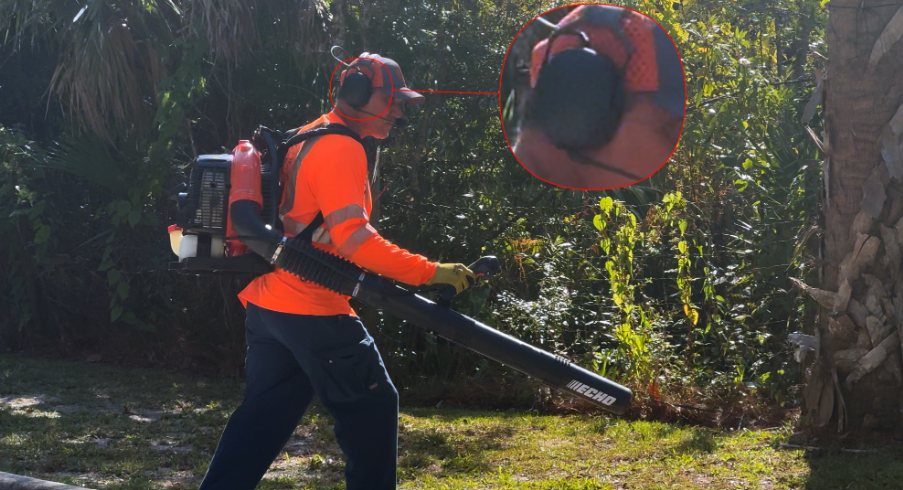
SOLANA BEACH, California – QHR, a developer of professional audio headsets for high-noise environments, today announced a wider release of its Headset and Headset Pro models, along with a product roadmap centered on edge-based artificial intelligence. The expansion targets workers in construction, manufacturing, aviation, and music who need hearing protection and clear communication at the same time, a combination that conventional equipment has struggled to deliver.
QHR is named for Quinn and Hadley, the two daughters of founder and chief executive Ryan Roberts. The company builds hearing protection and communication systems for settings at 80 decibels and above. In those settings, standard hearing protection blocks outside noise but also seals out communication, while communication headsets carry voices through and let surrounding noise in with them. QHR designs its products to do both at once, an approach the company describes as hearing everything and nothing at all.
To address that tradeoff, the Headset Pro treats noise control as three separate functions, combining active, passive, and environmental noise cancellation in a single hybrid array. According to QHR, the array reaches up to -34dB of attenuation across all three layers while preserving clear audio. The company summarizes the result as AirPods Max clarity, PELTOR-grade attenuation, mil-spec connectivity, and a single headset.
A central part of the design is the way the headset decides what counts as a voice. Most voice-triggered audio equipment relies on conventional Voice Activity Detection, or VAD, which identifies speech by measuring incoming sound against a background profile. That method works in stable conditions but tends to struggle when the noise floor shifts, as it does on a job site or a flight line.
QHR built its next generation around Machine Learning Voice Activity Detection, or MLVAD. Rather than judging whether a sound is simply loud enough to be a voice, MLVAD uses a neural network trained to recognize the patterns of human speech, adapting to changing noise and holding onto the voice underneath. The company developed it for loud, unpredictable conditions where conventional detection tends to fail.
Both methods feed a layer the company calls Intelligent VOX, which opens transmission only for real speech and lets operators communicate without pressing a button. Routing is configurable through a companion app. QHR reports that Intelligent VOX reaches 95 percent voice detection accuracy, which the company describes as the difference between communication equipment that crews rely on and equipment they work around.
Headset Pro is built for work that cannot pause for a dropped signal. It pairs a 4400mAh battery with a built-in 3600mAh power bank that can charge external devices in the field. Dual Hirose radio ports connect to professional communication systems and can run two radios at once, Bluetooth supports wireless audio and calls, and an MMCX earbud port adds further attenuation and audio customization. The headset also connects directly to aviation and ham radio systems, including the Baofeng UV5R and the ICOM A16B. The Headset Pro is available now, and a Headset 6 model is in development.
QHR has taken an unconventional path to market. The company reports that it previously completed an initial private raise of $500,000 and is preparing a second private round ahead of a Kickstarter marketing campaign, and that it is currently cashflow positive. QHR says it is prioritizing friends, family, and early adopters, with a reg-cf round planned to follow the Kickstarter. The company describes its approach as deliberately independent of traditional venture capital, structuring early rounds to favor backers who understand its direction rather than those seeking a near-term exit.
QHR positions its current products as a precursor to a longer-term plan to run artificial intelligence directly on the device.
“We are very excited about the future of QHR, and it’s premised on edge-based AI deployment,” said Ryan Roberts, chief executive of QHR. “The longer-term expectation is extensibility and direct access to an audio-processing-based architecture that allows LLM model instances to run locally on the hardware itself, supported by an input/output data stream via your phone or a Qualcomm modem.”
In practice, the company describes a headset that functions as on-device computing positioned where the noise is, running language models locally and connecting out only for tasks it cannot process on its own.
“The way we think about it, the device is built for audio-rich and data-rich environments where capturing everything, both audio and visual, is the entire point,” Roberts added. “Edge-based AI in audio is not a feature we are adding. It is the architecture we have been building toward from the beginning.”
According to QHR, a small team in Grand Rapids, Michigan is already using the headsets inside an artificial intelligence data center to stay connected in the high-noise environment around the facility.
QHR designs audio systems for high-noise environments across construction, manufacturing, aviation, music, and field operations. Headset and Headset Pro are available now, and Headset Mesh is open for inventory pre-book.
Media Contact:
QHR
Kate Senkosky
United States