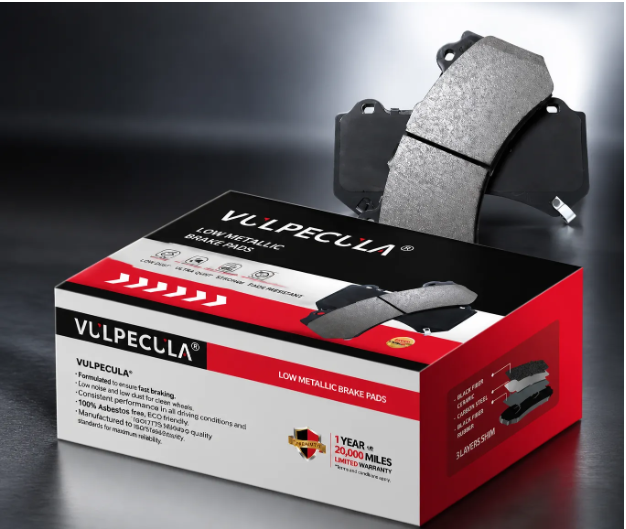
In today’s global automotive aftermarket, the brake pad industry is undergoing a structural transformation that goes far beyond product manufacturing. What used to be a relatively straightforward supply model based on standardized brake pad production is now evolving into a brand-driven ecosystem where control over distribution, pricing, and market positioning has become more important than the product itself.
Recent industry trends reflected in aftermarket discussions and search behavior—such as rising demand for private label brake pads, brake pad manufacturer partnerships, commercial vehicle brake pad solutions, ECE R90 certified brake pads, FMVSS 135 compliant products, fleet brake pads, and brake pad production line capabilities—clearly indicate one direction: distributors are no longer satisfied with selling existing brake pad brands. They are building their own.
Within this shift, manufacturers like TUOBA brake pads are increasingly becoming the structural backbone that enables distributors to move from simple trading operations into full brand ownership models.
Why More Distributors Are Launching Private Label Brake Pad Brands
The traditional brake pad supply chain was heavily dependent on price-driven distribution. Distributors purchased from brake pad manufacturers and competed mainly on margin compression and availability. However, this model has been steadily losing competitiveness due to global price transparency, increased competition, and product homogenization.
As a result, the focus has shifted toward brand ownership rather than product ownership.
Private label brake pads have therefore evolved from a simple sourcing alternative into a strategic business model that allows distributors to control branding, pricing strategy, and regional positioning while outsourcing engineering and production to specialized manufacturers.
According to broader aftermarket direction highlighted in AAPEX 2026 industry outlook discussions, this shift toward distributor-owned brands is becoming a defining trend in the global brake pad market structure.
Choosing the Right Product Portfolio: The Foundation of a Sustainable Brake Pad Brand
One of the most common reasons new private label brake pad brands fail is not product quality, but incorrect product structure design.
A sustainable brake pad brand must be built around a complete application-driven portfolio rather than isolated SKUs. In global markets, demand is typically concentrated in four major application categories: heavy-duty trucks, trailers, buses, and passenger vehicles.
Heavy commercial trucks require high thermal stability and consistent friction performance under extreme load conditions. Trailer applications demand structural durability and long service life under heavy inertia braking. Bus brake pads must prioritize NVH performance and braking smoothness due to passenger comfort requirements. Passenger car brake pads, on the other hand, are increasingly driven by low dust emissions, quiet braking behavior, and rotor compatibility.
Manufacturers such as TUOBA brake pads typically structure their product systems around these application categories, ensuring that each segment is supported by dedicated friction formulations rather than a one-size-fits-all approach.
Brand Positioning Strategy: Defining Profit Structure Before Product Strategy
In the brake pad industry, brand positioning is not a marketing decision—it directly determines long-term profitability and market survival.
Private label brake pad brands generally fall into three positioning layers. Premium brands are typically aligned with OE-level expectations and are strongly influenced by regulatory requirements such as ECE R90 and FMVSS 135, particularly in European and North American markets where performance consistency, noise control, and brake dust emissions are critical evaluation factors.
Mid-range brands represent the largest global volume segment, serving distributors and fleet operators that prioritize balanced performance and cost efficiency. Entry-level brands, often focused on price-sensitive regions, compete primarily on cost structure and supply stability rather than advanced performance characteristics.
The key challenge is that many new brands attempt to serve all three segments simultaneously, resulting in unclear positioning and weak channel differentiation.
Packaging Design as a Supply Chain System, Not a Visual Element
In private label brake pad manufacturing, packaging is often misunderstood as a branding exercise, when in reality it functions as a supply chain control system.
Effective packaging design must address SKU identification accuracy, regional labeling requirements, and logistics efficiency across different distribution environments. Misalignment in packaging systems can directly lead to incorrect application matching, inventory inefficiencies, and distributor-level operational losses.
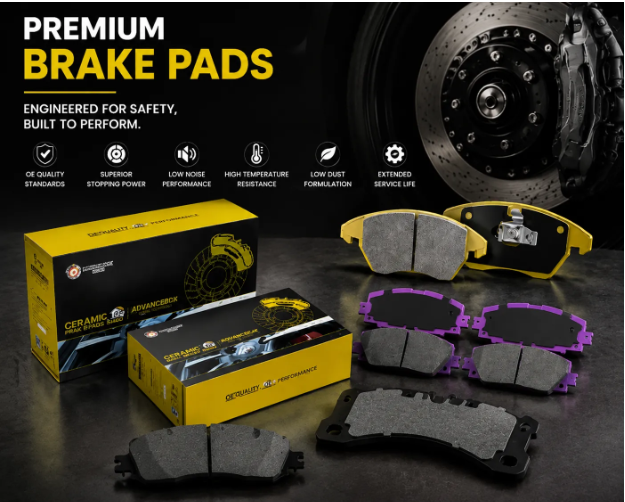
In structured systems such as those supported by TUOBA brake pads private label programs, packaging is typically categorized into neutral packaging for wholesale markets, branded packaging for distributor networks, and OE-style packaging for premium channels. Each serves a specific role within the broader supply chain architecture.
Why Private Label Brake Pad Brands Fail: The Structural Causes
Industry experience shows that a significant percentage of private label brake pad brands fail within the first three years, and the reasons are highly consistent across markets.
The first major failure point is incomplete product coverage. Many brands launch with limited SKUs and fail to cover full vehicle application systems, making it impossible to serve fleet customers or large distributors effectively.
The second issue is regulatory misalignment. Many brands underestimate the importance of ECE R90 and FMVSS 135 compliance during the early development stage, resulting in market access limitations in Europe and North America.
The third failure factor is lack of stable brake pad manufacturer support. Without a consistent production and formulation system, product batch variation leads to quality inconsistency, which quickly destroys distributor confidence and brand reputation.
The fourth issue is unclear brand positioning. Attempting to simultaneously target premium, mid-range, and economy segments creates channel conflict and weakens brand identity.
The fifth and often overlooked factor is absence of long-term supply chain planning. Successful brake pad brands require structured SKU expansion strategies, fleet supply capability, and scalable manufacturing integration.
The Role of Manufacturing Systems in Successful Private Label Growth
Successful private label brake pad brands are not built on branding alone—they are built on manufacturing systems that can support long-term stability and scalability.
Manufacturers such as TUOBA brake pads play a critical role in enabling this structure by providing formulation adaptability across different markets, OE-level production consistency, fleet-grade supply reliability, and multi-regional regulatory compatibility.
This transforms the manufacturer’s role from a simple supplier into a system enabler within the global aftermarket ecosystem.
Conclusion: Private Label Brake Pads Are Becoming a Strategic Industry Entry Point
The global brake pad industry is no longer defined by isolated product competition or incremental performance improvements. It is being reshaped by a deeper structural transition where supply chain control, regulatory alignment, and brand ownership are converging into a single competitive framework.
In this environment, private label brake pads are not simply a sourcing option, but a strategic entry point into the global aftermarket value chain. Distributors that once relied on third-party brands are now evolving into brand owners, while manufacturers are increasingly positioned as engineering and production infrastructure behind these brands.
However, the difference between success and failure is not the decision to launch a private label brand—it is the ability to structure it correctly from the beginning. A scalable product portfolio, clearly defined brand positioning, regulatory-ready product architecture, and stable brake pad manufacturer support system are no longer optional elements; they are foundational requirements for survival in this market.
This is where integrated manufacturing partners such as TUOBA brake pads play a critical role. By combining formulation engineering, production stability, and multi-market compliance capability, TUOBA enables distributors to transition from transactional purchasing models into structured brand ownership systems. In this model, the manufacturer is not simply a supplier, but a long-term system partner supporting brand scalability across different regions and vehicle segments.
Looking forward, the brake pad market will continue to polarize between low-control commodity suppliers and system-level manufacturers capable of supporting private label ecosystems at scale. Companies that fail to evolve beyond product-centric thinking will face increasing margin pressure, while those that build integrated brand + supply chain structures will define the next phase of global aftermarket competition.
Ultimately, private label brake pad development is not about creating another product line—it is about building a controllable position within a global supply chain that is rapidly shifting from manufacturing-driven to brand-driven architecture.
Read More From Techbullion