Predictive maintenance in manufacturing automation systems is transforming how industries manage machines, production lines, and overall operational efficiency. Instead of waiting for equipment to fail or performing maintenance on fixed schedules, predictive maintenance uses real-time data, sensors, and intelligent analytics to forecast potential failures before they occur.
This approach helps manufacturers reduce downtime, optimize costs, and improve productivity while ensuring smoother production workflows. As modern factories become increasingly automated, predictive maintenance is becoming a core component of smart manufacturing ecosystems.
What is Predictive Maintenance?
Predictive maintenance is a data-driven maintenance strategy that evaluates the condition of equipment during normal operation to detect possible failures in advance. It relies on technologies such as the Internet of Things (IoT), artificial intelligence (AI), machine learning, and advanced analytics. These technologies continuously monitor machine performance indicators such as vibration, temperature, pressure, and sound patterns.
Unlike reactive maintenance, where repairs happen after breakdowns, or preventive maintenance, where servicing is scheduled at fixed intervals, predictive maintenance focuses on actual equipment conditions. This ensures that maintenance is performed only when needed, avoiding unnecessary servicing while preventing unexpected breakdowns.
Role in Manufacturing Automation Systems
In manufacturing automation systems, predictive maintenance plays a crucial role in maintaining seamless production lines. Automated systems depend heavily on interconnected machinery, robotics, and control systems. A single machine failure can disrupt the entire production process, leading to delays and financial losses.
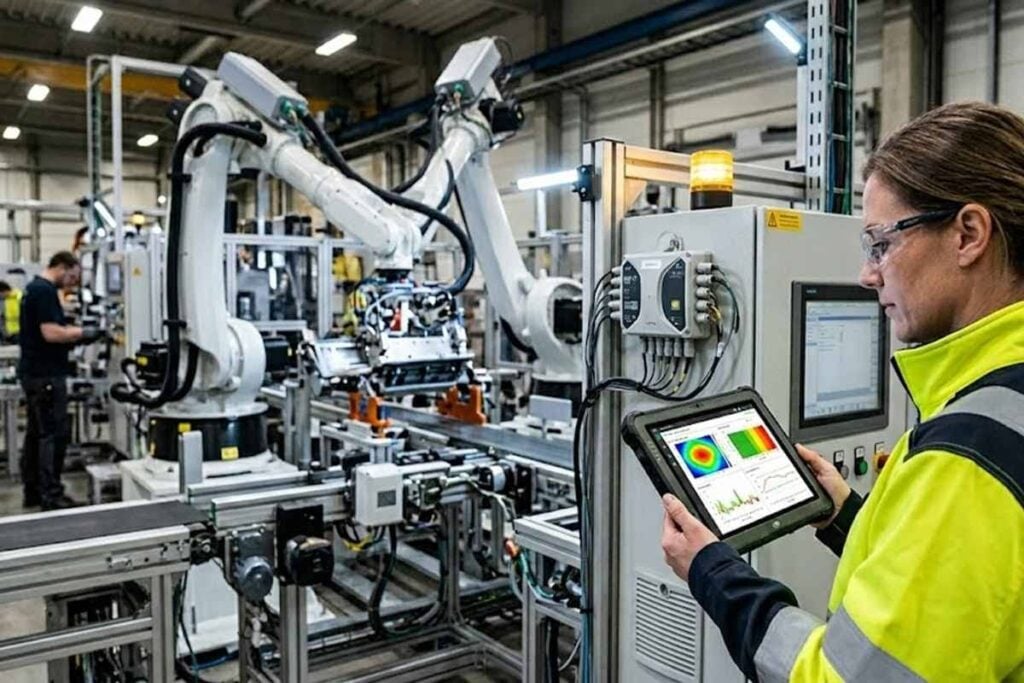
Predictive maintenance integrates directly with automation systems through sensors and Industrial IoT platforms. These systems continuously collect data from machines and send it to centralized dashboards for analysis. Engineers and maintenance teams can then identify performance deviations and take corrective action before failures occur. This integration ensures higher reliability and operational efficiency in manufacturing environments.
Key Technologies Involved
Predictive maintenance relies on several advanced technologies that work together to monitor and analyze machine health effectively.
- Internet of Things (IoT): IoT sensors collect real-time data from equipment, including temperature, vibration, and pressure levels.
- Artificial Intelligence (AI): AI algorithms analyze large volumes of data to identify patterns and predict possible failures.
- Machine Learning (ML): Machine learning models improve predictions over time by learning from historical maintenance data.
- Cloud Computing: Cloud platforms store and process massive datasets, enabling remote monitoring and analysis.
- Big Data Analytics: This helps in processing complex data sets to detect anomalies and trends.
These technologies collectively create an intelligent maintenance ecosystem capable of making accurate predictions and reducing operational risks.
How Predictive Maintenance Works?
The predictive maintenance process follows a structured workflow that transforms raw machine data into actionable insights.
First, sensors installed on machines collect real-time operational data. This data is then transmitted to monitoring systems or cloud platforms. Next, analytical tools process the data to identify unusual patterns or early signs of failure. Machine learning models compare current performance with historical data to predict potential breakdowns.
Once a risk is detected, alerts are generated for maintenance teams in manufacturing automation systems. These alerts help technicians take preventive actions such as repairing, replacing parts, or adjusting machine settings before a failure occurs. Over time, the system becomes more accurate because it continuously learns from new data.
Benefits in Manufacturing Automation
Predictive maintenance offers several advantages that significantly improve manufacturing performance and cost efficiency.
- Reduced Downtime: Machines are repaired before breakdowns occur, minimizing production interruptions.
- Cost Savings: Early detection of faults reduces expensive emergency repairs and equipment replacement costs.
- Improved Efficiency: Machines operate at optimal performance levels with fewer disruptions.
- Extended Equipment Life: Regular monitoring prevents excessive wear and tear on machinery.
- Better Safety: Early identification of faults reduces the risk of accidents in the workplace.
These benefits make predictive maintenance an essential strategy for modern manufacturing industries aiming for high productivity and reliability.
Challenges and Limitations
Despite its advantages, predictive maintenance also comes with certain challenges that manufacturers must address.
One major challenge is the high initial investment required for sensors, software, and infrastructure setup. Small and medium-sized enterprises may find it difficult to adopt these technologies due to cost constraints. Another challenge is data quality, since inaccurate or incomplete data can lead to incorrect predictions.
Additionally, implementing predictive maintenance requires skilled personnel who understand data analytics and machine learning systems. Integration with existing legacy systems can also be complex and may require system upgrades or replacements. Cybersecurity is another concern because connected systems may be vulnerable to cyber threats if not properly secured.
Applications in Modern Industries
Predictive maintenance is widely used across various manufacturing sectors due to its versatility and effectiveness.
In automotive manufacturing, it ensures robotic assembly lines function without interruptions. In the food and beverage industry, it helps maintain hygiene-sensitive equipment by preventing unexpected breakdowns. In electronics manufacturing, it ensures precision machinery operates within required tolerances.
Other industries such as aerospace, pharmaceuticals, and heavy machinery production also rely heavily on predictive maintenance to maintain operational reliability and safety standards.
Future of Predictive Maintenance
The future of predictive maintenance in manufacturing automation systems is expected to become even more advanced with the integration of emerging technologies. Artificial intelligence will become more accurate in predicting failures, while edge computing will enable faster data processing directly on machines.
Digital twins, which are virtual replicas of physical machines, will play a significant role in simulating performance and predicting maintenance needs in real time. Additionally, 5G connectivity will improve data transmission speed, allowing real-time monitoring of complex manufacturing systems.
As Industry 4.0 continues to evolve, predictive maintenance will become a standard practice rather than an optional upgrade, driving smarter and more autonomous factories.
Why HONEST Automation Stands Out?
HONEST Automation stands out in the industrial automation landscape due to its focus on reliability, innovation, and data-driven engineering solutions. It emphasizes the integration of advanced predictive maintenance tools within smart factory environments, helping industries transition smoothly toward fully automated operations.
The company prioritizes precision engineering and intelligent system design, ensuring that machines not only operate efficiently but also communicate performance data effectively. The honest automation china enables manufacturers to reduce downtime, improve maintenance planning, and enhance overall productivity. By combining modern IoT infrastructure with advanced analytics, it supports the development of smarter and more resilient manufacturing ecosystems.
Additionally, it focuses on customized solutions tailored to specific industrial needs. This flexibility allows businesses of different scales to adopt predictive maintenance strategies without disrupting existing operations. Their approach strengthens long-term operational stability and supports continuous improvement in manufacturing efficiency.
Conclusion
Predictive maintenance in manufacturing automation systems represents a major shift from traditional maintenance practices toward intelligent, data-driven decision-making. By leveraging IoT, AI, and advanced analytics, manufacturers can predict failures, reduce downtime, and optimize operational efficiency.
Although challenges such as cost and complexity exist, the long-term benefits far outweigh the limitations. As technology continues to evolve, predictive maintenance will play an increasingly vital role in building efficient, safe, and highly automated manufacturing environments.