PENCALO Is Making the Case for Dedicated AI Hardware Starting With the Calculator

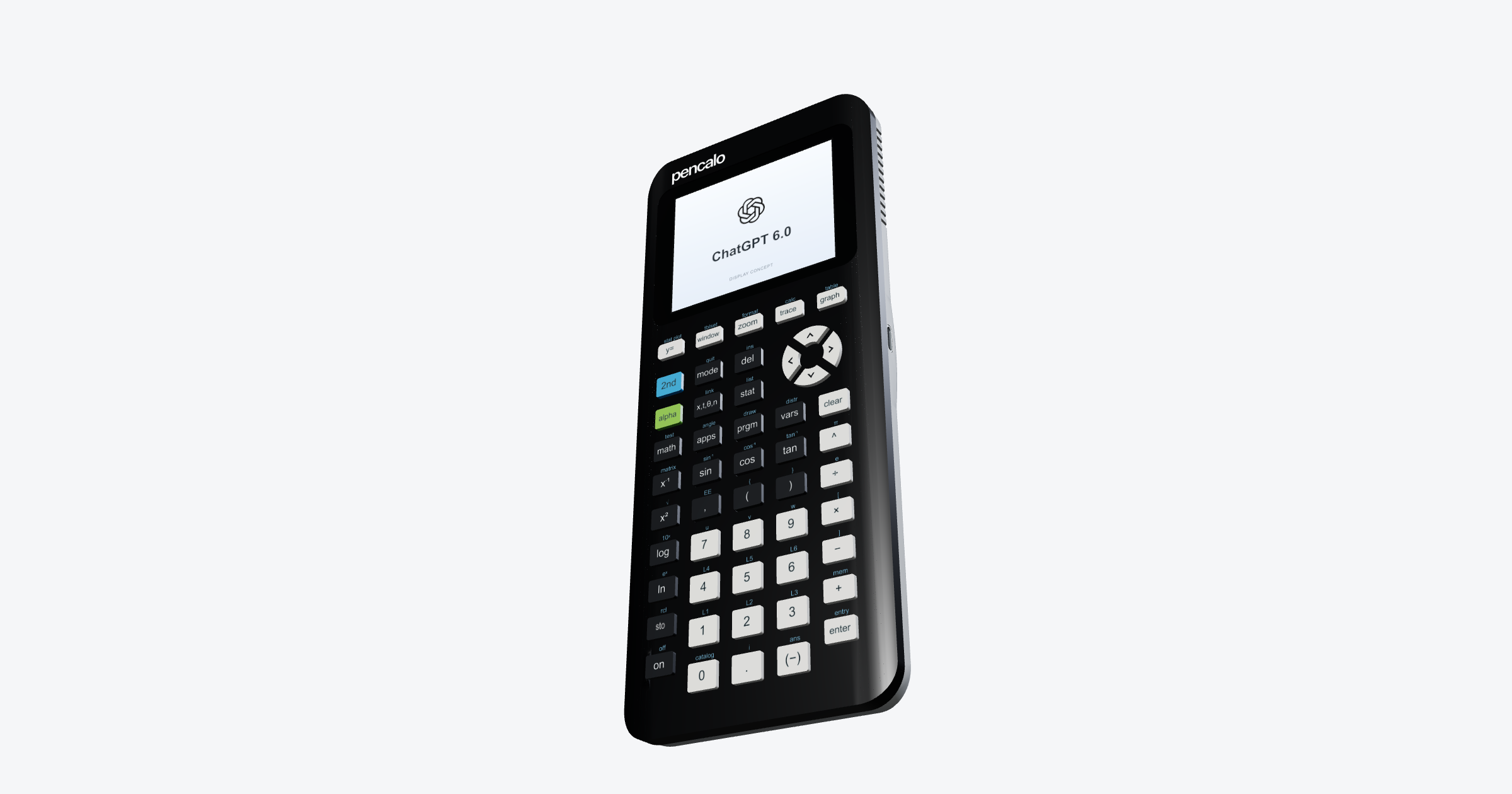
The most compelling hardware products rarely come from adding more features. They come from asking a smarter question: what should this device actually be designed to do? PENCALO, an emerging consumer electronics brand working at the intersection of AI and physical study tools, is asking exactly that — and building the answer into a form factor that students have carried in their bags for decades. The calculator seems like an unlikely launchpad for a piece of futuristic AI hardware, but PENCALO’s reasoning is hard to argue with. It’s universal, it’s tactile, and it has never once distracted anyone with a push notification. The PENCALO TTT1 is now available to purchase, with orders fulfilled according to the shipping schedule on our website, and understanding why its physical design choices matter is the most interesting place to start.
The Smartphone Is Powerful. That’s Also the Problem.
Let’s be honest about something first. The smartphone is one of the most impressive pieces of technology ever built. It’s also one of the most hostile environments for sustained, focused thinking.
Every app on a smartphone is competing for attention. Social platforms, messaging apps, news feeds these aren’t passive utilities sitting quietly in the background. They’re actively designed to interrupt, to pull focus, to reward switching between tasks. So when a student reaches for their phone to get help with a difficult problem, they’re not just picking up a tool. They’re stepping into a competition for their own concentration, and the apps are exceptionally good at winning.
This is why dedicated hardware keeps finding its audience, even in a world where phones can theoretically do everything. E-readers persist alongside tablets because the stripped-back, single-purpose experience changes how reading feels. Mechanical keyboards survive in a touchscreen era because physical feedback alters the interaction in ways users can genuinely feel. The logic applies directly here.
A device built specifically for AI-assisted study, free from notification badges and social feeds, isn’t a step backward. It’s a deliberate design decision. And for a generation of students increasingly aware of how much cognitive bandwidth their phones quietly consume, that decision carries real weight.
Breaking Down the Physical Design
Building a device like this involves a set of genuinely interesting hardware trade-offs. The components PENCALO has chosen for the TTT1 aren’t arbitrary; each one reflects a specific philosophy about how the device should be used.
Physical keys might seem like the most old-fashioned choice a hardware designer could make, but they serve a clear purpose. Tactile key input is faster and more reliable for numerical entry than a touchscreen, particularly in a study setting where you’re methodically working through a problem set. There’s also a subtle cognitive dimension: pressing a physical key delivers sensory feedback that tapping glass doesn’t, and that difference reinforces the sense that something deliberate is happening. You’re doing something, not just swiping.
The rear camera is arguably the most transformative element of the design. Rather than requiring users to retype equations, reconstruct diagrams, or manually enter complex notation, the camera allows the device to capture a question directly from the physical world: a textbook, a printed problem set, a whiteboard. The AI receives the question exactly as it appears, without transcription errors or formatting losses. For subjects where precision matters enormously, calculus, chemistry, physics, this is a meaningful practical advantage over typing-based input.
The built-in display keeps the experience contained. When an AI explanation appears on the device itself rather than bouncing to a phone or laptop screen, it stays in the context of the work at hand. The student’s attention doesn’t migrate. The screen becomes a workspace, not a portal to somewhere else.
The built-in battery makes the system genuinely portable and self-contained. There’s no dependency on a nearby laptop or USB port. The device operates independently in a library, a study room, a kitchen table at midnight before an exam.
Together, these four components form a coherent system. That coherence is what distinguishes purpose-built hardware from a list of features. Everything is there for a reason, and the reasons connect.
The Intelligence Layer and What It Actually Does
None of this would matter if the AI component weren’t doing something genuinely valuable. The intelligence built into a device like this isn’t about computing faster calculators have handled arithmetic since the 1970s. It’s about providing an explanation.
When a student photographs a problem and receives a step-by-step breakdown of the reasoning, they’re getting something a traditional calculator never offered: understanding. The answer is almost secondary. The value is in the logic that leads to it the named rules, the sequence of decisions, the moment when a concept clicks because the steps have been laid out clearly rather than simply executed.
It’s important to be transparent about how this works. AI features require internet access and available AI usage. The intelligence is accessed through a live connection rather than stored locally on the device. For most study environments classrooms, libraries, home this is rarely a practical limitation. But it’s an honest design reality worth understanding before pre-ordering.
Hardware as a Signal to Yourself
There’s something worth noting about what it means to reach for a dedicated AI study device instead of a phone. It’s a small but real signal to your own brain as much as anything else about what mode you’re in.
Behavioral research has long suggested that physical environments and tools shape behavior. Students who use specific, purpose-dedicated tools often find it easier to enter and sustain focused states. The tool itself becomes a cue: this is study time, not scroll time. Purpose-built hardware carries that cue in a way that a smartphone, open to everything, simply doesn’t.
PENCALO’s hardware approach is built on this understanding. The TTT1 isn’t trying to do everything. It’s trying to be the right thing at the right moment, a focused, intelligent device for the specific kind of thinking that studying requires.
A Young Category Worth Watching
Consumer AI hardware is still in its early days as a product category. Most of the genuinely interesting devices are either just entering the market or in their earliest commercial stages. The space is still being defined, which makes it one of the more exciting corners of the tech world to follow right now.
The direction, though, is clear. AI is migrating out of apps and into objects. Interfaces are becoming physical, tactile, and intentional. And the devices that will matter most won’t be the ones that do the most they’ll be the ones that understand their purpose and serve it exceptionally well.
For gadget enthusiasts and students who’ve grown up surrounded by powerful but endlessly distracting technology, a focused AI device with genuine physical design thinking behind it is exactly the kind of tech worth paying attention to. Explore what PENCALO is building and see the interactive demonstration at https://pencalo.com/.