
Payment Orchestration Explained: Why Growing Merchants Are Rethinking Their Payment Stack

For years, the typical online merchant ran payments the same way: one gateway, one set of fraud rules, one dashboard. It worked well enough at small scale. But as businesses expand across channels, currencies and customer segments, that single-path setup starts to show its limits. Payment orchestration has emerged as the way growing merchants bring order to an increasingly complex payment environment.
This article explains what payment orchestration is, the problems it solves, and what merchants should look for when evaluating it.
What payment orchestration actually means
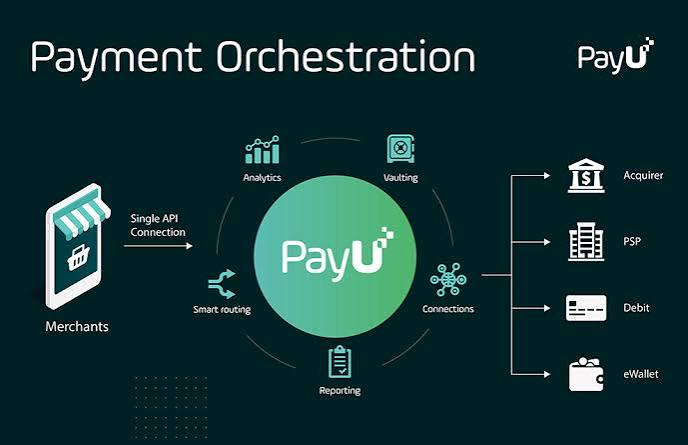
Payment orchestration is a layer that sits between a merchant’s checkout and the services involved in completing a transaction. Instead of hardwiring every payment to one route with one set of rules, an orchestration layer decides how each transaction is handled based on conditions the merchant defines: the payment method, the customer’s location, the order’s risk profile, the currency, or the sales channel.
In practice, orchestration brings several functions into one place:
- Routing transactions across connected services
- Applying fraud screening and authentication rules consistently
- Managing tokenized customer credentials for repeat and recurring purchases
- Collecting transaction, risk and dispute data into a single record
- Connecting online checkout, virtual terminals and in-person point of sale
The value is not any single feature. It is that decisions are made once, in one configurable place, rather than separately in five disconnected systems.
Why the single-path model breaks down
Three pressures push growing merchants toward orchestration.
Channel sprawl. A business that started with a web store may now sell through a mobile app, a marketplace, social commerce, phone orders and physical locations. Each channel often arrives with its own payment tool, its own reporting and its own rules. Customer and transaction data ends up scattered, and nobody has a complete view.
Fraud complexity. The Merchant Risk Council’s 2026 Global eCommerce Payments and Fraud Report found that 98% of surveyed merchants experienced at least one type of fraud attack in the prior 12 months. Refund and policy abuse was reported by 41% of respondents, first-party misuse by 36% and card testing by 33%. Each of these needs different controls, and many happen after a payment has already been approved. A single set of authorization rules cannot cover them all.
Customer expectations. Shoppers expect fast, familiar checkout everywhere: saved credentials, digital wallets, local currencies and no unnecessary verification steps. Meeting those expectations across channels is far easier when the logic behind them lives in one layer.
Orchestration and fraud prevention
Orchestration is one of the most practical ways to improve fraud outcomes without adding friction for good customers. When risk decisions are centralized, a merchant can:
- Apply risk-based authentication.Low-risk transactions pass through smoothly, while higher-risk orders receive step-up verification. Applying extra checks to every order is a common cause of checkout abandonment.
- Use richer signals.Velocity, device, location and purchase history become more useful when they are evaluated together across channels, not in isolation.
- Close the learning loop.When dispute outcomes flow back to the decisions that produced them, rules can be retuned based on real results rather than guesswork.
- Extend monitoring past authorization.Refund requests and disputes become part of the same data model, which matters when post-purchase abuse is among the most common attack types.
Tokenization as a foundation
Tokenization replaces sensitive card data with a non-sensitive token that can be used for future transactions. The Merchant Risk Council reports that 72% of merchants now use at least one form of payment tokenization. In an orchestrated setup, tokens allow customers to check out quickly across channels and support recurring billing, while reducing the amount of raw card data a merchant stores. Tokenization is not a fraud solution on its own, but it is a strong base layer that makes the rest of the stack safer and simpler.
Data that is ready when you need it
One underrated benefit of orchestration is recordkeeping. Dispute responses depend on evidence such as authentication results, device and IP data, order details, customer communications and proof of delivery. When that information is captured in one place at the time of the transaction, it can be retrieved in minutes instead of pieced together from several systems under deadline. The same records help a merchant answer questions quickly if a payment partner asks about an unusual pattern in transaction activity.
What to look for when evaluating orchestration
Not every solution described as orchestration delivers the same value. Merchants comparing options should ask:
- Is the logic configurable?Rules, thresholds and routing should be adjustable as the business and threat landscape change, not hardcoded.
- Does it cover every channel?The real benefit comes from connecting online checkout, virtual terminals, recurring billing and in-person point of sale.
- Is decision-making transparent?A system that flags orders without explaining why is hard to tune and hard to trust.
- Does it support recurring and multi-currency payments?Subscription models and cross-border sales are where single-path setups struggle most.
- What does support look like?When a transaction pattern needs attention, responsive, knowledgeable support matters as much as the technology.
The bigger picture
Payment orchestration reflects a broader shift in how merchants think about payments. Payments are no longer just a utility that moves money from customer to business. They are a source of customer insight, a front line for fraud prevention and a core part of the buying experience.
For growing merchants, the question is not whether their payment stack will become more complex. It already has. The question is whether that complexity is managed in one place or scattered across disconnected tools. Approaching ecommerce payment processing through an orchestration lens gives businesses a way to scale across channels, respond to fraud with precision and keep checkout fast for the customers who matter most.
Payment Orchestration Explained: Why Growing Merchants Are Rethinking Their Payment Stack
For years, the typical online merchant ran payments the same way: one gateway, one set of fraud rules, one dashboard. It worked well enough at small scale. But as businesses expand across channels, currencies and customer segments, that single-path setup starts to show its limits. Payment orchestration has emerged as the way growing merchants bring order to an increasingly complex payment environment.
This article explains what payment orchestration is, the problems it solves, and what merchants should look for when evaluating it.
What payment orchestration actually means
Payment orchestration is a layer that sits between a merchant’s checkout and the services involved in completing a transaction. Instead of hardwiring every payment to one route with one set of rules, an orchestration layer decides how each transaction is handled based on conditions the merchant defines: the payment method, the customer’s location, the order’s risk profile, the currency, or the sales channel.
In practice, orchestration brings several functions into one place:
- Routing transactions across connected services
- Applying fraud screening and authentication rules consistently
- Managing tokenized customer credentials for repeat and recurring purchases
- Collecting transaction, risk and dispute data into a single record
- Connecting online checkout, virtual terminals and in-person point of sale
The value is not any single feature. It is that decisions are made once, in one configurable place, rather than separately in five disconnected systems.
Why the single-path model breaks down
Three pressures push growing merchants toward orchestration.
Channel sprawl. A business that started with a web store may now sell through a mobile app, a marketplace, social commerce, phone orders and physical locations. Each channel often arrives with its own payment tool, its own reporting and its own rules. Customer and transaction data ends up scattered, and nobody has a complete view.
Fraud complexity. The Merchant Risk Council’s 2026 Global eCommerce Payments and Fraud Report found that 98% of surveyed merchants experienced at least one type of fraud attack in the prior 12 months. Refund and policy abuse was reported by 41% of respondents, first-party misuse by 36% and card testing by 33%. Each of these needs different controls, and many happen after a payment has already been approved. A single set of authorization rules cannot cover them all.
Customer expectations. Shoppers expect fast, familiar checkout everywhere: saved credentials, digital wallets, local currencies and no unnecessary verification steps. Meeting those expectations across channels is far easier when the logic behind them lives in one layer.
Orchestration and fraud prevention
Orchestration is one of the most practical ways to improve fraud outcomes without adding friction for good customers. When risk decisions are centralized, a merchant can:
- Apply risk-based authentication.Low-risk transactions pass through smoothly, while higher-risk orders receive step-up verification. Applying extra checks to every order is a common cause of checkout abandonment.
- Use richer signals.Velocity, device, location and purchase history become more useful when they are evaluated together across channels, not in isolation.
- Close the learning loop.When dispute outcomes flow back to the decisions that produced them, rules can be retuned based on real results rather than guesswork.
- Extend monitoring past authorization.Refund requests and disputes become part of the same data model, which matters when post-purchase abuse is among the most common attack types.
Tokenization as a foundation
Tokenization replaces sensitive card data with a non-sensitive token that can be used for future transactions. The Merchant Risk Council reports that 72% of merchants now use at least one form of payment tokenization. In an orchestrated setup, tokens allow customers to check out quickly across channels and support recurring billing, while reducing the amount of raw card data a merchant stores. Tokenization is not a fraud solution on its own, but it is a strong base layer that makes the rest of the stack safer and simpler.
Data that is ready when you need it
One underrated benefit of orchestration is recordkeeping. Dispute responses depend on evidence such as authentication results, device and IP data, order details, customer communications and proof of delivery. When that information is captured in one place at the time of the transaction, it can be retrieved in minutes instead of pieced together from several systems under deadline. The same records help a merchant answer questions quickly if a payment partner asks about an unusual pattern in transaction activity.
What to look for when evaluating orchestration
Not every solution described as orchestration delivers the same value. Merchants comparing options should ask:
- Is the logic configurable?Rules, thresholds and routing should be adjustable as the business and threat landscape change, not hardcoded.
- Does it cover every channel?The real benefit comes from connecting online checkout, virtual terminals, recurring billing and in-person point of sale.
- Is decision-making transparent?A system that flags orders without explaining why is hard to tune and hard to trust.
- Does it support recurring and multi-currency payments?Subscription models and cross-border sales are where single-path setups struggle most.
- What does support look like?When a transaction pattern needs attention, responsive, knowledgeable support matters as much as the technology.
The bigger picture
Payment orchestration reflects a broader shift in how merchants think about payments. Payments are no longer just a utility that moves money from customer to business. They are a source of customer insight, a front line for fraud prevention and a core part of the buying experience.
For growing merchants, the question is not whether their payment stack will become more complex. It already has. The question is whether that complexity is managed in one place or scattered across disconnected tools. Approaching ecommerce payment processing through an orchestration lens gives businesses a way to scale across channels, respond to fraud with precision and keep checkout fast for the customers who matter most.






Comment