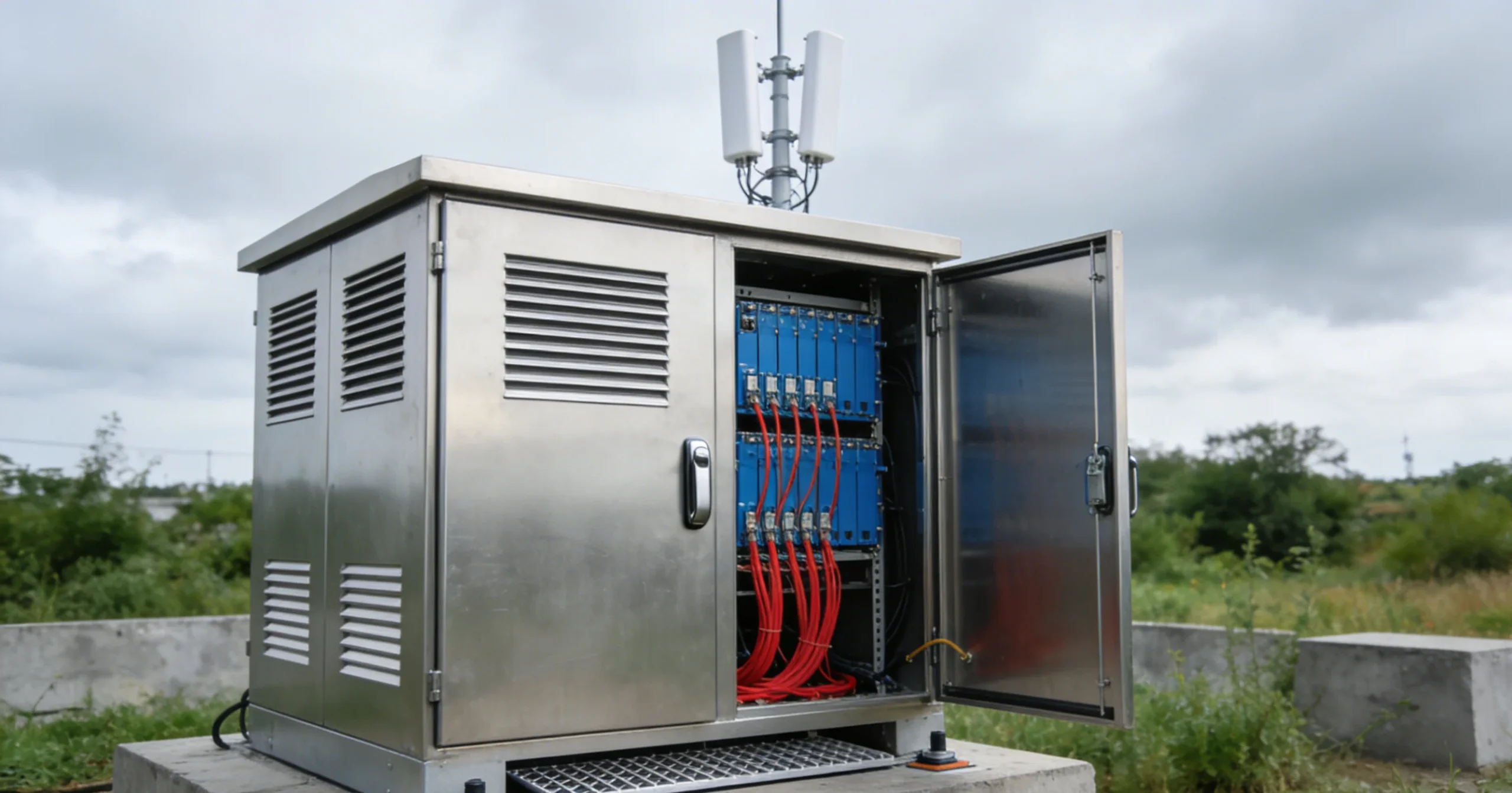
Telecommunications networks are the backbone of modern communications, supporting everything from emergency services to a global economy. The expansion of telecommunications networks into remote areas and harsh environments has created a need for robust physical security for the electronic equipment involved in the delivery of services and products. The components of a telecommunications network require protection from extreme temperatures, moisture, dust, and vandalism to allow for continued reliable operation.
If you are looking for more information about KDST Custom Outdoor Telecom Cabinet Solutions – KDST, go here right away.
Outdoor telecommunications cabinets play an important role as the first line of defence for telecommunications infrastructure. Outdoor telecommunications cabinets are engineered to provide protection from the elements for routers, switches, power distribution units, and backup battery systems. All aspects of outdoor telecommunications cabinets are examined in this article as well as variations of cabinets, maintenance required, and the effect of outdoor cabinets on network reliability.
For more in-depth information, you should view the Custom Outdoor Telecom Cabinet Solutions – KDST
What Is An Outdoor Telecommunications Cabinet?
An outdoor telecommunication cabinet is a rugged purpose-built enclosure designed to protect telecommunications equipment outside. Outdoor telecommunications cabinets differ from traditional IT racks found within climate-controlled data centres, because they are built to withstand environmental conditions. These cabinets create a microenvironment within the cabinets, providing temperature-controlled and dust-free conditions for all the electronics inside of an outdoor telecommunications cabinet, regardless of what environmental conditions exist outside the cabinet.
View Custom Outdoor Telecom Cabinet Solutions – KDST for More Details
Key Characteristics of High-Performance Enclosures
High-performance outdoor telecommunications enclosures generally share the following characteristics. First, most enclosures have specific Ingress Protection (IP) ratings: Typically IP55 and above, which indicates that the enclosures are resistant to dust and water jet penetration. Secondly, robust thermal management systems are the norm; most cabinets are fitted with heat exchangers, air conditioners, or direct air cool systems to prevent overheating. The final physical security measures include multiple locks and heavy-duty aluminum or steel that protect from accidental entry or force.
Hardware Reliability and Environmental Conditions
Hardware reliability is directly correlated with the overall network, and the physical condition of network hardware can directly affect how a network can perform. Exposure to moisture (i.e., humidity) can corrode circuit boards. Also, very high temperatures shorten the life of batteries and processors. Outdoor cabinets prevent these environmental effects, thereby preventing physical failures. Therefore outdoor cabinets maintain consistent signal transmission and prevent network outages and extend the life of these costly infrastructure assets due to protecting the interior environment of the cabinet.
Different Types of Outdoor Telecom Cabinets
Telecom cabinets are classified by the configuration of mounting and size.
Pole Mount Cabinets
Smaller cabinets that are mounted on telephone poles and typically used for Wi-Fi and 5G small cells.
Pad Mount (Ground Mount) Cabinets
Larger cabinets that are mounted on concrete pads, typically containing an extensive amount of equipment, battery banks, and fiber distribution equipment.
Wall Mount Cabinets
Mid-sized cabinets that are mounted on exterior building walls or shelters, are used for last-mile distribution.
Comparing Outdoor Telecom Cabinets with Indoor Telecom Cabinets
The main difference between outdoor and indoor cabinets is the physical “hardening” of both indoor and outdoor cabinets due to their environment. Indoor cabinets are designed to maintain temperature and humidity control, as well as the proper airflow and cable organization, in a tightly controlled environment. Indoor cabinets typically do not have weather seals or any active cooling systems installed. Outdoor cabinets, on the other hand, are designed to isolate all cabinet-enclosed contents from the environment outside.
Outdoor telecom equipment is constructed with a variety of materials and methods to serve outdoor locations. All cabinets are equipped with double wall construction and insulation to lessen the solar load and prevent any condensation from forming on the inside of the cabinet. Indoor systems do not require this type of construction and materials due to their relative protection from the sun’s rays.
Specific Designs for Outdoor Telecom Cabinets
In addition to standard designs, many cabinets are manufactured and designed for specific challenges encountered at specific sites. For example, in urban areas, many companies install discreet or camouflaged cabinets that meet zoning requirements or enhance the aesthetics of the area. In addition, cabinets placed in coastal regions are constructed with marine-grade stainless steel to assist in resisting corrosion from salt spray.
Installation and Maintenance
Best Practices for Installation
Installers should be aware of best practices when installing outdoor telecom cabinets. The most important aspect of installing any equipment is selecting the proper site. This includes determining areas that are flood-prone and identifying how much sun exposure will be received. It is also essential to properly ground all cabinets to mitigate the effects of lightning and power surges. All cable entry points must be sealed so that NEMA or IP ratings of the enclosure are maintained.
Regular Maintenance Requirements
Verification of routine maintenance schedules will prevent minor issues from becoming network outages. Technicians conducting routine inspections for outdoor telecom cabinets will look for cracks and signs of wear in door seals (gaskets). Similarly, cooling system filters must be cleaned and/or changed to provide the proper airflow. The outside of the cabinet must also be checked for any signs of rust or physical damage that could affect physical security.
Battery Backup Solutions
Continued power supply is one of the most important aspects of outdoor enclosures. As a result, most cabinets use Uninterruptible Power Supplies (UPS) and battery strings. All batteries are temperature-sensitive, requiring the cabinet’s thermal management system to keep the battery compartment cooler than in the area housing the active electronics.
Emerging Technologies for Outdoor Telecom Solutions
Advancements in Outdoor Cabinet Designs
The telecom industry is moving toward smarter infrastructure. Many new cabinets come equipped with an array of IoT-enabled sensors that monitor current levels of internal temperature, humidity, door status, and water intrusion in real-time. This information enables network operations centers (NOCs) to identify environmental breaches before a catastrophic equipment failure occurs.
How Technology Affects Network Performance
As the population density of 5G networks increases, the amount of heat generated by equipment increases. Therefore, new cabinets are being designed with innovative Thermal Dissipation Methods, including use of Phase Change Materials (PCM) and Liquid Cooling Loops that enable an operator to manage the excessive amount of heat produced by high-density equipment without increasing the size of the cabinet.