Online trading has never been more easily accessible than it is in 2026. Some people trade online to generate a side income or build generational wealth for themselves and their families. That is why more people are learning to trade online.
There are many online brokerage platforms out there with user-friendly interfaces, advanced financial charts, and other tools to make it as easy as possible for beginners to enter the financial markets. All you need is the right education to get started.
What Is Online Trading?
Online trading is when you buy and sell financial assets through a web-based brokerage platform. In the old days, people had to call up brokers on the telephone to enter their trades, but not anymore. The internet enables anyone to execute trades through their online brokerage accounts within seconds.
In addition, online trading gives you access to a variety of different asset classes, such as stocks, bonds, equities, and cryptocurrencies. The trading speed and diversity associated with online trading can offer profitable opportunities to traders, but also bigger risks if they don’t know what they are doing.
For this reason, getting an education in online trading is essential for any beginner who is thinking about trading online for the first time.
How Beginners Can Start Trading
A beginner needs to choose an online brokerage platform before they can begin trading. It should be a reputable and secure platform with millions of users to ensure it remains stable and dependable for their trading needs.
You are required to open a new account on the brokerage platform before you can begin trading. The registration form will ask you to enter all kinds of personal and financial information, such as your name, address, phone number, and bank account number.
Once the broker verifies your identity, your brokerage account will be officially opened. Then you can begin funding your account by electronically transferring funds from your bank account to your brokerage account. From there, you can begin making trades and adding assets to your investment portfolio.
Understanding Financial Markets
The four primary financial markets are forex, stocks, commodities, and indices. Here is a brief description of each one:
- Forex – Forex is the foreign exchange marketplace where you can trade different pairs of currencies 24 hours a day, five days a week. It is the most liquid financial market in the world.
- Stocks – Stocks represent equity ownership in public companies. It is one of the most popular financial markets and is deeply impacted by news and earnings reports.
- Commodities – Commodities are tradable physical goods and raw materials, such as crude oil, gold, and silver. They are often resistant to inflationary effects on the financial markets.
- Indices – Indices are the financial indexes of specific financial markets and stocks, such as NASDAQ and S&P 500. They allow traders to make low-risk investments in the broader health of the economy without focusing on individual assets.
Essential Trading Terminology Every Beginner Should Know
Every beginner should learn the following common trading terms before engaging in online trading:
- Spread – The difference between the buy and sell prices of an asset. A large price difference means low liquidity, and a narrow price difference means high liquidity.
- Leverage – The borrowed capital from a broker to increase your buying power with a smaller amount of personal capital.
- Margin – The actual capital required to hold a leveraged trade.
- Volatility – The speed at which asset prices change and fluctuate on the market.
Beginner Trading Strategies
Beginners can be successful if they implement effective trading strategies. For instance, following the latest trading trends is an effective strategy because you are basically following the current visible direction of the market.
There is also breakout trading, where you wait for the asset price to move beyond its predetermined resistance levels due to high volume and momentum. These kinds of breakouts usually mean a new trend has emerged.
Beginners who don’t want to stare at their computer or mobile screens all day can engage in swing trading. It is a trading strategy where you hold your asset positions for several days or weeks until significant price changes occur.
Risk Management for New Traders
New traders should establish a risk management system where they protect their capital and avoid common trading mistakes. Protecting capital means creating an investment budget that allows you to only risk what you can afford to lose. Always prioritize capital protection over making profits. Beginners must learn to avoid the common mistake of letting their emotions guide their trading decisions. Emotions are the number one reason why beginners fail.
The Biggest Trading Mistakes Beginners Make
Avoiding the biggest trading mistakes beginners make can save you many thousands of dollars, if not more. These mistakes include overleveraging, chasing losses, and failing to plan.
Overleveraging means putting too much borrowed money into an investment. It is often the result of attempting to chase losses in an attempt to gain back lost capital, which almost never works out well for the trader.
A general lack of planning leads to emotional trading, which is the common cause of chasing losses and overleveraging. Once again, create a budget and plan to avoid making these mistakes.
Creating a Personal Trading Plan
A personal trading plan will outline all your investment goals, risk tolerance, and trading schedule. Are you trying to make short-term or long-term gains? How much risk can your budget handle? How often do you want to trade on the markets? Try to answer all these questions and incorporate those answers into your personal trading plan.
How Axwel Supports New Traders
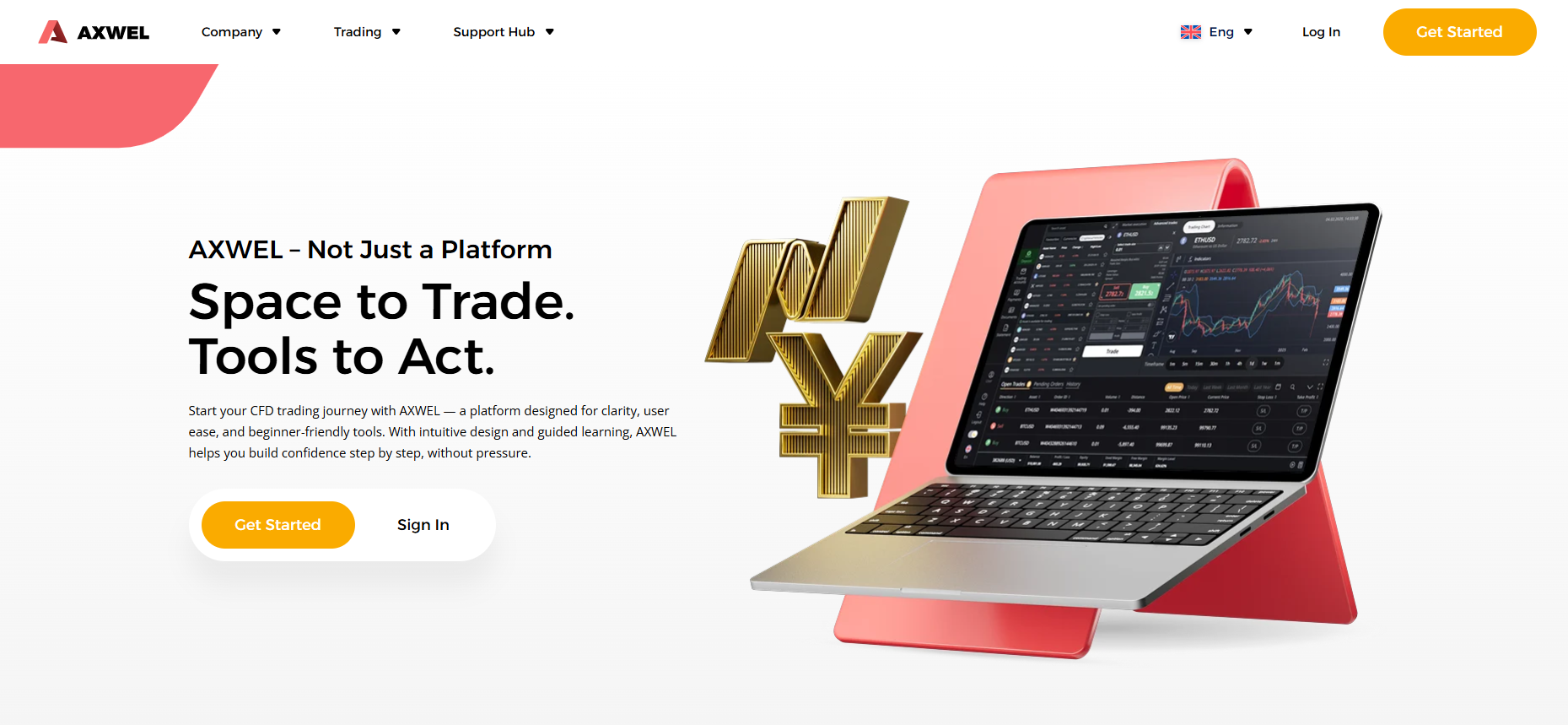
Axwel is an online trading platform designed for beginners who need user-friendly tools, clarity, and ease when trading online for the first time. Not only does it take the pressure away for new traders, but it also offers them educational resources and guided learning opportunities to make trading easier.
Users can access the Axwel trading platform from their mobile devices or computers, whichever is most convenient for them.
The Risk And Profitability for Beginners
Every broker has a different minimum deposit requirement to start trading on their platform. In many cases, you only need to deposit as little as $100 to get started.
There is always some level of risk involved in online trading because you can never truly know which direction the market will go. That is why beginners must educate themselves before engaging in online trades. Beginners have the potential to generate profits from their online trades. Once they have an effective strategy and risk management system, it is easier for beginners to make profitable trades.
Conclusion
Online trading offers incredible opportunities for beginners in 2026. To overcome the challenges and risks involved, beginners should take the time to educate themselves and create a robust trading plan before making their first deposit. From there, they can create an account on a stable and reliable trading platform like Axwel to access a diverse and lucrative set of global financial markets.