
One API for Seedance, Wan 3.0 and GPT Image: Is It Worth It?

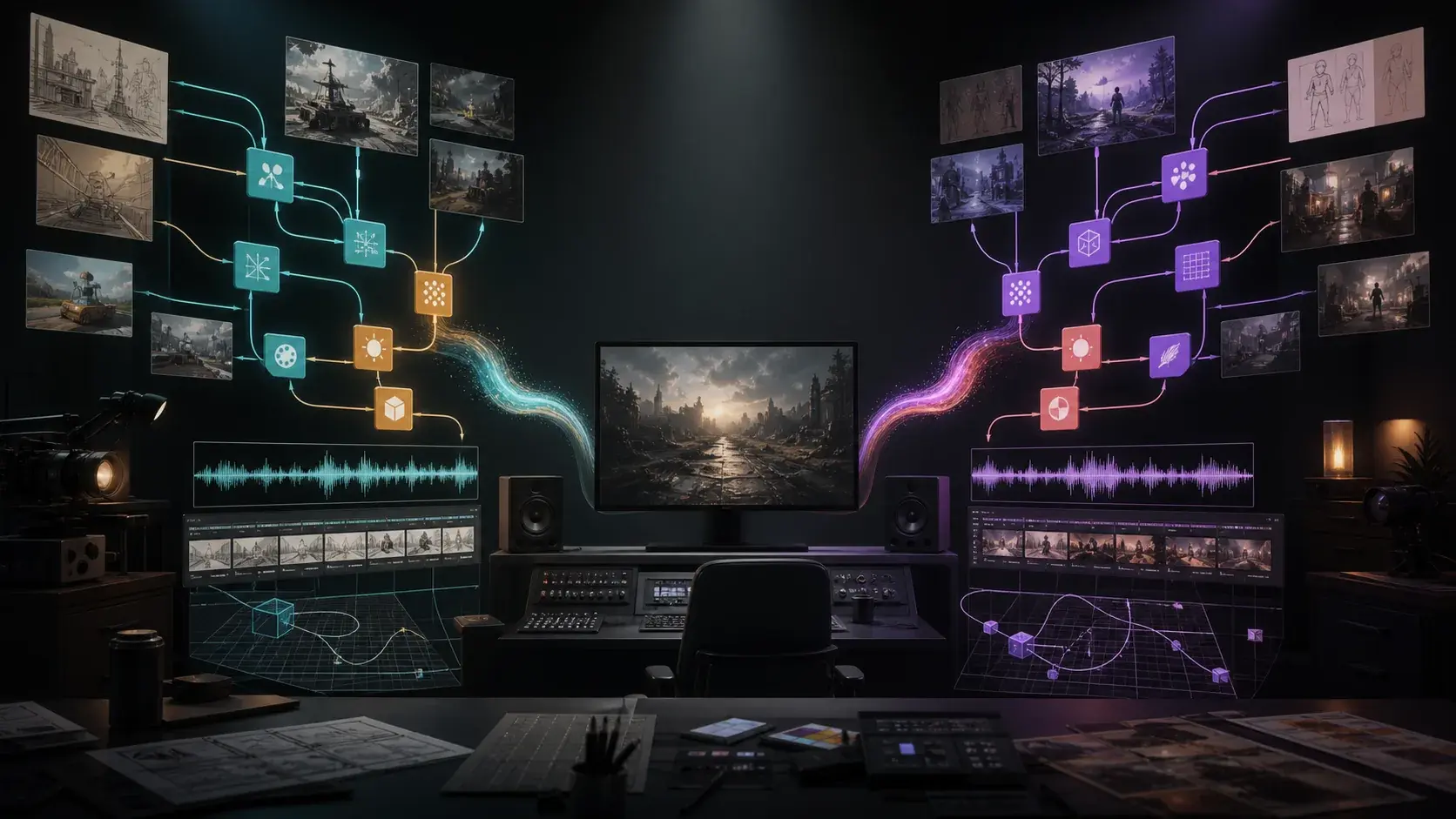
One application can give users a common way to create a Seedance video, a Wan 3.0 clip, or a GPT Image asset. That does not mean the three models have identical request fields, task states, or billing arrangements.
The distinction is concrete on SeedRouter today. Its current Wan 3.0 page sends generation to a separate Wan API account with separate billing; SeedRouter credits do not apply. A shared catalogue therefore should not be described as proof that one key buys access to all three.
The more useful question is whether your product benefits from a common application interface above the model-specific contracts. Often it does, provided the interface preserves the differences that matter.
What “one API” should mean to the application
A shared application interface can standardize a few operations: create a job, retrieve its progress, and obtain the finished asset. Those operations are useful across both image and video generation.
The request itself should remain typed by capability. An image edit needs a source image and possibly a mask. A video request needs timing and motion controls. Forcing both into a single object with dozens of optional fields makes invalid combinations easy to create and hard to explain.
A compact application-level structure could look like this:
type CreativeJob =
| { kind: ‘image’; model: string; imageRequest: unknown }
| { kind: ‘video’; model: string; videoRequest: unknown };
This is an architectural sketch, not a request accepted by any named service. In production, replace unknown with validated model-specific types. The point is to share the operation without erasing the contract.
Model selection is a creative decision
Seedance and Wan are video choices in this discussion; GPT Image is an image choice. A user who needs a still product asset should not have to navigate duration controls. Someone generating motion needs to know which reference modes, lengths, and resolutions the selected model supports.
Store a capability description beside each model integration. The interface can then show the relevant controls and explain why a setting is unavailable. Avoid silently dropping a field because another model does not understand it.
Use precise model versions behind broad family names. “GPT Image” is a useful label for a reader, but the implementation and quote should identify the actual version being called. The same discipline applies to Seedance and Wan variants.
Normalize progress without losing the original status
An application can present a small shared vocabulary such as “working,” “ready,” and “failed.” It still needs to preserve each service’s original task ID and state internally.
For example, SeedRouter’s Seedance contract reports success as succeeded and provides content.video_url. Its image task contract uses completed and image output data. Treating those as interchangeable without a conversion layer can leave a finished task permanently displayed as working.
Write that conversion once for each integration. Keep enough original information to diagnose an unexpected result, while returning only the fields the customer needs. A normalized status is useful; a guessed status is not.
Shared billing needs actual commercial support
A common user interface cannot merge balances that belong to separate accounts. If one model requires a separate service account, the product must account for that cost and access requirement explicitly.
The current Wan boundary on SeedRouter is a good example of why this check belongs early in planning. A team could still build an application that supports both SeedRouter and Wan API, but it would be maintaining more than one external relationship.
Similarly, when considering reAPI, inspect the current catalogue and model documentation before promising that a particular set of versions shares one credential or balance. A homepage category is weaker evidence than a working, documented model contract.
When the shared interface pays for itself
The design becomes useful when the application repeatedly needs the same surrounding behavior: ownership checks, a job history, result storage, and a consistent progress display. Implementing those features separately for every model creates repeated work.
It is less compelling for a small tool that only generates one type of clip. In that case, a direct integration may be easier to understand and maintain. Building a general platform before the second model has a real use case creates work without a demonstrated benefit.
There is also a maintenance cost. Every supported model can change its fields, limits, or pricing. Someone must update validation, capability descriptions, examples, and tests. A universal-looking button does not reduce that obligation.
Test the differences users can notice
A useful verification plan includes one successful request for each supported mode, invalid combinations rejected before submission, and recovery after interrupted polling. Check that an image result never reaches a video player and that a video task does not inherit an image completion rule.
Verify billing separately from output. A request can produce a valid asset while the application’s estimate is wrong. Keep the chosen model, quote, actual usage, and final account charge available for reconciliation.
Use a controlled budget for any paid evaluation. A generic “test all models” action is a poor fit for services whose generation prices differ substantially.
Architecture questions
Can one request body cover all three model families?
Your application can define a common wrapper, but each model still needs its own validated payload. A wrapper is not evidence of a shared external API contract.
Does SeedRouter currently provide Wan through the same balance?
Its checked Wan 3.0 page says generation uses a separate Wan API account and billing. SeedRouter credits do not apply to that experience.
When should a small team build this abstraction?
When a second model solves a real product need and the shared job-handling work is substantial enough to justify it. Start with the concrete integrations.
Unify the work around the models
One API for Seedance, Wan 3.0, and GPT Image can be worthwhile as an application design. Share job ownership, progress, and result handling while keeping model capabilities and account boundaries explicit. The benefit is a simpler product experience backed by accurate contracts.







Comment