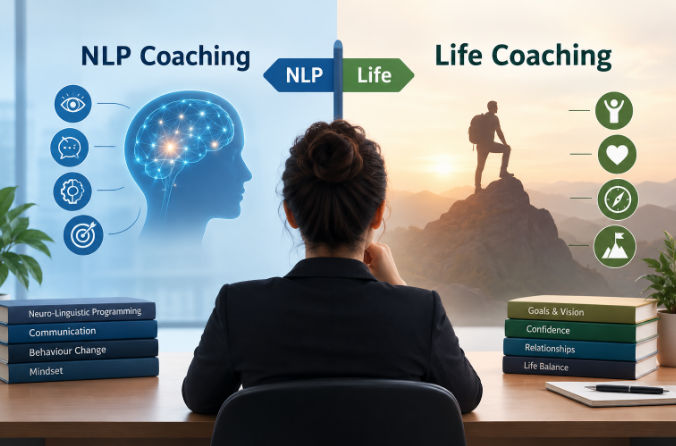
Choosing between NLP coaching and life coaching starts with understanding how you want to work with clients. Both approaches support personal and professional development through different methods and areas of focus. For someone planning to become a certified life coach, the choice also involves understanding how training connects with International Coaching Federation (ICF) credentials. Comparing both approaches can help aspiring coaches select training that reflects their coaching style and long-term professional goals.
What Is NLP Coaching?
NLP coaching utilizes Neuro-Linguistic Programming techniques to examine how language, thought patterns, and behaviors interconnect, helping clients identify and modify specific patterns. Coaches employ methods like reframing, visualization, and language pattern exploration to facilitate targeted change within their scope of practice.
This approach often appeals to coaches who enjoy using specific techniques and exercises. NLP-informed coaching may include reframing, visualization, goal-oriented questioning, and language-pattern exploration. These methods can complement coaching conversations when applied within the coach’s training, competence, and professional scope.
What Is Life Coaching?
Life coaching takes a broad, client-centered approach to personal and professional development. Coaches partner with clients to explore goals, develop insights, consider possibilities, and turn learning into action. Conversations may cover career direction, personal growth, habits, relationships, or important life transitions.
A certified life coach may use active listening, reflective questions, goal-setting, and accountability to support progress. Clients take an active role in deciding what they want to achieve and how they want to move forward, while the coach facilitates reflection, learning, and action.
NLP Coaching vs Life Coaching: What Are the Key Differences?
The two approaches become clearer when compared by how they typically support coaching conversations. Key differences include:
| Factor | NLP Coaching | Life Coaching |
| Primary Focus | Language, thought patterns, beliefs, and behaviors | Goals, awareness, and personal or professional development |
| Common Methods | Reframing, visualization, language techniques, and NLP exercises | Reflective questions, active listening, goal-setting, and accountability |
| Coach’s Approach | Uses relevant NLP techniques based on client goals | Partners with clients to encourage insight and action |
| Client Experience | Uses NLP-informed techniques to explore language and behavioral patterns | Uses coaching conversations to develop awareness, choices, and client-led actions |
| Typical Scope | Often addresses specific patterns or desired changes | Covers varied personal and professional goals |
| Training Focus | NLP principles and coaching applications | Coaching competencies, ethics, communication, and client development |
The main distinction lies in methodology. NLP coaching uses specific techniques to explore language and behavioral patterns, while life coaching takes a broader approach to supporting awareness, goals, choices, and client-led action.
How Does ICF Certification Apply to NLP and Life Coaching?
Knowing that ICF credentials focus on coaching competencies can help aspiring coaches feel respected and motivated to pursue recognized professional standards.
NLP education may count toward coach-specific education when it is explicitly taught as coaching education aligned with ICF standards. Aspiring coaches can therefore consider their preferred methodology while reviewing the education and other requirements for the ICF credential they plan to pursue.
Which Coaching Style Is Right for You?
Choosing a coaching style that matches your personal preferences can help you feel empowered and confident in your coaching development and future practice.
An NLP-Informed Approach May Suit You If You:
- Prefer Technique-Based Coaching: You enjoy applying defined methods that help clients examine experiences from different perspectives.
- Focus On Language And Patterns: You are interested in how language and thinking patterns relate to clients’ goals, choices, and behaviors.
- Enjoy Focused Exercises: You prefer using tools such as reframing and visualization when they support a client’s coaching goals.
These preferences can make NLP techniques a useful part of your developing coaching approach.
A Life Coaching Approach May Suit You If You:
- Prefer Client-Led Discovery: You enjoy conversations where clients reflect, develop insights, and determine meaningful next steps.
- Value Broad Goal Exploration: You want to support goals related to careers, personal development, habits, relationships, and life transitions.
- Enjoy Reflective Conversations: You prefer active listening, thoughtful questions, goal-setting, and accountability as central coaching practices.
These preferences align with a coaching style centered on partnership, reflection, client autonomy, and progress toward meaningful goals.
Can You Combine NLP And Life Coaching?
NLP and life coaching can work together when relevant NLP techniques form part of a broader coaching approach. A coach may use reflective questioning and client-led goal-setting while drawing on suitable NLP methods to explore language, perspectives, or behavioral patterns.
The approach works by aligning the method with the client’s goals and professional coaching competencies. ICF competencies cover areas including ethical practice, trust and safety, active listening, client insight, and client growth, providing a professional framework for developing an individual coaching style.
How Should You Choose The Right ICF Certification Path?
Once you identify your preferred coaching style, compare training and credential pathways using factors such as:
- Coaching Style: Consider whether you prefer technique-based exploration, client-led conversations, or a mix of both.
- Training Curriculum: Review the skills taught and opportunities to practice the coaching methods you want to develop.
- ICF Accreditation: Check the program’s current accreditation and how its education applies toward your intended credential.
- Practical Experience: Consider opportunities for coaching practice, feedback, performance evaluation, and mentor coaching.
- Credential Goal: Review the education, coaching experience, mentor coaching, performance evaluation, and examination requirements for your intended credential. ACC requires at least 60 education hours and 100 coaching experience hours; PCC requires 125 education hours and 500 experience hours; and MCC requires 200 education hours and 2,500 experience hours, along with current or previous PCC status.
When reviewing training providers such as Symbiosis Coaching, compare the NLP and life coaching curriculum, learning format, ICF-accredited education options, and applicable credential pathway with your professional goals.
Conclusion
NLP coaching may suit coaches who enjoy exploring language, thought patterns, and behavior through specific techniques. In contrast, life coaching may appeal to those who prefer broad, client-led conversations focused on awareness, goals, and action. ICF credentials offer a professional pathway based on coaching education, experience, competencies, and assessment. By considering your preferred coaching methods alongside your intended ICF credential, you can select training that supports the coaching style and professional direction you want to develop.