Mobile has achieved unprecedented dominance in digital engagement. Fifty-eight percent of global web traffic now originates from mobile devices, and in many emerging markets mobile is the primary, often only, means of accessing digital services. The mobile marketing technology sector, valued at $6.8 billion in 2025, encompasses the platforms, infrastructure and analytics tools that enable brands to reach, engage and convert audiences on smartphones and tablets. Understanding this ecosystem is essential for any organisation serious about digital marketing effectiveness.
The Mobile Marketing Technology Landscape
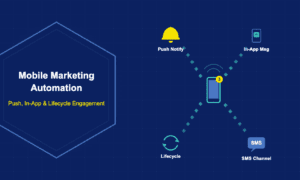
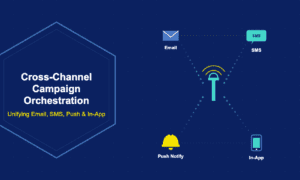
Mobile marketing technology spans a broad spectrum from channel-specific communication tools to sophisticated analytics and attribution platforms. The ecosystem can be broadly divided into five categories: mobile advertising technology, which enables targeted paid acquisition on mobile devices; messaging platforms covering push notifications, in-app messaging and SMS; mobile analytics and attribution, which measure engagement and conversion across mobile touchpoints; app store optimisation tools; and mobile-specific personalisation and engagement platforms.
The complexity of mobile marketing is compounded by platform fragmentation. iOS and Android represent fundamentally different technical environments with distinct development requirements, app store policies and advertising ecosystems. Each platform has also implemented privacy controls that significantly affect the data available to marketers. Apple’s App Tracking Transparency framework, introduced in 2021, required apps to explicitly request permission to track users across apps and websites for advertising purposes. The result was a dramatic reduction in available mobile advertising identifiers, forcing significant adaptation across the entire mobile marketing technology ecosystem.
Push Notification Platforms
Push notifications remain one of the highest-engagement channels available to mobile marketers. When delivered with appropriate timing and relevance, push notifications achieve open rates far exceeding email, with direct links into app experiences that reduce friction for conversion. The technology enabling sophisticated push notification programmes has advanced considerably beyond simple broadcast messages to support rich media, interactive notifications, personalised content and intelligent delivery optimisation.
Platforms including Braze, Airship and CleverTap provide enterprise-grade push notification infrastructure with personalisation capabilities, A/B testing, delivery time optimisation and detailed engagement analytics. These platforms integrate with customer data platforms to enable behavioural triggering, sending notifications based on specific user actions, inaction thresholds or predicted engagement windows. A user who abandons a checkout might receive a personalised notification with the abandoned item within minutes; a user who has not engaged with the app for seven days might receive a re-engagement message with a relevant offer.
Rich push notifications, which include images, videos or interactive buttons, consistently outperform plain text notifications in engagement metrics. The ability to present product images, event details or personalised content within the notification itself reduces the cognitive effort required for engagement and increases the likelihood that users act without even opening the full app experience.
SMS and RCS Marketing Technology
SMS marketing has experienced a significant renaissance, driven by extremely high open rates and the ubiquity of text messaging across demographics. Marketing SMS messages consistently achieve open rates above 90 percent, with most messages read within minutes of delivery. This performance profile has made SMS a high-value channel for time-sensitive communications including promotional offers, appointment reminders, shipping notifications and authentication codes.
Platforms including Twilio, Attentive and Klaviyo provide marketing SMS infrastructure with personalisation, segmentation, compliance management and detailed analytics. Compliance requirements for SMS marketing are stringent, with explicit opt-in consent required in most jurisdictions and clear opt-out mechanisms mandatory. Leading platforms manage consent records carefully and provide tools for maintaining regulatory compliance across multiple markets.
Rich Communication Services (RCS) represents the evolution of SMS, enabling branded messaging with rich media, interactive buttons, verified sender identity and read receipts. Available on Android devices and increasingly on iOS following Apple’s adoption of the RCS standard, this technology brings app-like experiences to the native messaging interface without requiring recipients to have a specific app installed. Brands including airlines, banks and retailers have deployed RCS messaging to deliver interactive boarding passes, account summaries and product catalogues directly within the messaging inbox.
| Mobile Channel | Avg Open Rate | Best Use Case | Opt-In Required |
|---|---|---|---|
| Push Notification | 7-10% | Real-time engagement, re-engagement | Yes (OS-level) |
| SMS | 90%+ | Urgent comms, promotions, reminders | Yes (explicit) |
| RCS | 70-85% | Rich product messaging, interactive content | Yes (carrier-level) |
| In-App Message | 30-40% | Onboarding, feature discovery, offers | No (in-session) |
| Email (mobile) | 20-30% | Newsletters, detailed communications | Yes (explicit) |
Mobile Attribution Technology
Accurately attributing mobile app installs, in-app conversions and revenue to the marketing activities that drove them is one of the most technically complex challenges in digital marketing. Mobile measurement partners (MMPs) have built specialised infrastructure to address this challenge, becoming essential components of any serious mobile marketing technology stack.
AppsFlyer, Adjust and Branch are the three dominant players in mobile attribution, each providing SDK-based measurement that tracks the complete user journey from ad exposure through app install to in-app events. These platforms maintain integrations with hundreds of advertising networks, social platforms and media partners, normalising attribution data across all sources into a unified view of marketing performance.
The introduction of SKAdNetwork, Apple’s privacy-preserving attribution framework for iOS, fundamentally changed mobile measurement on Apple devices. SKAdNetwork provides aggregate attribution data to advertisers without exposing individual user identities, but at the cost of significantly reduced granularity, delayed reporting and limited campaign data dimensions. Mobile measurement partners have invested heavily in modelling and estimation techniques that extend the utility of SKAdNetwork data, combining it with probabilistic matching, aggregated event measurement and modelled conversions to reconstruct a reasonable picture of campaign performance.
| Attribution Platform | Key Strengths | Best For |
|---|---|---|
| AppsFlyer | Largest network integrations, advanced fraud protection | Enterprise apps with complex media mix |
| Adjust | Strong analytics suite, European data residency | Privacy-conscious, GDPR-compliant programmes |
| Branch | Deep linking specialisation, cross-platform journeys | Organic growth and web-to-app conversion |
Deep Linking and User Experience Technology
Deep linking technology enables marketing campaigns to route users to specific in-app destinations rather than app storefronts or generic homepages, dramatically improving post-click user experience and conversion rates. A user clicking a promotional link for a specific product should land directly on that product page within the app, not the app’s home screen, requiring the user to navigate to the relevant content independently.
Deferred deep linking extends this capability to handle the case where a user who clicks a link does not yet have the app installed. After completing the app install, the user is automatically routed to the intended destination within the app, maintaining the context of the original marketing message through the install journey. Branch has built its business substantially on this deferred deep linking capability, and the technology has become standard in enterprise mobile marketing programmes.
Privacy Changes and the Future of Mobile Marketing Technology
The trajectory of mobile marketing technology is shaped significantly by privacy regulation and platform policy changes. Apple’s ATT framework has already transformed iOS advertising, and continued evolution of privacy controls across both major mobile platforms will require ongoing adaptation by marketers and technology vendors alike.
The response from the mobile marketing technology ecosystem has been to invest heavily in privacy-preserving measurement techniques, first-party data strategies and contextual targeting capabilities that do not rely on individual device identifiers. Incrementality testing, which uses randomised holdout groups to measure the true lift from marketing activities, has gained significant traction as a more reliable measurement approach in environments where attribution based on individual tracking is constrained.
Organisations building durable mobile marketing capabilities are investing in owned channels, particularly push notifications and in-app messaging, where the relationship with opted-in users provides a stable foundation for engagement that is not subject to third-party platform changes. Combined with robust first-party data infrastructure and privacy-preserving measurement approaches, these investments position brands for continued mobile marketing effectiveness regardless of how the regulatory and platform landscape evolves.
Related reading: Mobile Advertising in the US
Data from Statista’s digital market outlook shows that global digital spending continues to grow at double-digit rates, with mobile channels accounting for an increasingly dominant share of total transactions.
PwC’s analysis of financial services trends through 2025 highlights the convergence of technology and media as a defining dynamic, with data-driven personalisation becoming the primary competitive differentiator.
For more coverage on related topics, explore our dedicated section on technology insights.