
Mibro AeroPace Review: A Lightweight Running Watch with AI Coaching

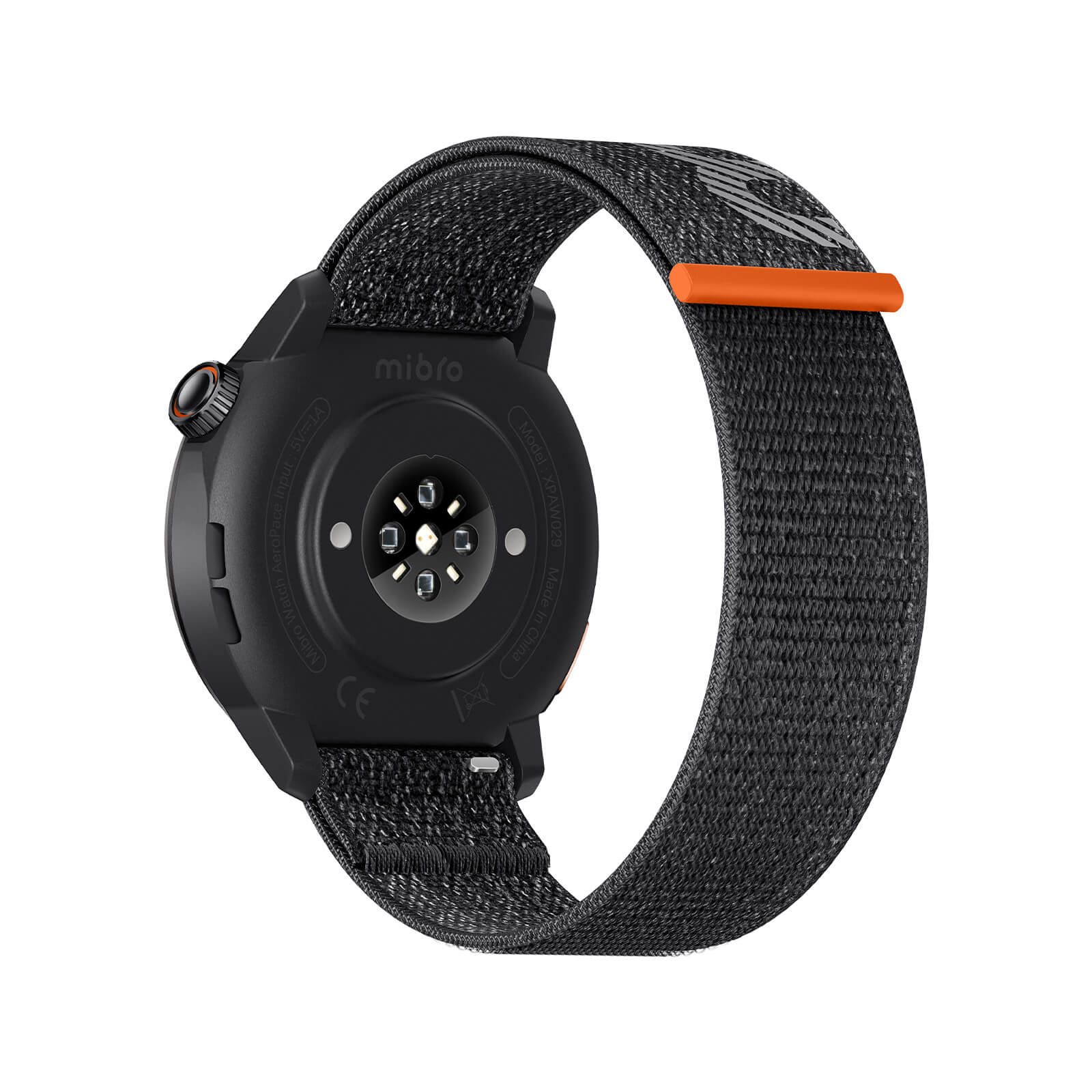
The Mibro AeroPace is a lightweight sports smartwatch aimed at runners who want more than a lap counter. It pairs a 32-gram body with dual-band GPS, a full sensor suite, and Mibro Coach, an AI training system that turns running data into a structured, adaptive plan. This review focuses on three areas that matter most to its target user: running performance, health monitoring, and the Mibro Coach experience.
Key specs at a glance
- 44.5 mm round case, 9.2 mm thick; 32 g with woven strap, 39 g with silicone strap
- 1.32″ circular AMOLED, 466 × 466 px, 353 PPI, up to 2,000 nits peak, 60 Hz
- Dual-band GNSS (L1+L5), GPS / BeiDou / GLONASS / Galileo / QZSS
- Offline vector maps, route tracking, deviation alerts, one-tap back-to-start
- Multi-LED optical heart rate sensor, SpO₂, accelerometer, gyroscope, magnetometer, barometric altimeter
- Advanced running metrics: VO₂ max, vertical oscillation, ground contact time, training load, recovery time
- Mibro Coach: five virtual coaches, Just Talk feature
- Up to 8 days typical battery, 12 hours continuous GPS, 5 ATM water resistance
- Launch price: $149.99
Design and Display
The running watch balances a sporty identity with everyday wearability. The round 44.5 mm case is just 9.2 mm thick and uses an aluminum bezel over a fiberglass-reinforced polymer body. The woven strap brings the total weight to 32 g, while the silicone strap weighs 39 g; both straps are included. Standard 22 mm lugs make third-party straps easy to fit.
The low weight and slim profile pay off in two scenarios that matter to runners: long training sessions on the wrist, and overnight wear for sleep tracking. The woven material reduces sensor movement on the skin, while silicone is easier to clean after a sweaty session. Water resistance is rated at 5 ATM, which covers rain, sweat, and showering, but high-pressure jets, hot water, and diving are not recommended.
The 1.32″ circular AMOLED panel offers 466 × 466 pixels at 353 PPI with 24-bit color and a 60 Hz refresh rate. Text, watch faces, and sports metrics remain sharp, and the 60 Hz screen makes transitions feel smooth. The 2,000-nit peak brightness is especially useful outdoors: a glance at pace or route does not require seeking shade. An ambient light sensor adjusts brightness automatically to save battery.
Running Performance
Dual-Band GPS
The AeroPace uses a 12 nm dual-band GNSS chip that receives both L1 and L5 frequencies and supports five satellite constellations. Dual-band reception reduces position errors caused by signals reflecting off buildings, trees, and terrain. Mibro also adds AI-based positioning algorithms on top of the hardware.
Offline Maps and Navigation
Global vector maps can be downloaded through the Mibro Fit app and stored on the watch, with free updates. Once loaded, the watch supports route tracking, alerts when the runner deviates, and a one-tap return-to-start function. This combination is uncommon at this price and makes the AeroPace useful for exploring unfamiliar roads or trails without carrying a phone. The small screen limits peripheral geographic context, so the experience is best treated as on-wrist guidance rather than a full expedition navigator.
Running Metrics Captured
During a session, the watch records pace, distance, heart rate, cadence, and stride length. Post-run, Mibro Coach layers on advanced running dynamics such as vertical oscillation and ground contact time, alongside training load and recovery time derived from heart rate variability. These metrics are most useful when read together over time rather than judged from a single run.
Sensors and Health Monitoring
Heart Rate Sensor
The rear sensor cluster is built around a redesigned multi-LED optical matrix paired with an updated algorithm, intended to stabilize readings during intense effort. A barometric altimeter, accelerometer, gyroscope, and magnetometer supply elevation, movement, orientation, and running-dynamics data. The same optical sensor also measures blood oxygen saturation (SpO₂).Wrist-based optical heart rate is convenient and covers zone-based training and general effort control for the target audience. It remains an estimate, however: irregular movement degrades accuracy, and short intervals or rapid intensity changes still favor a chest strap.AeroPace covers the routine health suite expected in a modern sports watch:
- 24/7 heart rate monitoring, with automatic background measurement
- Blood oxygen (SpO₂) spot checks and automated tracking
- Sedentary reminders after long periods of inactivity
- Steps, active calories, and distance throughout the day
Automatic monitoring means the watch collects data without manual starts, which suits continuous trend watching. As with all wrist-worn devices, the readings are directional references, not medical-grade measurements, and a single data point says little by itself. Value comes from reviewing trends over weeks in Mibro Fit.
Sleep Tracking
The 32 g woven-strap build makes overnight wear practical. Sleep stages and duration are captured at night and reviewed in the app, where they feed into recovery guidance. Because rest is a core part of any training routine, sleep data is also used by Mibro Coach to judge whether the user is ready for the planned session. Consistency matters more than any single night.
Mibro Coach: The AI Training Companion
Mibro Coach is the feature that distinguishes the AeroPace from a generic sports watch. Developed by the Mibro Sports Science Lab, it combines exercise physiology models with AI agents to close the loop between recording a run and planning the next one. Training is organized as a cycle: assessment, planning, execution, recovery, and post-session analysis.
Personalized, Adaptive Plans
Setup begins in Mibro Fit, where the user sets level, weekly availability, and goal. Mibro Coach offers more than 20 programs lasting 4 to 20 weeks, ranging from building the running habit and completing a first 5K or 10K up to half marathon and marathon training. The calendar then syncs to the watch so each session can be followed from the wrist.What separates it from a static training table is adaptation. Sessions factor in sleep quality, fatigue, recovery, and training status. If the data suggests the user is not ready for the planned load, the system lowers intensity or recommends extra rest. This matters most for beginners, whose typical mistake is not under-training but alternating long breaks with sudden spikes in volume or intensity.
Five Virtual Coaches and Just Talk
Users can choose among five virtual coaches with different communication styles. Some deliver direct, demanding feedback; others explain the reasoning behind a session or reinforce progress positively. The plan itself does not change, but the tone does — a customization aimed at improving adherence during the early weeks when routines are still forming.The Just Talk feature adds multi-turn natural conversation with the AI coach. Instead of digging through menus, the user can ask why a given session is easy, what a specific metric means, or how to fit training into a changing schedule. Proactive alerts flag shifts in training status and suggest plan adjustments.
What the Metrics Actually Mean
The advanced numbers are most useful when interpreted together:
- VO₂ max — an estimate of aerobic capacity.
- Training load — quantifies accumulated stress from recent sessions.
- Recovery time — based on heart rate variability, suggests when the body can be loaded again.
- Vertical oscillation — up-and-down body movement, a cue for running economy.
- Ground contact time — how long each foot stays on the ground per step.
On their own these figures can overwhelm; connected to history, sleep, and goals, they become actionable guidance. Mibro Coach presents strengths, areas to improve, and next recommended steps rather than isolated charts. Expectations should remain realistic: the coach provides structure and context, but it does not replace medical evaluation or a qualified trainer when injuries, conditions, or ambitious targets are involved. The first 30 days are included; Afterward, Mibro Coach moves to a subscription, at $4.99/month.
Battery Life
Mibro rates the AeroPace at up to 8 days of typical use and 12 hours of continuous GPS. Real-world testing approaches a week with general daily use and around four days when GPS is used frequently for training. Magnetic charging simplifies topping up. The 12-hour GPS window comfortably covers ordinary race distances, but it falls short of the endurance figures offered by specialist watches, so ultra events are outside its design brief.
Verdict
The Mibro AeroPace has a clear identity: a thin, light watch that pairs solid running hardware with an AI coaching layer. Its strengths are concentrated where runners actually feel them — 32 g on the wrist, a bright AMOLED display, dual-band GPS with offline maps, and a sensor suite that supports both effort tracking and recovery. Mibro Coach is the real differentiator: adaptive plans, five coach voices, and conversational guidance turn raw metrics into a reason-based program, which is especially valuable for beginners who do not know how to distribute sessions or interpret their own data.







Comment