
Master Advanced Fitness Using Functional Trainers at Home

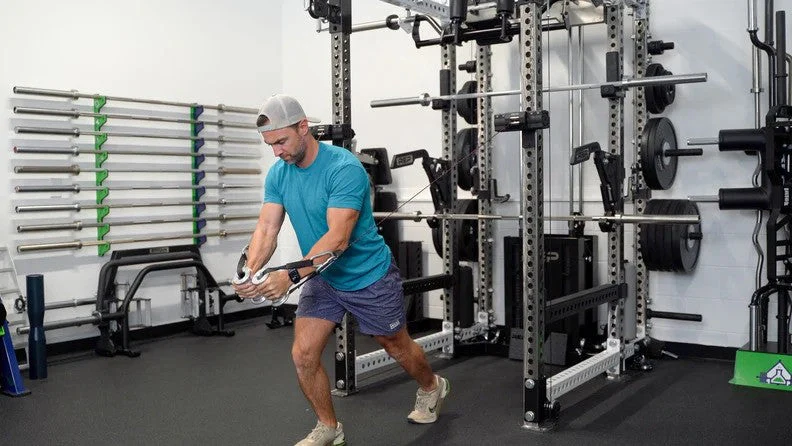
If you’ve been training seriously for years, you know the frustration of hitting a wall. Your home setup that once felt challenging now barely pushes you past maintenance. The dumbbells max out too low, the barbell feels limiting without a spotter, and your progress has flatlined. This is where functional trainers fundamentally change the equation for advanced home training.
Unlike conventional equipment that locks you into fixed planes of movement, functional trainers offer the resistance variability and movement freedom that experienced lifters need to keep progressing. They bridge the gap between a commercial gym’s cable station versatility and the convenience of training at home. In this article, you’ll discover how to leverage functional trainers to break through plateaus using progressive overload strategies, targeted accessory work, and exercise adaptability that keeps your muscles guessing. Whether you’re chasing strength records or refining muscular balance, the practical frameworks ahead will give you a clear path to continued advancement without ever waiting for a rack again.
The Foundation: Why Functional Trainers are Essential for Advanced Home Gyms
A functional trainer consists of two independent weight stacks connected to adjustable pulleys via steel cables, typically mounted on a freestanding frame. The pulleys slide along vertical tracks, allowing you to set resistance at virtually any height from floor level to overhead. This simple architecture creates an extraordinarily versatile training station that outperforms racks of specialized machines.
For advanced lifters, functional trainers for home gym setups solve problems that dumbbells and barbells simply cannot. Fixed free weights limit you to gravity-dependent resistance vectors, meaning you can only load muscles in a downward pull. Cable-based systems apply tension from any angle—horizontal, diagonal, low-to-high, high-to-low—which lets you target muscles through their complete strength curves and in sport-specific movement patterns. Compound movements like standing cable presses, split-stance rows, and rotational chops train stabilizers and prime movers simultaneously under constant tension, something plate-loaded machines with guided tracks cannot replicate.
The space efficiency argument is equally compelling. A single functional trainer occupying roughly a 5×4-foot footprint replaces a lat pulldown, cable crossover station, low row, and dozens of isolation machines. For the advanced trainee who has outgrown a basic rack-and-bench arrangement, this consolidation means expanding exercise selection dramatically without expanding your training space. The independent arms also allow unilateral work that exposes and corrects strength asymmetries—a critical concern once you’re handling loads heavy enough for imbalances to cause injury.
Mastering Progressive Overload with Functional Trainer Adjustability
Advanced trainees already understand that the body adapts to repeated stimuli. The challenge isn’t knowing you need progressive overload—it’s finding practical ways to implement it when your equipment seems maxed out. Functional trainers solve this problem through multiple adjustment dimensions that go far beyond simply adding weight to a bar.
Understanding Progressive Overload in Strength Training
Progressive overload is the systematic increase of training demands to force continued adaptation. For advanced lifters, this principle extends beyond adding five pounds each week. It encompasses manipulating time under tension, range of motion, movement complexity, and resistance angles. When linear weight progression stalls—as it inevitably does after years of training—these secondary overload variables become your primary drivers of growth. Functional trainers uniquely accommodate all of them within a single piece of equipment.
How Adjustable Settings Enable Progressive Overload
The pulley height adjustment on a functional trainer lets you shift resistance angles by mere inches, creating a meaningfully different stimulus on the same muscle group without changing exercises entirely. A chest fly performed from a low pulley position emphasizes the clavicular head differently than one set at shoulder height, and you can progress through these angles systematically across training blocks. Weight stack increments—often available in 2.5 or 5-pound jumps—allow micro-loading that barbells require add-on plates to achieve. You can also manipulate cable length and body positioning relative to the pulleys to alter the resistance curve mid-set. For example, stepping further from the stack during a Pallof press increases horizontal pull without touching the pin, giving you a progression tool that requires zero additional load. Combining these variables means you can create dozens of distinct progressive challenges for a single movement pattern across an entire mesocycle.
Expanding Your Routine: Accessory Work and Exercise Adaptability
Once your main lifts are programmed and progressing, the real differentiator for advanced trainees becomes what you do around those lifts. Accessory work and exercise adaptability aren’t optional extras at this level—they’re the mechanisms that keep you injury-free, address weak links, and ensure balanced muscular development that compounds over months and years.
The Role of Accessory Work in Advanced Fitness
Accessory work targets the smaller muscle groups and movement patterns that your primary lifts underserve. For an advanced trainee, these movements serve dual purposes: they build the supporting structures that allow heavier compound loads, and they correct imbalances that accumulate from years of favoring dominant movement patterns. A functional trainer excels here because cable-based resistance lets you isolate muscles like the rear deltoids, rotator cuff complex, hip abductors, and deep spinal stabilizers with precision that free weights make awkward or impossible. Face pulls at various heights address scapular health. Single-arm cable curls with a slight forward lean hit the long head of the biceps under constant tension through full range. Cable pull-throughs reinforce hip hinge mechanics without spinal compression. These aren’t vanity exercises—they’re the structural maintenance that prevents your heavy deadlift or overhead press from breaking down at the weakest link.
Leveraging Exercise Adaptability for Comprehensive Training
Exercise adaptability means you can modify angle, stance, grip, tempo, and resistance profile within a single session to create novel stimuli without learning entirely new movements. A cable crossover becomes a different exercise when you shift the pulleys from high to mid-height, change from a bilateral to alternating pattern, or add a half-second pause at peak contraction. Rotational movements like Pallof presses, woodchops, and cable punches train the transverse plane that barbells almost entirely neglect, building core anti-rotation strength that transfers directly to athletic performance and injury resilience. Standing single-leg cable rows challenge balance and hip stability simultaneously with upper back strength. This adaptability means your training never grows stale, and your muscles never fully accommodate to a fixed stimulus—exactly the environment advanced lifters need to continue progressing when simple weight increases are no longer viable week to week.
Your Action Plan: Step-by-Step Guide to Advanced Fitness Mastery
Knowing the theory behind functional trainers is one thing—putting it into practice requires a structured approach. The following action plan gives you a sequential framework to integrate your functional trainer into an advanced program that delivers measurable results. Each step builds on the previous one, creating a system that evolves with you rather than becoming another piece of equipment you outgrow.
Step 1: Assessing Your Current Fitness Level and Goals
Before touching the cables, establish your baseline. Test your current maxes on key movement patterns—horizontal push, vertical pull, hip hinge, and rotation. Document any asymmetries by comparing single-arm or single-leg performance between sides. Then set specific, measurable goals with timelines: adding a defined amount of volume to your weakest pattern within eight weeks, or eliminating a strength discrepancy between sides within a training block. These benchmarks give your programming direction and your progress checkpoints meaning.
Step 2: Setting Up Your Functional Trainer for Optimal Use
Position your trainer with at least three feet of clearance on all sides to accommodate lunging, stepping, and rotational movements. Mark your most-used pulley positions with tape or a marker on the track so you can replicate setups precisely between sessions. Attach varied handles—rope, D-grip, straight bar, ankle strap—and keep them accessible. Modern smart functional trainers from brands like Speediance even offer digital tracking of pulley positions and resistance settings, simplifying the consistency that precise programming demands. Verify that your cable paths run smoothly without friction at every height setting, and confirm weight stack pins seat fully before loading. Consistent setup eliminates variables that corrupt your tracking data.
Step 3: Designing a Progressive Overload Program
Structure your weekly training around four to five sessions, each emphasizing a primary movement pattern paired with complementary cable work. Use a three-week wave for load progression: week one at a moderate intensity establishing movement quality at a new angle or position, week two adding weight or reps, and week three pushing toward a rep max or introducing a tempo challenge. On the fourth week, deload by reducing volume while maintaining intensity. Rotate your pulley angles every mesocycle so the same muscle groups face fresh resistance profiles each month. This framework prevents accommodation without requiring constant exercise swapping.
Step 4: Incorporating Accessory Work and Adapting Exercises
Dedicate the final fifteen minutes of each session to two or three accessory movements chosen based on your Step 1 assessment. Prioritize movements that address your identified weak links—external rotation work if your shoulders lag, single-leg cable RDLs if hip stability limits your deadlift, or anti-rotation holds if your core collapses under heavy loads. Every two weeks, adapt one variable on each accessory: shift the pulley one notch, switch from bilateral to unilateral, or add a two-second eccentric. Small modifications keep these movements productive without overcomplicating your program.
Step 5: Monitoring Progress and Adjusting Your Routine
Log every session with specific details: pulley position, handle used, weight, reps, tempo, and any body positioning notes. Review this data biweekly against your Step 1 goals. If a movement stalls for two consecutive sessions, change one variable—angle, rep scheme, or rest period—rather than overhauling the exercise. Reassess your baseline tests every six to eight weeks and update your goals accordingly. This disciplined tracking turns your functional trainer from a versatile tool into a precision instrument for continuous advancement, ensuring you never plateau from neglect or randomness in your programming.
Building Lasting Progress with Your Functional Trainer
Functional trainers represent more than an equipment upgrade—they’re the infrastructure that makes continued advancement possible within your home gym. By providing infinite resistance angles, micro-loading capability, and unilateral training options, they eliminate the ceiling that conventional equipment imposes on experienced lifters. Progressive overload becomes multidimensional when you can manipulate pulley height, body position, and movement complexity alongside load increases. Accessory work transforms from an afterthought into a precision tool for addressing weak links and preventing the injuries that derail long-term progress.
The action plan outlined here gives you a repeatable system: assess honestly, set up deliberately, program intelligently, and track relentlessly. These aren’t one-time steps but a continuous cycle that compounds results over months and years. Advanced fitness isn’t about dramatic overhauls or exotic exercises—it’s about systematic manipulation of training variables applied consistently. Your functional trainer provides the mechanical versatility to support that approach indefinitely. Start with your baseline assessment this week, commit to the tracking discipline, and let the framework drive your progress forward without guesswork or stagnation.







Comment