
M3U, Xtream Codes, and Stalker: Why IPTV Compatibility Still Matters in 2026

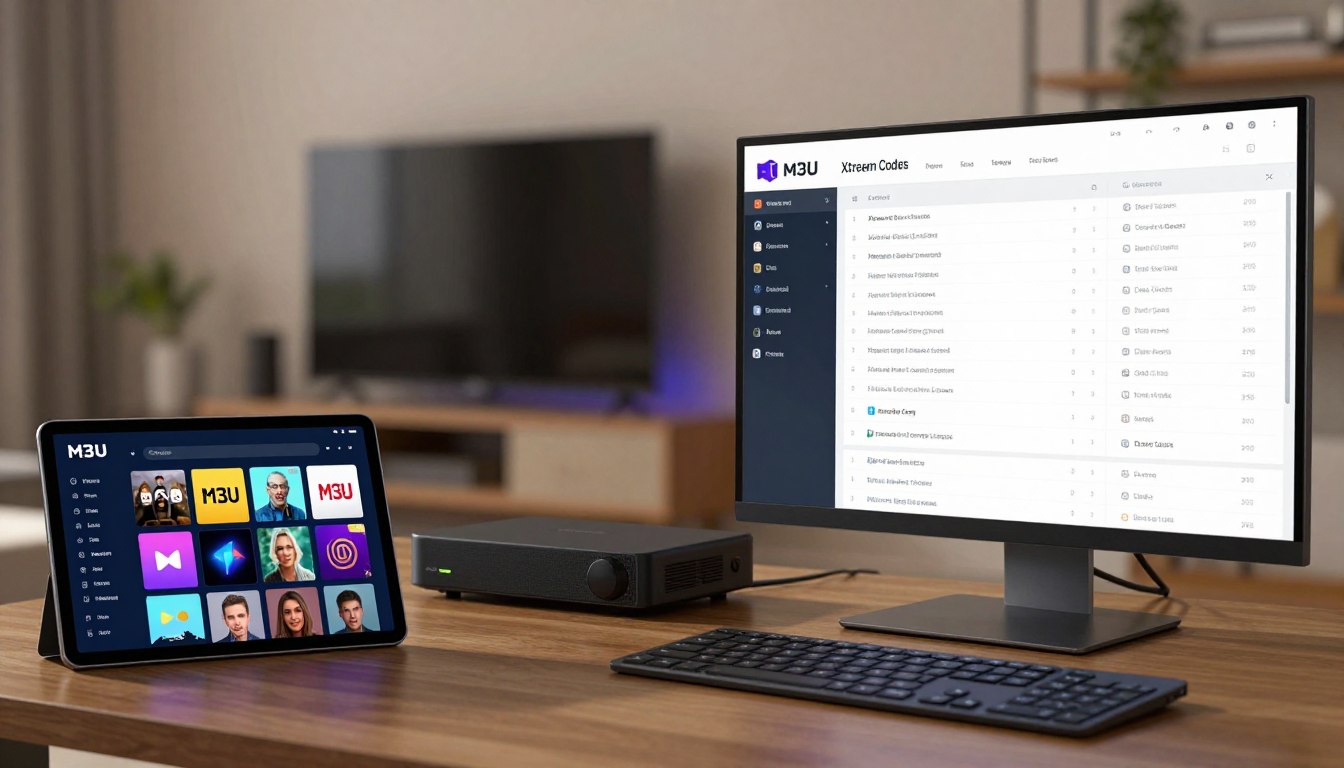
IPTV has become a mature part of the streaming landscape, but the way users connect to services is still far from uniform. Behind the simple idea of “watching TV over the internet” are several different source types, each with its own strengths, limitations, and setup quirks.
For users, this matters because the source format affects the entire viewing experience. It influences how channels appear, whether movies and series are separated properly, how guide data works, and how easy it is to troubleshoot playback issues.
The three formats most users still encounter are M3U, Xtream Codes, and Stalker or MAC Portal connections.
M3U is the most familiar. At its simplest, it is a playlist file or URL containing stream entries. Each entry may include a channel name, logo, group title, and sometimes information that links it to an electronic program guide. The advantage is portability. M3U works across many apps and devices. The downside is inconsistency. Some playlists are clean and well structured. Others are cluttered, mislabeled, or missing useful metadata.
Xtream Codes is different because it works more like a login API. Instead of loading a static playlist, the player connects with a server URL, username, and password. When implemented well, this can return live TV, categories, movies, series, and EPG data in a more organized way. For many users, that makes Xtream easier to browse than a raw playlist.
Stalker and MAC Portal systems come from a more set-top-box-style IPTV world. They can still be relevant for providers and users with legacy portal workflows. These sources may behave differently from M3U or Xtream, which is why support cannot be assumed across every app.
This is where player compatibility becomes important. A user may have a working source, but if the player only supports one connection type, or handles the data poorly, the experience suffers. A multi-format M3U, Xtream Codes, and Stalker IPTV player such as IPTV Player Zero gives desktop users a way to work with the source type they already have rather than forcing them into a different setup.
Compatibility is not just about logging in. It is about what happens after the connection succeeds.
For live TV, the player needs to organize large channel lists into something searchable and usable. Categories, favorites, recently watched channels, and fast switching all matter more as the list grows.
For EPG data, the player needs to display schedule information clearly and provide tools for common problems, such as time offsets. However, EPG quality still depends heavily on the source. If a provider does not return good guide data, the player can only show what it receives.
For movies and series, structure matters again. A good Xtream source may separate films, shows, seasons, and episodes. A capable player can turn that into a proper browsing experience with progress tracking, search, and cleaner navigation.
For troubleshooting, the format also matters. A failed stream can have many causes: expired credentials, provider restrictions, broken URLs, unsupported formats, DRM, regional blocking, server overload, or local network problems. Users often blame the app first, but the real failure point may be upstream. Clear errors and format-aware handling make diagnosis much easier.
There is also a legal and practical distinction that should not be ignored. IPTV technology is neutral. M3U, Xtream Codes, and portal systems can be used in licensed or unlicensed environments. The legitimacy of a setup depends on content rights and the source provider, not the file format or API. A responsible player does not provide channels, playlists, or subscriptions. It gives users software to play sources they supply themselves.
In 2026, the strongest IPTV setups are not defined by one magic format. They are defined by flexibility. M3U remains useful because it is simple and widely supported. Xtream Codes remains popular because it can provide richer structure. Stalker and MAC Portal support matters for users whose providers still rely on that workflow.
The player’s job is to handle those differences without making the user think about them every time they want to watch something.
As IPTV continues to evolve, compatibility will remain one of the most important parts of the user experience. Better codecs, faster networks, and stronger content delivery all help, but the final layer is still the software on the viewer’s device. That is where raw source data becomes usable television.







Comment