
LED Corn Light Bulb Guide: How to Choose the Right One

A 400-watt metal halide lamp draws about 450 watts at the wall once its ballast is counted. Many LED corn bulbs in the 80 to 120 watt range are sold as direct replacements. The savings are real. But only if you match the bulb to the fixture.
This guide covers what to check before you buy.
What Is an LED Corn Light Bulb?
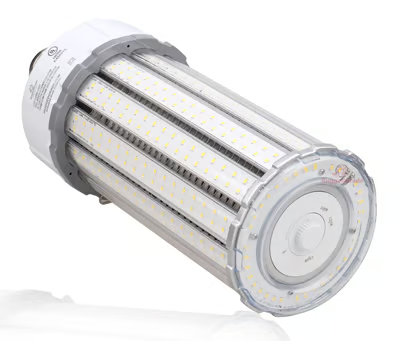
An LED corn light bulb has rows of small LED chips around a central metal column. The shape looks like an ear of corn. The metal core pulls heat away from the chips. Many models screw into a standard socket. That makes them popular for retrofits.
Why Do People Switch to LED Corn Bulbs?
Old lamps waste power and need frequent replacement. Corn bulbs address both problems. The points below explain what you gain.
- Lower power draw. Same brightness, far fewer watts.
- Longer rated life. Good models are rated for 50,000 hours or more.
- Instant light. Metal halide lamps need several minutes to warm up. After a power cut, they need a cool-down before restarting. LEDs do not.
- Less heat. Heat still builds at the base, but the output is much lower than HID lamps.
Always check the manufacturer’s rated life and warranty. Ratings vary widely between brands.
6 Specs to Check Before You Buy
Most buying mistakes come from skipping one of these specs. Each one decides whether the bulb fits, works, and lasts. Check them in this order.
- Base Type
The base is the threaded part. Standard household sockets use E26 in North America and E27 in most other regions. Larger fixtures, like high bays and street lights, use the E39 or E40 mogul base. A wrong base means a return. Read the socket or the old bulb first.
- Lumens, Not Watts
Watts measure power use. Lumens measure light output. Compare lumens. Find the lumen rating of your old bulb, then match it or exceed it slightly.
Be careful with “equivalent” claims on the box. They are marketing shorthand. Lumens per watt (efficacy) also tells you how efficient the bulb is. Higher is better.
- Ballast Compatibility
This matters most when you replace HID lamps such as metal halide or high-pressure sodium. The ballast regulates power to the old lamp. LED bulbs handle it in one of three ways:
- Plug-and-play (Type A). Works with the existing ballast. No rewiring.
- Ballast bypass (Type B). You remove the ballast and wire mains power directly to the socket.
- Hybrid (Type A/B). Works either way.
Bypass models usually run more reliably, because a failing ballast can’t hurt them. They also remove a part that would otherwise wear out. But the rewiring is electrical work. If you aren’t trained, hire an electrician.
- Input Voltage
Many corn bulbs accept 90 to 277V AC. That covers most residential and commercial supplies. Read the label. Make sure your supply sits inside the range.
- Enclosed Fixture Rating
Many LED bulbs carry a warning against fully enclosed fixtures. Trapped heat damages the driver and shortens life. If your fixture has a closed glass cover, buy a bulb rated for enclosed use. If the label says nothing, assume it is not rated.
- Color Temperature
Color temperature is measured in kelvins (K). It sets how warm or cool the light looks.
- 2700K–3000K: warm, yellow-white. Good for living areas.
- 4000K: neutral white. Good for offices, kitchens, and garages.
- 5000K and above: daylight. Good for workshops, warehouses, and security lighting.
Also check the color rendering index (CRI). A higher CRI shows colors more accurately. For paint, retail, or detailed work, look for 80 or above.
360° or 180°: Which Beam Angle Do You Need?
Beam angle controls where the light goes. This is the spec buyers skip most often. The right choice depends on the fixture.
A 360° bulb sends light in all directions. It suits open areas and fixtures with a reflector. The reflector redirects sideways light downward. Garages, barns, porches, and shaded fixtures work well.
A 180° or flat bulb points light downward. It suits bare sockets on high ceilings. Less light is wasted on the ceiling.
Use this rule. If the fixture has a reflector, pick 360°. If it is a bare socket on a high ceiling, pick 180°.
Where Corn Bulbs Work Well, and Where They Don’t
They suit quick, low-cost retrofits. They are a poor match for focused or damaged setups. Use the lists below to decide.
Good fits:
- Warehouses and workshops with old high-bay fixtures
- Garages, basements, and storage rooms
- Parking areas and outdoor security lights
- Signs and retail spaces
Poor fits:
- Enclosed fixtures with a non-rated bulb
- Spotlights and track lights that need a tight beam
- Fixtures with damaged sockets or worn wiring
For outdoor use, look for a damp or wet rating. The bulb is only part of the system. The socket must also keep water out.
Avoid Cooling Fans
Some corn bulbs include a small fan. Fans are moving parts. They wear out. In dusty places, they clog. A failed fan lets the bulb overheat. Passive heat-sink designs have no fan to fail. For most buyers, passive cooling is the safer choice.
How to Install a Plug-and-Play Corn Bulb
The steps are short. Follow them in order.
- Turn off power at the breaker. A wall switch alone is not enough.
- Let the old bulb cool fully.
- Remove the old bulb.
- Screw in the new bulb until snug. Do not force it.
- Turn the power on and test.
For a ballast bypass, switch off the breaker and follow the bulb’s wiring diagram. If you are unsure, stop and call an electrician.
Frequently Asked Questions
Do LED corn bulbs get hot?
They run cooler than metal halide or high-pressure sodium lamps. The base and heat sink still get warm. Leave space around the bulb for airflow.
Can I use one in an enclosed fixture?
Only if the label says it is rated for enclosed fixtures. Otherwise, heat shortens its life.
Are LED corn bulbs dimmable?
Some are. Most are not. Look for “dimmable” on the package. Use a dimmer that the manufacturer lists as compatible.
Why does my bulb flicker or hum?
The usual cause is a mismatch with the ballast, dimmer, or driver. Check compatibility. Switching to a bypass setup often fixes it.
How do I choose the right brightness?
Match the lumens of the bulb you are replacing. For larger rooms, add up the lumens you need across all fixtures. Do not guess from watts.
Conclusion
An LED corn light bulb can cut energy use and maintenance in older fixtures. Success depends on six checks: base, lumens, ballast, voltage, enclosure rating, and color temperature. Add beam angle and cooling design, and you avoid most problems.







Comment