
Interlock vs. Concrete Driveways: Which Is Right for Your Toronto Home?

Your driveway is the first thing visitors see and one of the hardest-working surfaces on your property. In the Greater Toronto Area, where winters bring repeated freeze-thaw cycles, road salt, and snowplows, the choice between poured concrete and interlocking pavers is more than a style decision — it affects durability, maintenance, and resale value for decades.
Poured concrete is the familiar default. It is relatively economical up front, quick to install, and offers a clean, uniform surface. Its weakness, however, shows in our climate. As water seeps into the slab and freezes, concrete cracks. Once a crack forms, repairs are difficult and rarely invisible; often the only real fix is replacing an entire section. Concrete also stains from oil and salt and can spall — flake at the surface — after aggressive winters.
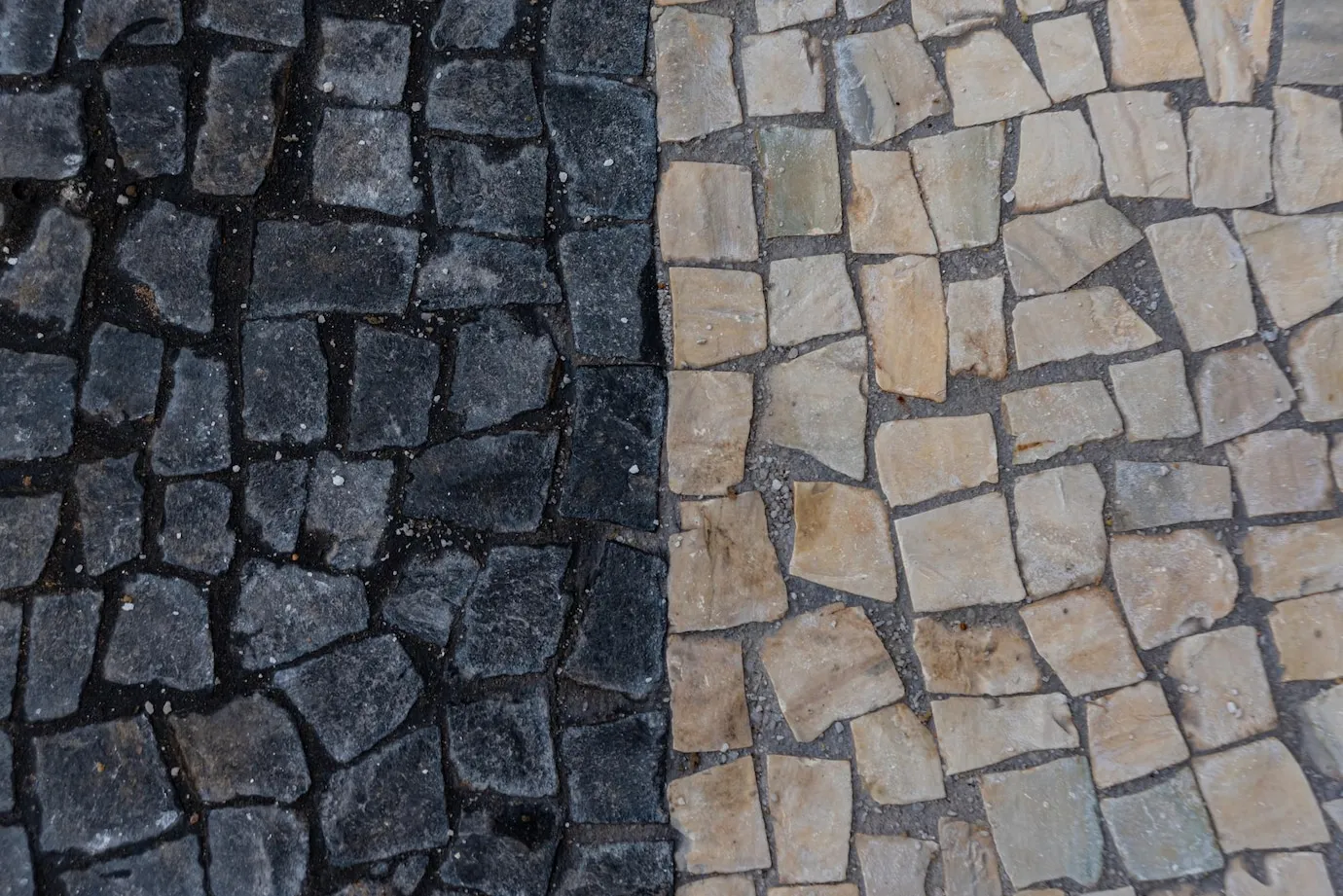
Interlocking pavers take a fundamentally different approach. Instead of one rigid slab, the driveway is built from hundreds of individual units set over a deep, compacted aggregate base and locked together with sand. That flexibility is the key advantage: when the ground shifts with frost, the pavers move as a system rather than cracking. If a single stone is ever stained or damaged, it can be lifted and swapped out without disturbing the rest — a repair that takes an hour, not a demolition crew.
Interlock also wins on curb appeal. With a huge range of colours, shapes, and laying patterns, a paver driveway can be tailored to complement your home’s architecture, edged with contrasting banding or blended into matching walkways and a front entrance. For many GTA homeowners, that design flexibility and premium look are worth the investment on their own.
Cost is where the trade-off lives. A quality interlock driveway in Toronto typically costs more than poured concrete up front, because the base preparation is more involved and installation is labour-intensive. But the lifetime math often favours interlock: concrete that cracks and needs replacing in 15 to 20 years can end up costing more than pavers that last 30 or more with simple maintenance.
Speaking of maintenance, both surfaces need care, but of different kinds. Concrete should be sealed periodically and any cracks addressed before water works its way in. Interlock benefits from re-sanding the joints every few years and an occasional seal to lock in colour and resist weeds — straightforward tasks that keep the surface looking new.
The quality of installation matters more than the material you choose. A beautifully chosen paver driveway laid over a shallow or poorly compacted base will fail just as surely as bad concrete. Proper excavation, a generous compacted base, and correct edge restraints are what separate a driveway that lasts from one that ripples and sinks. The same craftsmanship applies to matching interlocking patios and walkways that tie the whole front of the home together.
For most Toronto homeowners who plan to stay in their home and want lasting curb appeal, interlock is the stronger long-term choice. If budget is the deciding factor and the look is secondary, concrete still has its place. Either way, insist on proper base work — it is the foundation of everything.
Anchor text & backlinks used
Anchor: “interlock driveway in Toronto” → https://azlandscaping.ca/services/driveways/
Anchor: “interlocking patios and walkways” → https://azlandscaping.ca/services/interlocking-patios/







Comment