The number most creators and brands obsess over – follower count – is also the one that has the least direct connection to how Instagram distributes content.
That’s not an opinion. It’s a structural feature of how the algorithm works, and understanding it changes what “Instagram growth” actually means in practice.
What the Algorithm Uses Follower Count For
Follower count is used by Instagram’s algorithm in one specific way: it determines the initial sampling pool.
When you publish a post, Instagram shows it to a percentage of your followers to gauge their response. A larger follower base means a larger absolute sample size – but not necessarily a stronger signal. If your followers are disengaged, inactive, or misaligned with your content type, a larger sample just produces more noise.
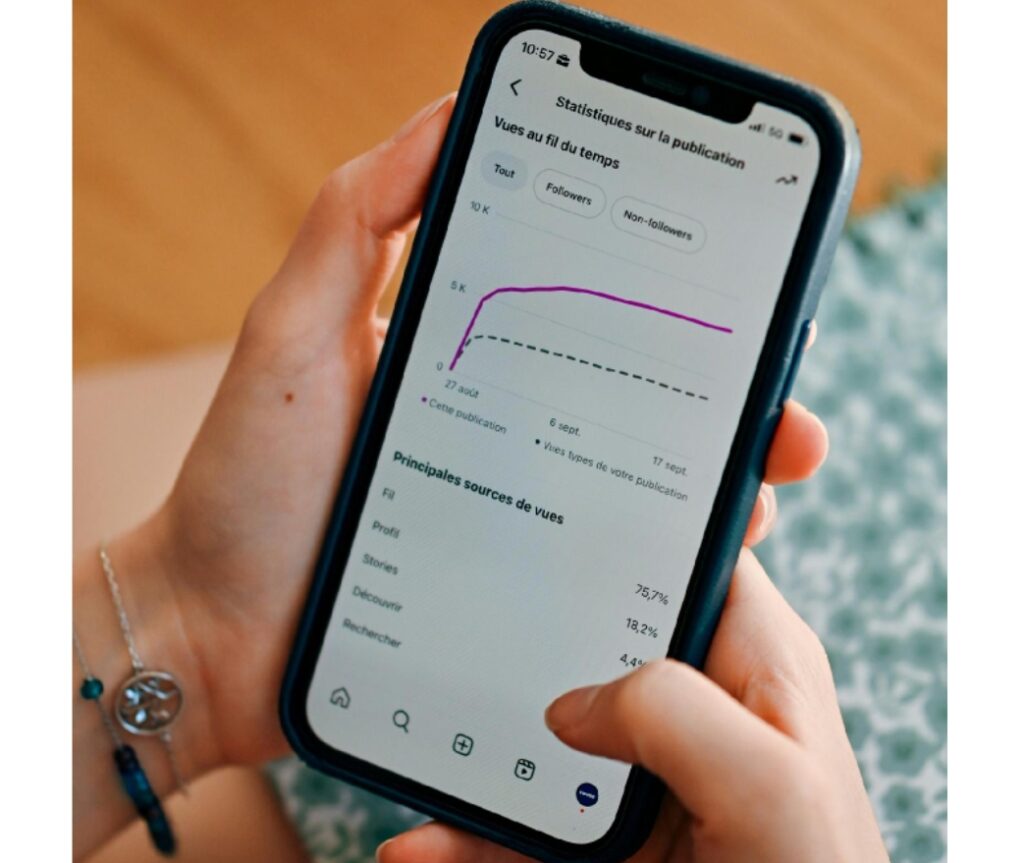
The metric the algorithm actually cares about is engagement per reach – how many of the people who saw the post interacted with it, particularly in the first hour. A 10,000-follower account that generates 500 likes in the first 60 minutes sends a stronger distribution signal than a 200,000-follower account that generates 500 likes spread across a week.
Follower count is a denominator. Engagement rate is what the algorithm is watching.
The Follower Growth Trap
Most Instagram growth advice still leads with follower acquisition. Follow-for-follow tactics, hashtag strategies, collaboration shoutouts – all of these are oriented toward growing the follower number.
The problem is that followers acquired through these methods are often misaligned. They followed because of a specific post, a collaboration, or because they were following back reciprocally – not because they’re genuinely interested in the account’s content. When you post, they don’t engage. Your engagement rate drops. The algorithm sees weak signal and reduces distribution. You reach fewer of your existing followers on future posts – including the ones who are genuinely interested.
This is the follower growth trap: acquiring followers in ways that degrade engagement rate, which degrades reach, which degrades the account’s overall algorithmic standing.
The research on this is well-documented, including analysis of instagram follower growth vs engagement infrastructure and how brands that prioritised follower quality over follower volume consistently outperformed those focused on raw acquisition metrics.
What Engagement Infrastructure Actually Means
If follower count is the wrong thing to chase, what’s the right thing?
Consistent early-window engagement on every post. That’s the variable the algorithm responds to most directly.
“Early-window” means the first 30–60 minutes after publishing. During that period, Instagram is actively sampling your followers and deciding whether to push content wider. High engagement in that window = wider distribution. Low engagement = limited reach.
“Consistent” means every post, not just posts you manually boost or happen to publish at peak times. The algorithm builds a model of your account based on patterns across many posts. Inconsistency – spiking on some posts, underperforming on others – produces a noisy model. The algorithm can’t predict how your content will perform, so it defaults to conservative distribution.
This is what ecommerce brands and serious creators have recognised. They treat early engagement as infrastructure – something that runs consistently in the background, the same way a scheduling tool or analytics platform does. One analysis of instagram reach strategies for ecommerce accounts found that the brands with the most consistent organic reach growth were those that had decoupled early engagement from posting timing – ensuring every post received baseline early signal regardless of when it went live.
The Subscription Model as Infrastructure
The practical implementation of consistent early-window engagement is a subscription-based automatic likes service.
One-time purchases address individual posts. They don’t build the pattern the algorithm learns from. Subscriptions address every post – which is what’s needed to shift how the algorithm models the account.
ProflUp is built specifically around this infrastructure model: subscription-based delivery, detection within 60 seconds of posting, gradual delivery pacing through real accounts. The subscription structure means there’s no manual decision required per post – the system runs the same way on every piece of content, which is exactly the consistency the algorithm is looking for.
The measurable effect builds over time. Month one: consistent signal, stable distribution. Month two: the algorithm begins testing posts with small non-follower audiences. Month three and beyond: if those tests generate engagement, organic reach starts to expand as the account model updates.
None of that happens from chasing followers. It happens from maintaining the engagement signal the algorithm actually responds to.
Rethinking What Growth Means
For most accounts, the most useful reframing of “Instagram growth” is: improving the percentage of your posts that reach audiences beyond your existing followers.
That metric – distribution expansion rate – is driven by early-window engagement ratio, content format fit (Reels drive more DM shares, carousels drive more saves), and posting consistency. Follower count is downstream of all three. Grow the engagement infrastructure, and follower growth follows as a consequence.
The accounts that understand this stop treating follower count as the goal and start treating it as a lag indicator of whether the engagement infrastructure is working.
Frequently Asked Questions
If follower count doesn’t matter much, why do brands still buy followers? Vanity, mostly. Follower count is visible to the public – it reads as social proof to potential customers who visit the profile. It has limited algorithmic value but real brand perception value. The problem is that bought followers don’t engage, which degrades engagement rate, which hurts distribution. The trade-off is usually not worth it for accounts serious about reach.
What engagement rate should I be aiming for? Instagram’s average engagement rate across all account sizes is around 1–3% per post. Accounts with rates above 5% are performing well. But absolute rate matters less than trend – if your rate is improving over time, the algorithm’s model of your account is updating positively.
Does the algorithm treat Reels differently from static posts for early engagement? Yes. Watch time is the primary signal for Reels, with likes-per-reach as a secondary. For static posts and carousels, likes-per-reach and saves carry more weight. The early-window sampling structure is consistent across formats, but the signals being measured differ.
Can automatic likes actually improve organic reach? Yes, through the mechanism described above. Consistent early-window engagement gives every post a better chance at the initial distribution expansion. Over time, consistent expansion events update the account’s algorithmic model, which affects how future posts get evaluated. The effect is cumulative and requires consistency – not one-off purchases.
How long does it take to see algorithmic changes from consistent engagement? Most analyses suggest 60–90 days of consistent posting with consistent early engagement before the account model update becomes visible in reach metrics. The algorithm requires enough data points to update its predictions reliably.
Key Takeaways
- Follower count is a denominator. Engagement-per-reach during the early sampling window is what the algorithm actually uses to make distribution decisions.
- Acquiring disengaged followers degrades engagement rate, which degrades reach – the follower growth trap.
- Consistent early-window engagement on every post is the variable most directly connected to algorithmic distribution.
- Subscription-based automation builds this consistency systematically – the same baseline signal on every post, every time.
- Organic follower growth is a consequence of strong engagement infrastructure, not a precondition for it.