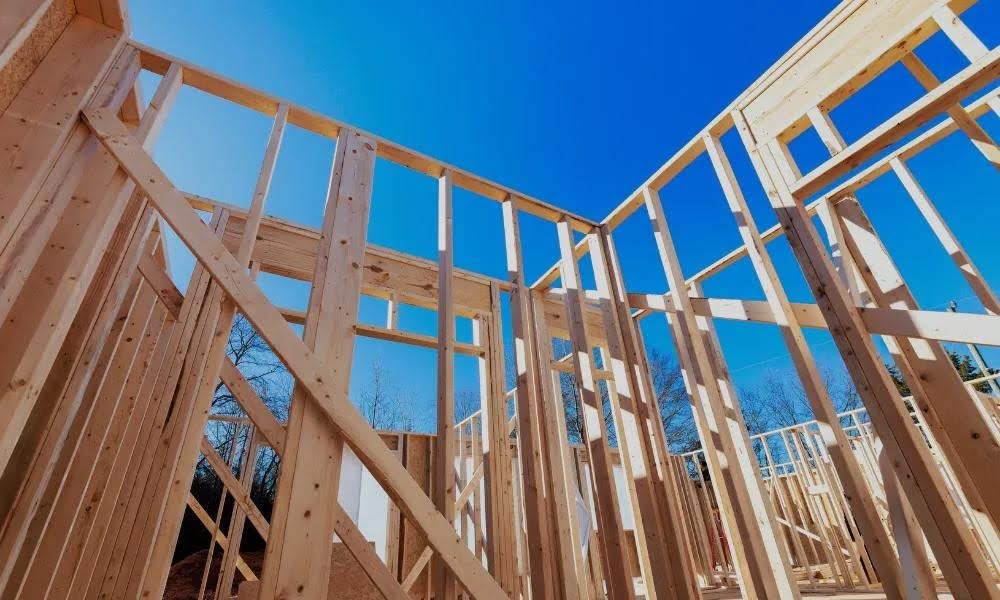
Outdoor construction is going through a quiet but significant transformation. Across residential and commercial projects, architects, contractors, and homeowners are rethinking the materials they specify not just for durability, but for environmental responsibility. The pressure to build smarter, waste less, and source responsibly has pushed a new generation of materials to the forefront. Among them, sustainably harvested tropical hardwoods have emerged as one of the most compelling answers to the question: how do we build for the long term without compromising the planet?
Why Outdoor Construction Demands a Different Standard
Outdoor materials face conditions that indoor materials simply do not. UV radiation, moisture cycling, freeze-thaw stress, foot traffic, and biological threats like mold and insects all work together to degrade structures far faster than most people expect. The traditional response pressure-treated lumber loaded with chemical preservatives solved some problems while creating others. Toxicity concerns, limited lifespans, and poor aesthetics have driven the market toward alternatives that perform better across every dimension.
The innovation happening in sustainable outdoor building materials is not about chasing trends. It is about identifying materials whose natural properties align with what outdoor construction actually requires: density, resistance to rot, dimensional stability, and a service life measured in decades, not years.
Thermally Modified Wood: Engineering Nature
One of the most significant technical advances in sustainable building materials over the past two decades is thermal modification. The process involves heating wood typically to temperatures between 160°C and 230°C in a low-oxygen environment. The heat alters the cell structure of the wood at a molecular level, reducing the sugars and starches that fungi feed on, collapsing the water-absorbing pathways that cause swelling and cracking, and increasing the overall density and stability of the board.
The result is a wood product that performs like a tropical hardwood without requiring tropical sourcing. Thermally modified pine, ash, and oak are increasingly specified for decking, cladding, and outdoor joinery. These products carry no chemical treatments and are fully recyclable or compostable at end of life. For builders working under tight sustainability mandates or LEED certification requirements, thermally modified timber offers a verifiable, low-impact option.
Responsibly Sourced Tropical Hardwoods: The Performance Benchmark
While engineered and modified wood products continue to improve, they are often compared and measured against a natural baseline: tropical hardwoods. Species like ipe, cumaru, garapa, and massaranduba have natural Janka hardness ratings that dwarf domestic softwoods. Their density, oil content, and tight grain structure give them an innate resistance to insects, moisture, and decay that no manufacturing process fully replicates.
The sustainability conversation around tropical hardwoods has evolved considerably. The issue was never the wood itself it was the sourcing practices. Illegal logging, deforestation, and poor chain-of-custody documentation gave tropical timber a damaging reputation. But certified suppliers operating under FSC (Forest Stewardship Council) or IBAMA frameworks have fundamentally changed the picture. Responsible harvesting at controlled rates, reforestation programs, and transparent documentation now make it possible to specify tropical hardwoods with confidence.
For outdoor decking in particular, the material’s longevity is itself a sustainability argument. Consider ipe: properly installed and minimally maintained, an ipe deck can last 40 to 75 years. A composite deck might last 25 years. A pressure-treated pine deck, 10 to 15 years. When you factor in the energy, materials, and waste associated with multiple replacement cycles, the long-service-life hardwood often carries a lower lifetime environmental footprint. Ipe wood decking represents this philosophy in its most refined form a material that does not need to be engineered or modified because nature already optimized it for exactly the conditions it will face.
Composite and Recycled-Content Decking: Progress and Limits
Wood-plastic composites (WPC) and capped composite decking represent another major category of innovation in outdoor building materials. Early composite products had well-documented problems: fading, mold growth, surface checking, and a hollow sound underfoot that no amount of marketing could disguise. Modern composites, particularly capped products with a protective polymer shell, have addressed many of these shortcomings.
The sustainability case for composites centers on recycled content. Many products incorporate post-consumer recycled plastics and reclaimed wood fiber, diverting waste from landfills. Manufacturing energy and transportation emissions are also relevant variables composites produced domestically may carry a lower carbon transport footprint than tropical timber shipped from Brazil.
The honest limitation of composites is performance at the extremes. In high-heat climates, WPC surfaces can reach temperatures 20 to 30 degrees Fahrenheit above natural wood. In harsh UV environments, color fading remains a challenge despite improved pigment technology. At high load points around furniture legs, heavy planters, and grill pads composites can dent and deform in ways that hardwoods simply do not.
Reclaimed Wood: Circular Economy in Practice
Reclaimed timber is one of the most straightforward expressions of circular economy principles in construction. Old-growth lumber salvaged from demolished industrial buildings, barns, and warehouses carries decades of natural seasoning that makes it exceptionally stable and dense. For outdoor applications where aesthetics are a priority feature decks, pergolas, accent walls reclaimed wood offers character that no new-growth product can manufacture.
The practical limitations are supply chain reliability and quality consistency. Reclaimed stock varies in dimension, grade, and species. For large-scale outdoor projects, sourcing enough consistent material is a real constraint. Reclaimed wood also requires careful inspection for embedded fasteners, chemical treatments from prior use, and structural integrity. Despite these challenges, suppliers specializing in reclaimed material have professionalized the sector considerably, and reclaimed outdoor lumber is now a credible specification option for design-focused projects.
Hidden Fastener Systems and Low-Impact Hardware Innovation
Material selection is only one dimension of sustainable outdoor construction. Installation methods and hardware also carry environmental and performance implications. Hidden fastener systems, which secure decking boards from below rather than through the face, have become the preferred installation method for premium outdoor decking projects. They eliminate the surface penetrations that allow water intrusion, reduce visible rust staining, and allow individual boards to be replaced without disturbing adjacent sections.
Stainless steel and hot-dipped galvanized hardware have replaced zinc-plated fasteners as the standard for outdoor applications, significantly extending hardware lifespan in coastal and high-moisture environments. For hardwood species like ipe and cumaru, stainless steel is effectively non-negotiable the tannins in dense tropical hardwoods react chemically with lesser metals, causing staining and accelerated corrosion.
Certifications and Supply Chain Transparency
The single most important factor in specifying sustainable outdoor building materials today is supply chain transparency. A material’s environmental credentials mean nothing if the documentation behind them is unreliable. The industry has developed a robust framework of third-party certifications to address exactly this.
- FSC certification verifies that timber was harvested according to standards that protect biodiversity, worker rights, and forest regeneration.
- The Lacey Act in the United States prohibits the import of illegally sourced timber and requires importers to maintain documentation of species origin.
- IBAMA export documentation from Brazil certifies that timber shipments comply with Brazilian federal forestry law.
- CITES permits apply to specific protected species and ensure international trade remains within sustainable harvest limits.
For architects and project managers, requesting these documents upfront should be standard practice not an afterthought. Reputable suppliers make this documentation readily available because it reflects real investment in responsible sourcing.
Longevity as the Defining Sustainability Metric
The outdoor building materials industry has spent considerable energy debating which material is most sustainable. The answer depends heavily on how you define the question. If sustainability means lowest upfront carbon footprint, a locally produced composite may score well. If it means lowest total lifecycle impact across 50 years, dense tropical hardwood with verified sourcing often wins by a significant margin.
Every material replacement cycle carries embedded costs: manufacturing energy, raw material extraction, transportation, and construction waste. A material that never needs replacing eliminates all of those downstream costs. This is not an argument against innovation it is an argument for using longevity as a primary evaluation criterion alongside upfront environmental impact.
The most sophisticated thinking in sustainable outdoor construction does not declare a single winner. It matches material to context: thermally modified timber for projects where domestic sourcing is a priority, reclaimed wood where aesthetics and circular economy credentials matter most, certified tropical hardwoods where maximum performance over the longest possible lifespan is the specification goal.
Conclusion
Innovation in sustainable outdoor building materials is not a single breakthrough it is a broad, ongoing shift in how the industry thinks about performance, responsibility, and time. The materials available to builders today are dramatically better than those available a generation ago, both in environmental credentials and in physical performance.
The challenge for professionals in the field is making specification decisions that are genuinely informed not driven by greenwashing or short-term cost optimization. That means asking hard questions about supply chains, requesting certification documentation, calculating lifecycle costs honestly, and selecting materials whose natural or engineered properties are genuinely matched to the demands of outdoor construction. When those decisions are made well, the result is outdoor spaces that perform for decades and represent a genuine investment in building responsibly.