When Apple’s latest product launch ends, technology creators immediately enter a race against time.
Thousands of creators may watch the same presentation, but the ones who can quickly identify important announcements, extract useful details, and publish their own analysis are often the ones who capture the first wave of attention.
The challenge is that finding those moments inside a long recording is not as simple as pressing play.
A one-hour product launch video can contain dozens of details worth discussing. However, many creators still have to move through the timeline repeatedly, replay sections of the presentation, and manually search through hours of spoken content to find the right quote or product detail. By the time they finish organizing the information, the biggest opportunity for traffic and engagement may already have passed.
Consistent content creation is not only about coming up with new ideas. For many creators, the bigger challenge is making better use of the videos they have already produced.
A podcast episode, an in-depth interview, an online course, or a long-form video may contain many ideas that could become separate articles, social posts, newsletters, or short videos. But those opportunities often remain inside the original recording because finding and extracting them takes too much time.
This is why more creators are adding video transcription to their regular content process. By turning spoken conversations into searchable text, creators can review old recordings, find important sections, and create new content without starting from zero every time.
Your Existing Videos May Already Contain Content Worth Reusing
Creating a successful video requires much more work than the final upload suggests.
Creators often spend hours researching topics, preparing scripts, recording footage, and editing the final version before publishing. However, after the initial release period ends, many videos are rarely revisited.
The recording itself still contains the same ideas, explanations, and conversations. The problem is that finding specific information later can become surprisingly difficult.
Imagine a creator published a one-hour interview several months ago. A new topic appears, and they remember that the guest discussed something related to it. Without a transcript, they usually have to watch the entire conversation again and search manually for the exact moment.
For creators who have built a large library of videos, this process quickly becomes inefficient.
An old recording should not only have value on the day it is published. With the right approach, it can continue generating ideas, supporting new projects, and helping creators produce more useful content.
Different types of videos create different problems when creators want to reuse previous recordings.
A tutorial video may include multiple explanations, examples, and demonstrations. A creator may remember teaching an important concept but struggle to find the exact section when they want to turn it into a written guide or a shorter educational video.
Interview content creates another challenge. The most valuable statement from a guest is not always the opening answer or the final conclusion. Sometimes the best quote appears halfway through a long conversation, surrounded by other discussions that provide important context.
Podcasts have a similar problem. A single episode may cover several topics, personal experiences, and opinions. When creators want to develop one idea into a newsletter, article, or social media post, they need a practical way to locate that section without listening to the entire episode again.
Live events are often even harder to manage.
During a product announcement or industry presentation, creators need to quickly identify details such as new features, technical improvements, or changes compared with previous versions. Searching manually through a long recording can slow down the entire publishing process.
Searchable Transcripts Change How Creators Reuse Existing Recordings
The biggest advantage of a transcript is not simply converting speech into written words. It is making the information inside a recording easier to find.
A video is designed for watching. A video transcript creates another way to work with that same information.
Once a recording becomes searchable, creators can quickly locate specific topics instead of relying on memory or moving through the timeline again and again.
A technology writer covering a product announcement can search for terms related to performance, design, pricing, or new features. A course creator can review previous lessons before preparing a new class. A podcast host can revisit earlier conversations when planning future episodes.
For creators who regularly work with long recordings, tools that transcribe video to text online provide a practical way to turn videos into editable text that can be reviewed, organized, and reused.
This is also where VideoToTranscript fits into the creator workflow. Instead of treating every recording as a finished project, creators can use transcripts to discover additional ideas from videos they have already created.
Manual Transcription Makes Consistent Publishing Harder
Some creators still choose to create transcripts manually. For short clips, this may be manageable. However, the time required increases quickly as recordings become longer.
A 60-minute interview may take several hours to type manually. The process becomes even slower when the recording includes multiple speakers, technical terms, unclear audio, or frequent changes in topic.
For creators who publish regularly, this creates a difficult trade-off. The time spent organizing existing recordings directly reduces the time available for filming, editing, and developing new ideas.
The Time Cost Behind Long Recordings
Manual transcription requires much more than typing every spoken sentence.
Creators need to check whether the wording matches the original recording, mark sections worth revisiting, identify quotes that may work well outside the video, and separate different speakers when conversations involve multiple people.
Small mistakes can create additional work later. A missing phrase or incorrect timestamp can make it harder to use the transcript for another project.
This is especially challenging for creators who want to build a consistent publishing schedule. Spending several hours preparing a transcript means less time available for creating videos, responding to audiences, or exploring new topics.
Modern video transcription tools reduce this repetitive work by creating an initial text version that creators can review and improve. Instead of starting from an empty document, they can focus on selecting ideas, refining messages, and deciding how the material should be used next.
Video Transcription Makes Information Inside Recordings Easier to Find
As creators continue publishing more videos, managing previous recordings becomes a challenge of its own.
A creator may remember discussing a specific topic months ago, but finding that conversation again is often difficult. The file name may not provide enough information, and watching every old video from beginning to end is rarely practical.
This is where video transcription changes the way creators work with their existing recordings.
A transcript creates a searchable version of the video. Instead of depending on memory or manually checking timestamps, creators can search for specific words, review the surrounding context, and quickly decide whether a section is worth using.
For example, a technology creator preparing content after a major product announcement may need to compare details from a long presentation. Searching a transcript for terms related to the processor, camera system, battery performance, or pricing can reveal relevant sections within seconds.
The same approach applies beyond technology content.
A business creator can revisit previous interviews before writing a new article. An educator can find explanations from older lessons when updating a course. A consultant can review past discussions before preparing a client presentation.
The original recording does not change. The difference is that the information inside it becomes much easier to access and reuse.
Find Important Moments Without Watching the Entire Recording Again
One of the biggest frustrations when working with old videos is that creators often remember that something useful was said, but not exactly when it happened.
A guest may have shared a valuable opinion during the middle of a long interview. A speaker may have explained a complicated topic in a way that is perfect for a future article. A customer question from a previous webinar may become the foundation of a new FAQ section.
Without a searchable transcript, finding these moments usually requires watching the entire recording again.
With a searchable video transcript, creators can first search for relevant terms, review the surrounding conversation, and decide how the information can be reused.
This small change can save hours of unnecessary review time and make older recordings much more practical for future projects.
Turn Existing Videos Into New Content and Income Opportunities
For many creators, the pressure to publish more content often creates the feeling that every new idea requires a completely new recording.
A new script needs to be written. A new video needs to be filmed. A new editing process needs to begin.
However, many creators already have a large amount of material available. The challenge is not always creating more. It is finding better ways to transform existing recordings into new opportunities.
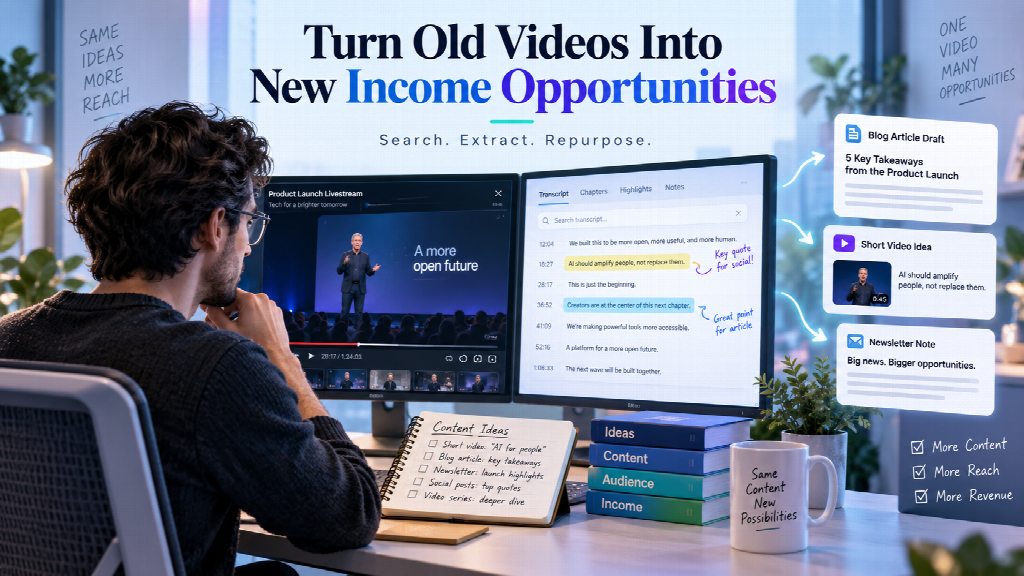
A single interview can become more than one piece of content. The main discussion can become a detailed article, key opinions can become LinkedIn posts or X threads, and useful sections can become short-form videos for YouTube Shorts, TikTok, or Instagram.
For creators building an audience, this approach can also create more opportunities for growth and monetization.
A creator who teaches a specific skill can turn previous lessons into a paid mini-course, downloadable guide, or subscriber resource without recording every explanation again. A consultant can use recorded expertise to create guides that demonstrate knowledge to potential clients. A niche content creator can turn old discussions into newsletters that continue attracting subscribers.
The goal is not to publish the same material repeatedly. It is to make sure valuable ideas have more opportunities to reach the right audience.
One Recording Can Support Multiple Content Formats
Creators often underestimate how much material exists inside a single recording.
A one-hour interview may contain several topics that can be explored separately. A podcast conversation may include enough ideas for multiple future episodes. A webinar may answer questions that can later become educational resources.
The key is identifying which parts of the recording are useful for different audiences.
A detailed discussion that works well as a long-form article may also provide short explanations for social media. A tutorial that teaches a complex process can become a written guide for users who prefer step-by-step instructions.
This approach helps creators spend less time repeatedly preparing the same information and more time improving the ideas they want to share.
Audio Content Can Follow the Same Repurposing Approach
Video is not the only format that contains valuable conversations.
Many creators also produce podcasts, interviews, voice recordings, and private discussions. These recordings often contain important ideas, but finding a specific moment inside an audio file can be just as difficult as searching through a video.
A podcast host may want to revisit a previous discussion before recording a new episode. A researcher may need to find a specific statement from an interview. A business owner may want to organize customer conversations into searchable notes.
Using speech to text online tools can help convert these recordings into text that is easier to review and organize.
For creators who work across both video and audio formats, combining video transcription and audio transcription creates a more complete way to manage existing recordings.
A Practical Workflow for Turning Recordings Into New Content
Repurposing existing videos does not require a complicated system. The most effective approach is usually a simple process that helps creators find useful information and decide how to use it.
(A simple workflow for turning one video into more content.)
Step 1: Start With Recordings That Already Have Potential
The best recordings to revisit are usually not random files from a hard drive.
They are often videos that already attracted attention, generated questions, or contain detailed explanations that remain useful over time.
A popular interview, a successful tutorial, a recorded webinar, or a detailed product discussion can provide a strong starting point because the core information has already been created.
Step 2: Find the Sections Worth Developing Further
After creating a transcript, creators can review the recording in a different way.
Instead of watching everything again, they can search for important topics, highlight useful quotes, and identify sections that could become new content.
This is especially helpful for longer recordings where the most valuable ideas may be spread across different parts of the conversation.
A transcript does not decide what content should be created. It simply makes the decision process faster by helping creators see what they already have.
Step 3: Adapt Ideas for the Right Audience
The final step is deciding how the information should be presented.
A detailed interview may work as an article for readers who want more context. A short explanation may work better as a social media post. A tutorial section may become a guide for users who need practical instructions.
The same recording can support different goals when creators understand how to adapt the information.
Better Access to Existing Videos Helps Creators Build Long-Term Content Systems
As creators continue publishing, their old recordings become increasingly difficult to manage.
A large collection of videos stored on a computer or cloud drive may contain years of knowledge, but without a practical way to search through them, much of that information remains unused.
A transcript provides another access point to those recordings.
Instead of opening old files one by one or guessing where a specific discussion happened, creators can search through text and quickly find the information they need.
This is where VideoToTranscript provides a practical solution for creators who want to work more efficiently with existing videos. By turning recordings into searchable transcripts, creators can review previous work, discover new ideas, and create additional content from material they have already produced.
Creators who want to explore this approach can start with tools that transcribe video to text free online and see how searchable transcripts fit into their own content process.
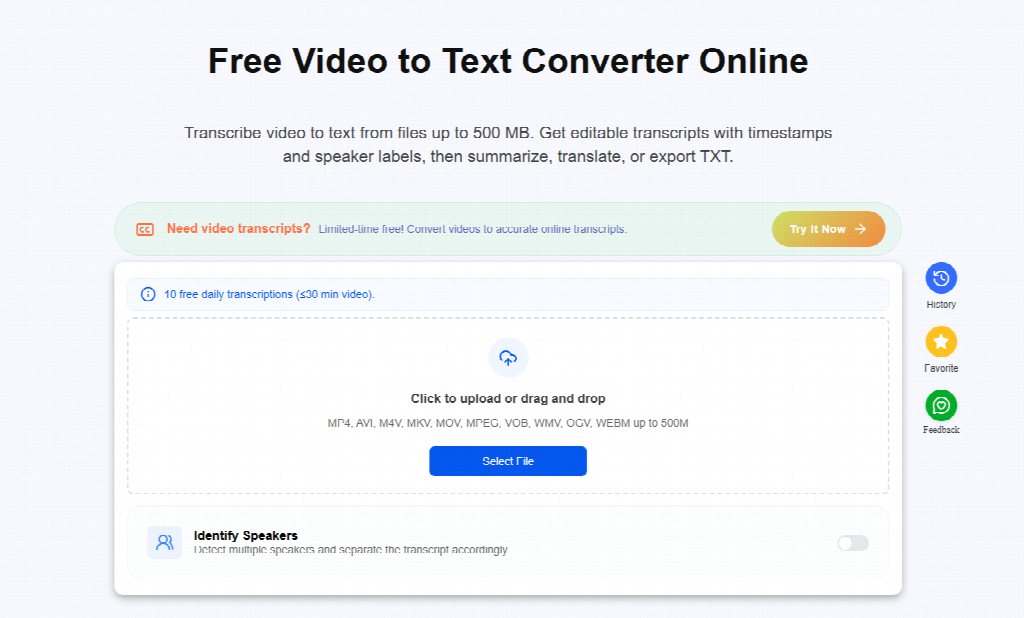
(Decopy helps creators turn video into text, summaries, and reusable insights.)
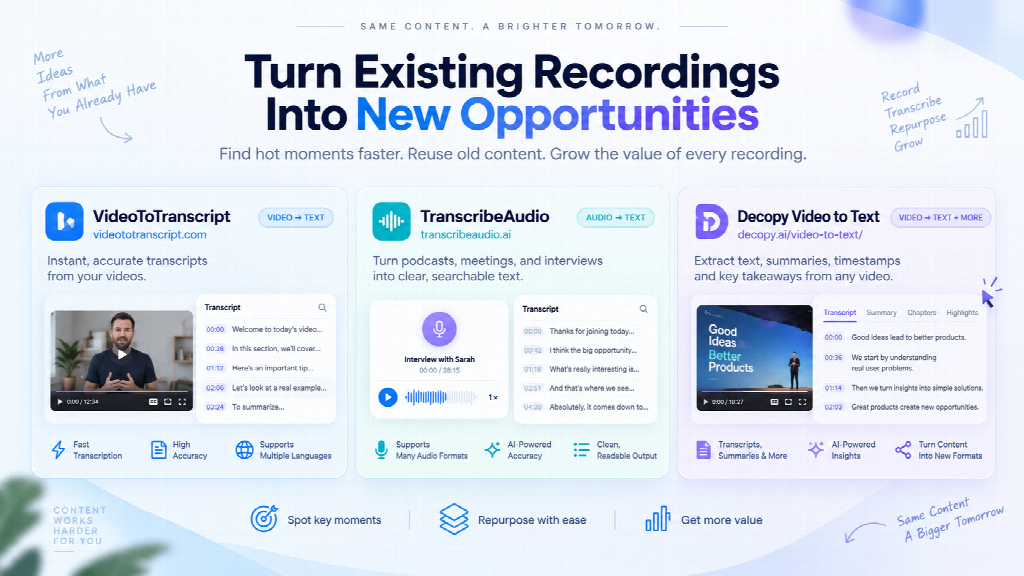
(Three tools that help turn recordings into reusable content assets.)
Conclusion
Creating more content does not always require recording more videos.
Many creators already have valuable ideas inside interviews, podcasts, tutorials, and long-form recordings. The challenge is not a lack of material. It is finding a practical way to access, organize, and reuse what has already been created.
Video transcription helps solve this problem by turning spoken conversations into searchable text. It allows creators to find important moments faster, adapt existing recordings into different formats, and reduce the repetitive work involved in reviewing long videos.
The purpose of transcription is not to replace the original video. A recording still provides the complete experience, including visuals, emotion, and context.
Instead, a transcript gives creators another way to work with the content they have already produced. With tools like VideoToTranscript, previous recordings can continue supporting future articles, videos, newsletters, and business opportunities long after the original publication.