The conventional wisdom in the technology industry holds that world-class data science teams live in San Francisco, New York, Boston, or Seattle. They cluster around top research universities, venture capital networks, and the gravitational pull of other tech companies competing for the same talent pool. They do not, by most accounts, build themselves in Sarasota, Florida.
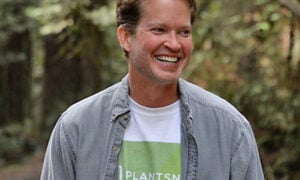
Michael Peterman has spent nearly two decades proving that wrong.
VeraData Holdings, the nonprofit fundraising intelligence company Peterman founded in 2007 and has grown into a full-spectrum enterprise with revenue exceeding $120 million, runs on a technical team of more than 25 PhD mathematicians based primarily in Southwest Florida. These are not generalist data analysts or business intelligence professionals. They are quantitative scientists with doctoral training in applied mathematics, statistics, decision science, and machine learning, doing work that would be competitive at any technology company in the country, for a mission that most technology companies would not know how to value.
“We were the first to bring this to charities,” Peterman says. “The vernacular was unknown. We would talk about machine learning and support vectors and different types of analytic methodologies, and nobody knew what we were saying. Most people still don’t know.”
The Recruiting Problem Nobody Talks About
Building a PhD-level quantitative team outside a major technology hub requires solving a recruiting problem that most founders in Peterman’s position simply avoid by relocating to where the talent already is. Peterman made a different choice. He built the company where he lived, in Southwest Florida, and figured out how to attract technical talent to it.
The answer was not compensation, though VeraData competes aggressively on that dimension. It was mission. Recruiting a PhD mathematician to work on donor acquisition models for nonprofit organizations turns out to be a more compelling pitch than it sounds. The work is genuinely hard. The data is rich. The problem is unsolved in ways that academic research has not addressed. And the outcome, more philanthropic giving reaching more causes, gives technical professionals something that most technology companies cannot offer: a reason to care about the answer.
VeraData has led VeraData to recognition as one of Inc. Magazine’s Best Workplaces. That recognition is not incidental. It reflects a deliberate decision by Peterman to build a technical culture that retains the kind of talent that has options, including the option to relocate to a coastal tech hub and earn comparable or higher compensation doing work with less human meaning.
“When you build something in a place you actually care about, it changes the way you lead,” Peterman says. “Sarasota is home. It is where we raise our family. It is where our team shows up every day.”
What a PhD Mathematician Actually Does at VeraData
The technical work at VeraData is not a supporting function. It is the core product. The company’s Donor Science framework, a trademarked methodology for treating nonprofit donor acquisition and retention as a discipline with measurable repeatable outcomes rather than an art form, is built entirely on proprietary predictive modeling infrastructure developed and maintained by the company’s quantitative team.
That infrastructure has been trained on nearly two decades of sector-specific campaign performance data from more than 400 nonprofit organizations. The models identify which prospective donors have the highest statistical probability of making an initial gift, which lapsed donors have the highest probability of reactivation, and which mid-level donors have the behavioral and demographic characteristics of eventual major contributors. Each of those is a distinct modeling problem requiring distinct analytical approaches, and each improves with every additional campaign the company runs.
The result is what Peterman describes as a compounding data flywheel. Every campaign generates performance data that makes the next model more accurate. Every new client adds signal that improves predictions for the broader portfolio. The system gets smarter over time in ways that a new entrant to the market, regardless of how sophisticated their general-purpose AI tooling is, cannot replicate without running the same volume of sector-specific campaigns over the same period of time.
VeraData’s technical infrastructure also carries both SOC2 and HIPAA compliance certifications, a combination the company says no other player in the nonprofit data sector holds. Earning and maintaining both certifications requires a level of data governance and engineering rigor that goes beyond what most companies the same size invest in, and it reflects the seriousness with which Peterman has treated the technical foundation of the business from the beginning.
Building Technical Credibility in an Unexpected Place
The broader implication of what VeraData has built in Sarasota is a challenge to the assumption that meaningful technical work requires a major metropolitan address. The company’s PhD team is evidence that quantitative talent will follow interesting problems and strong culture to places that conventional hiring wisdom would not recommend.
That has practical consequences for the technology industry’s ongoing conversation about distributed work, talent distribution, and the geography of innovation. Peterman did not build his team remotely after a pandemic forced the option. He built it in place, in a mid-sized Florida city, before distributed work was a mainstream operating model, because he was committed to a location and figured out how to make it work.
“You don’t build anything meaningful alone,” Peterman says. “I have an incredible team at VeraData and an incredible partner at home. Sarasota shaped both of those things. I am grateful for all of it.”
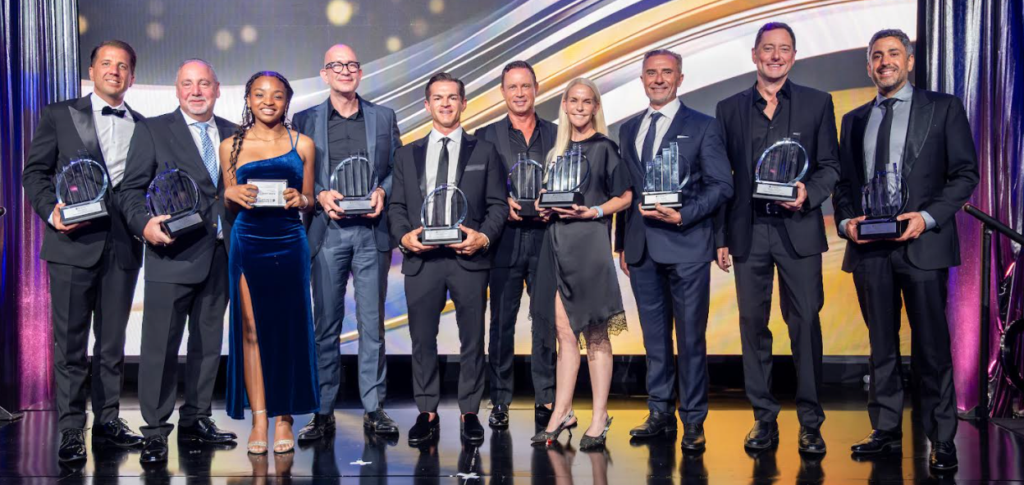
Peterman was named EY US Entrepreneur of the Year 2026 Florida Award winner, selected from 592 finalists across 17 regional programs nationwide, and advances to the national competition at the EY Strategic Growth Forum in November 2026. He will be among the highest-growth company founders in the country competing for the overall national honor.
About VeraData
VeraData is a data analytics company headquartered in Sarasota, Florida, specializing in AI and machine learning-enabled donor acquisition and retention for the nonprofit sector. Founded in 2007 by Michael Peterman, VeraData serves more than 400 nonprofit organizations nationwide and supports clients that collectively raise more than $1 billion in annual philanthropic giving. VeraData operates as The Donor Science Company. For more information, visit veradata.com.
About Michael Peterman
Michael Peterman is the Founder and CEO of VeraData and the originator of the Donor Science framework. He is the EY US Entrepreneur of the Year 2026 Florida Award winner and will compete at the national EY Entrepreneur of the Year program in November 2026. Peterman is based in Sarasota, Florida.
Media Contact Information
Organization: VeraData
- Farque