UK businesses are rapidly changing how they manage vehicle fleets in 2026, with telematics, AI-driven analytics, and cloud-based fleet software replacing many traditional manual processes.
What was once a paper-heavy exercise involving spreadsheets, manual logbooks, and end-of-month fuel receipts is now becoming increasingly automated and data-driven. Rising fuel costs, insurance premiums, maintenance expenses, and pressure to improve driver accountability are pushing many UK businesses towards smarter fleet management technology.
For small and mid-sized fleet operators, adoption has accelerated significantly over the past 18 months. Telematics was once viewed as technology reserved for major logistics firms and national hauliers, but it is now commonly used by businesses operating as few as five to ten vehicles.
Several factors are driving this shift:
- Lower hardware and installation costs
- Easier cloud-based integrations
- Improved mobile accessibility
- Real-time reporting capabilities
- Increased insurer demand for risk visibility
At the same time, insurers are increasingly rewarding businesses that can demonstrate stronger risk management through telematics and fleet data reporting.
How Fleet Data Is Delivering Real Savings
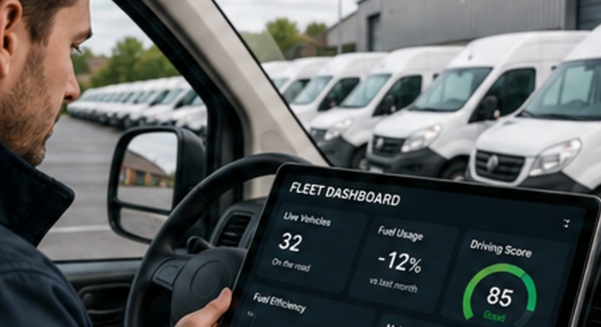
Modern fleet management platforms now go well beyond simple GPS tracking. Businesses can capture real-time data relating to:
- Harsh braking
- Speeding incidents
- Acceleration patterns
- Vehicle idling
- Fuel usage
- Mileage tracking
- Engine diagnostics
- Driver identification
- Vehicle utilisation
This information is increasingly feeding directly into core operational areas, including:
- Insurance risk assessment and claims management
- Predictive maintenance scheduling
- Driver performance monitoring
- Route optimisation
- Fuel efficiency reporting
- Compliance and duty of care procedures
Many platforms now also include vehicle inspection reporting, maintenance alerts, and driver behaviour monitoring tools designed to help businesses support wider compliance responsibilities and reduce operational risk.
Crucially, fleet data is no longer staying isolated within telematics dashboards. APIs and cloud integrations now allow information to flow directly into accounting systems, payroll software, maintenance platforms, and insurance broker portals.
For operators, this creates:
- Better visibility over running costs
- Faster identification of problem vehicles or drivers
- Improved budgeting accuracy
- Reduced downtime
- More evidence-backed operational decisions
The Insurance Connection
The insurance market has become one of the biggest beneficiaries of this shift towards connected fleet data.
Underwriters reviewing fleet risks now have access to far more detailed operational insight than they did even a few years ago. Businesses able to demonstrate clean telematics records, formal driver management procedures, and proactive maintenance controls are often achieving materially stronger terms at renewal compared with fleets operating without measurable data.
Identifying the right platform is therefore becoming an increasingly important decision. Businesses evaluating different solutions are using independent comparison resources and industry guides to compare fleet management platforms, integration capabilities, compliance tools, and reporting features across providers such as Quartix, Samsara, Webfleet, and FleetCheck.
Resources such as a guide to the best fleet management apps in the UK for 2026 can help operators compare features, pricing structures, and suitability across different fleet sizes and vehicle types.
What This Means for SMEs
For many UK SMEs, fleet technology has moved from being optional to operationally significant.
The cost of entry is now relatively low, with many telematics platforms charging between £8 and £15 per vehicle each month. For businesses running multiple vehicles, the return on investment is often measurable within the first six to twelve months through:
- Reduced fuel consumption
- Lower idling times
- Improved driver accountability
- Reduced maintenance surprises
- Better insurance terms
- Fewer claims-related disruptions
The businesses gaining the most ground in 2026 are those treating fleet data as a strategic business asset rather than a compliance afterthought.
Meanwhile, operators still relying heavily on spreadsheets, paper logs, and reactive maintenance are increasingly finding themselves at both a financial and operational disadvantage compared with competitors using connected, data-led fleet management systems.
As cloud-based fleet platforms continue to expand their capabilities and AI-driven analytics become more mainstream, the gap between data-led and data-blind fleet operators is expected to widen further throughout the second half of 2026.