
How to Evaluate STEM Programs at Hong Kong International Schools

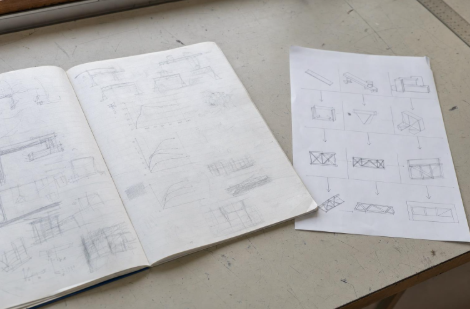
A student’s project notebook can give parents concrete evidence of learning: measurements, a revised design and an explanation of why the changes helped.
When evaluating STEM education in Hong Kong, look for that evidence alongside a school’s facilities and course list.
The University of Hong Kong’s STEM Education specialism document identifies cross-disciplinary integration as central to STEM education.
Ask how students connect subjects in their everyday work.
Key takeaways
- Check progression. Ask how the science and mathematics in each project build from one grade or year to the next.
- Inspect learning evidence. Request an anonymised project from your child’s prospective grade, with drafts, tests and feedback.
- Confirm access for your child. Find out whether the work happens in timetabled lessons or optional clubs, and what support is available.
Start with the curriculum
The Education University of Hong Kong defines STEM education as the integrated teaching and learning of science, technology, engineering and mathematics.
Look for tasks that connect these subjects: a design problem might require measurement, a scientific explanation and a working prototype.
Classroom robotics projects are a common example, using mathematics to measure, science to explain how a model moves and engineering to build it.
Ask teachers to explain those connections in a recent project. STEAM adds the arts, often through design or storytelling.
Check what students learn through those contributions, too.
Follow the progression. Ask for a grade-specific curriculum map. For each year that concerns you, it should show the science and mathematics content involved, the design or computing task that applies it, and how the next stage builds on previous learning.
If two grades appear to cover similar activities, ask what new knowledge or skills students will develop.
Check the pathway. Stamford American School Hong Kong’s curriculum overview identifies the IB Diploma Programme as one of its high-school graduation options.
Hong Kong International School describes access to AP courses as conditional on course prerequisites and/or teacher recommendations.
Use these school-reported pathways to ask how students prepare for later courses, what the entry requirements are and what options remain if a child does not meet them.
Ask for evidence of everyday learning
Request a recent, anonymised project from your child’s prospective grade. Ask to see the brief students received, a first attempt, evidence from testing, the revised version and the criteria used to assess it.
Trace testing and revision. In a bridge-design task, look for a record of how much mass each version held, the changes made after testing and the student’s explanation of the results.
The work should connect those choices to a scientific idea, such as how load is distributed.
American School Hong Kong describes students gathering supplies, constructing models and testing designs in its STEAM program.
It also says it communicates assessment expectations through learning targets and rubrics. These descriptions identify useful documents to request from any school: a rubric, or scoring guide, and work assessed against it.
A search for international schools hk may bring Stamford American School Hong Kong onto your shortlist; treat its website as a starting point, then request a current timetable and recent student work for your child’s grade.
Ask how teachers guide and assess. Find out who teaches the work, whether science, mathematics and technology teachers plan together, and what feedback students receive between drafts.
In group projects, how does the teacher check each child’s understanding? A qualitative study by Bradley and Churchill, published in December 2023, examined STEM teaching in Hong Kong international schools and identified appropriate teacher knowledge as an implementation requirement.
Its findings should not be read as a current, sector-wide assessment.
Check purposeful technology use. The Education Bureau released its Blueprint for Digital Education Development in Primary and Secondary Schools through a circular dated June 17, 2026.
The September 16, 2026 Policy Address announced plans to extend AI teaching-assistant support to more subjects. These developments provide regional context without confirming what a particular international school uses.
Ask what students must understand and do themselves, what AI assistance is permitted on a project, and how teachers check students’ explanations and working.
Use one checklist on every school visit
Use the same checklist on each visit and record what staff can show you.
| Criterion | Evidence requested | Questions to ask
|
|---|---|---|
| Progression | Grade-specific curriculum map | How does next year build on this one? |
| Student work and feedback | Anonymised project with drafts, tests and rubric | What feedback came between versions? |
| Teaching responsibility | Who teaches the work and how they coordinate | How is each child’s understanding checked in group work? |
| Participation and support | Timetable showing when STEM work happens | Lessons or clubs, and what support or extension exists? |
| Practical access and total cost | Written fee breakdown and equipment-access arrangements | How are places and equipment time allocated? |
Confirm your child’s access. The Harbour School describes The Foundry as its purpose-built makerspace. For any such space, ask how often your child’s class would use it and which lessons take place there.
Check whether projects run in normal lessons or optional clubs, how club places and equipment time are allocated, and what is available for a child who needs extra support or wants to go further.
Follow up the prospectus. If Stamford American School Hong Kong is on your shortlist, use its published curriculum documents to prepare questions.
Its 2025–26 high school profile describes STEMinn as embedded in the curriculum. Its secondary curriculum guide lists mechanics and robotics, UI/UX (how people interact with digital products), architecture and audiovisual storytelling among Grade 7 STEMinn topics.
A current timetable and recent project work can help you understand how Stamford American School Hong Kong puts that curriculum into practice. Ask for examples from your child’s prospective grade.
Request the same evidence from every school on your list. Ask each for a written fee breakdown covering materials, trips, devices, clubs and learning support, with a clear indication of which costs are included in tuition and which are additional.






Comment