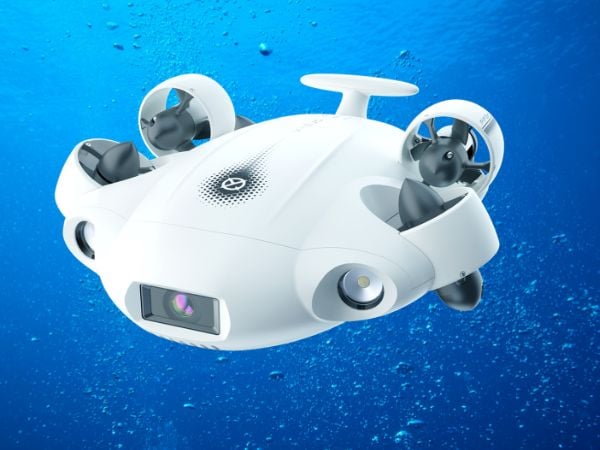
Choosing an underwater drone comes down to matching a few specs to how you plan to use it. An underwater drone is a tethered camera platform you fly below the surface while watching a live feed on a phone or tablet, and the right one depends on whether you are filming, checking a hull, or working a professional job. This guide walks through what to compare so you buy once and buy right.
What An Underwater Drone Actually Does
An underwater drone gives you eyes, and on some models hands, below the surface without getting wet. It replaces guesswork with a live, recorded view.
The tether is central to how these systems work. It carries power, control, and a live video signal back to the surface, so the feed stays solid where a wireless signal would drop. That makes an underwater drone approachable for a first-time operator, since there is no dive training and no air to manage. Depending on the model, you can film in 4K, inspect structures, or fit a gripper to retrieve objects.
The Four Specs That Matter Most
Four specs decide most purchases. Stabilization, camera and lighting, depth rating, and tether length. Get these right and the rest is detail.
Stabilization comes first, because footage and inspection detail are only useful when the vehicle holds steady in current. Camera and lighting come next, since color and detail fade fast underwater and onboard lights bring them back. Depth rating should comfortably exceed where you plan to work, not just meet it. Tether length sets your working range, so measure the deepest or farthest point you need to reach and add margin.
It helps to weigh these against runtime and how easy the unit is to launch single-handed. A drone you can deploy from a dock in minutes gets used far more than one that needs a setup ritual, and use is where the value is.
Match The Model To Your Use
The best drone is the one that fits your job, not the one with the longest spec sheet. Three broad use cases point to three tiers.
For casual filming and exploration, a compact entry model covers depth, runtime, and camera quality at the lowest cost. For hull checks and semi-professional work, a mid tier adds tool support and longer range. For professional inspection and full field workflows, a higher tier brings the runtime, depth, and accessory ecosystem the job demands. Buy for the work you do most, and let occasional edge cases stay edge cases.
Common Mistakes To Avoid
Most buyer regret comes from chasing headline specs instead of real use. A few mistakes show up again and again.
The first is overbuying in depth, since a rating far beyond where you will ever operate adds cost without benefit. The second is ignoring tether length, which quietly limits where you can work more than any camera number. The third is treating resolution as the whole story, when stabilization and lighting decide how usable the footage really is. The fourth is forgetting accessories, because a platform that cannot take the tool you need later becomes a dead end. A little planning here saves an expensive second purchase.
How To Compare Before You Buy
Comparing models side by side prevents overspending and underspending alike. Put the specs that matter in one view.
Line up stabilization, camera, lighting, depth, tether, runtime, and tool support across the models on your shortlist. A structured comparison of the best underwater drones shows where the real differences are, rather than the marketing highlights each product leads with. Then weigh the price against the specs you will actually use, not the ones that sound impressive.
Buy The Right Tool Once
An underwater drone is a long-term tool, so the goal is a confident, right-sized purchase. Weight stabilization, camera and lighting, depth, and tether against your real use, then confirm your pick with a side-by-side.
Browse the full range of underwater drone models to see the tiers in one place, and use a clear comparison of the best underwater drones to lock in the specs that fit how you plan to shoot, inspect, or explore.