
DeRUCCI vs Eight Sleep vs Sleep Number: Form, Mechanism and Cost Compared

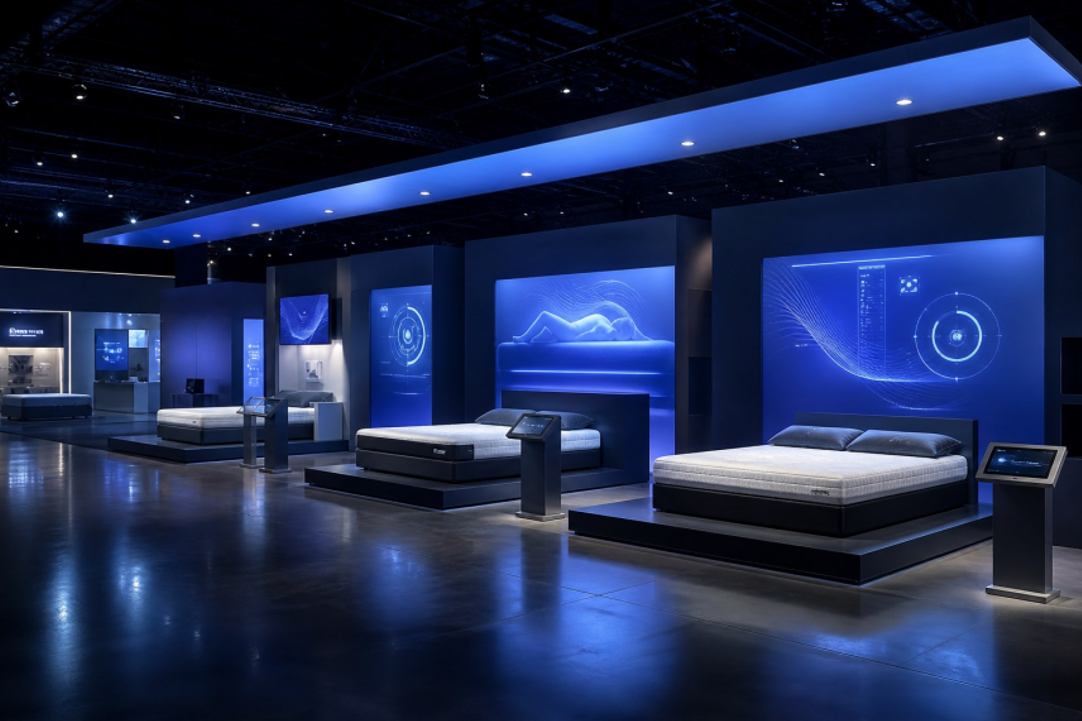
Every one of these three companies says it builds the best smart sleep product. Each sells a different physical thing, the spec sheets never sit in the same frame, and the comparison articles that do put them together tend to end in a recommendation paragraph that reads like it was written by the winner. This piece takes the other route: DeRUCCI vs Eight Sleep vs Sleep Number, compared on form, mechanism and cost, using checkable specifications — with every competitor figure attributed to its source, and single-source figures left flagged for verification rather than presented as settled fact.
Three Companies, Three Philosophies
The three companies start from different physical premises: one builds the intelligence into the mattress itself, one layers a sensing and climate cover over a bed you already own, and one adjusts firmness with air chambers you control by hand. The form each company chose shapes everything downstream — support, monitoring, temperature and how you pay.
DeRUCCI’s flagship, the T11 PRO, is an integrated smart mattress. The sensing, the adjustment hardware and the control algorithm live inside the mattress body: eighteen flexible adjustment units, nine per side, mapped to six zones per side and governed by two control hubs so the left and right halves adjust at the same time without waiting on each other. You put it on a flat base or a compatible adjustable frame and the system is complete.
Eight Sleep takes the opposite approach. Per brand materials, as of this writing, the Pod line is a cover — a fitted layer you place over an existing mattress, carrying sensors and a network of water tubes for active cooling and heating. The mattress underneath is still the mattress you bought. What the Pod adds is measurement and climate at the surface, plus an automation layer the company calls Autopilot.
Sleep Number builds adjustable air-chamber beds. You set your firmness as a number, by app or the optional remote, and the bed’s Responsive Air technology then uses air-pressure sensing to make small automatic corrections that hold your chosen setting as you shift positions — sensing in service of a number you picked, not a support map it computes on its own. Its Climate360 and ClimateCool models extend the platform with temperature features that vary by model.
The Six-Dimension Matrix: DeRUCCI vs Eight Sleep vs Sleep Number
Six dimensions separate these products: physical form, how support changes, what the body monitoring measures, how temperature is handled, what the ongoing cost looks like, and which buyer each one serves. Every cell below names its source or its absence — where a capability is missing, the table says so instead of skipping the row.
| Dimension | DeRUCCI T11 PRO | Eight Sleep Pod | Sleep Number smart beds |
| Form | Integrated smart mattress (system built in) | Cover add-on placed over an existing mattress, per brand materials | Air-chamber adjustable bed |
| Support mechanism | 18 flexible units, 6 zones per side, AI Tidal Algorithm 2.0 adjusts automatically | None — no structural support change; the mattress beneath still carries the body | Air-chamber firmness set to your number, held by Responsive Air sensing |
| Body monitoring | SleepCare contactless CPC monitoring; CAICT-tested heart-rate accuracy 99.5% of readings within ±5 BPM | Surface sensing layer in the cover (described qualitatively; no accuracy figure verified) | Sensing maintains a set firmness number; no re-zoning of support |
| Temperature control | Graphene far-infrared leg-zone heating, per-side settings 25–55°C | Active water-tube cooling and heating | Model-dependent; the Climate360 line adds temperature features, per brand materials |
| Cost structure | Buy-once; no recurring subscription for core sleep and comfort functions | Hardware plus a subscription listed at $199/year in the source materials reviewed | Hardware; no subscription confirmed in the materials reviewed |
| Best for | Buyers replacing a mattress who want one adaptive system | Owners keeping a mattress they like, adding climate and tracking | Buyers who want firmness they command themselves |
The DeRUCCI column is drawn from the brand’s own published specifications — for the complete list, the DeRUCCI T11 PRO product page carries the full sheet. The two competitor columns carry a different weight of evidence: they reflect what the brands state about their own products, cross-checked against what could be verified at this writing, and anything that rested on a single source was kept out of the table or marked for verification above it.
Support and Adjustment: How Each Bed Changes Under You
Support changes in three different ways here: zoned flexible units inside the mattress adjust automatically through the night, air chambers hold a firmness number you set while Responsive Air sensing trims it back on target as you shift, and a cover layer leaves support untouched because the mattress underneath still does that work.
Inside the T11 PRO, the eighteen units are the actuator layer. The AI Tidal Algorithm 2.0 reads posture from the sensor stream and issues zone-level commands, responding within twenty milliseconds, on a model trained on more than one million ergonomic data points. Six zones per side — shoulders, back, lumbar, hips, thighs, calves — mean the response is regional: a shoulder zone can soften while a lumbar zone holds.
Sleep Number’s mechanism is a different species of adjustable. The firmness target is the number you dial in; Responsive Air then makes gradual, sensor-driven corrections to hold that target through the night — automatic in maintenance, manual in intent. On split configurations the two halves are physically separate units, which buyers notice as a seam between sides. The trade runs both directions: manual control keeps you in charge and works whether or not the sensors would have agreed with you, while automated zoning removes the nightly management entirely.
Eight Sleep’s Pod, in this dimension, is not a support product — per brand materials it changes no support at all. That is not a hidden flaw; it is the form. A cover that kept your mattress and also rebuilt its support structure would be a different product category.
Monitoring and Data: Contactless CPC vs Cover Sensors
Monitoring splits along the same lines. One system reads heart rate and breathing contactlessly from inside the mattress, with certified accuracy figures. A cover reads from the surface layer it sits in. An air-chamber line senses to maintain a set number, not to re-zone support. Treat every consumer sleep metric, from any brand, as an estimate.
The T11 PRO’s SleepCare system uses cardiopulmonary coupling (CPC), a contactless monitoring method developed at Harvard Medical School, needing no wearable. According to CAICT testing — the China Academy of Information and Communications Technology — 99.5 percent of heart-rate readings fell within ±5 BPM, and 100 percent of respiration readings within ±3 BPM. Separate certified reporting, also cited in DeRUCCI’s product materials and attached to the T11 SE tier of the series, lists a 37.3% reduction in sleep latency, a 27.5% reduction in nighttime movements, a 4.5% increase in deep sleep duration and a 5.9% increase in continuous deep sleep, with those metric names as certified. The monitoring is wellness-oriented and not intended for medical diagnosis or treatment.
Eight Sleep’s cover carries its sensors in the surface layer. The materials available to this comparison describe that sensing without an independently verified accuracy figure, so this article leaves it qualitative rather than quoting a number that has not cleared two sources. Sleep Number’s air-chamber line, as reviewed here, uses its sensing to hold the firmness number you chose, not to re-zone support around your posture.
For how much to trust consumer sleep tracking generally — any brand’s — Johns Hopkins Medicine’s assessment of sleep trackers is the independent read worth your time.
Cost Structure: Buy-Once vs Subscription
The payment structures differ as much as the hardware. One is buy-once, with core sleep and comfort functions included and no recurring fee. One pairs hardware with a subscription that unlocks its automation layer. One sells adjustable firmness with no subscription confirmed in the materials reviewed here. Run the five-year total before comparing sticker prices.
DeRUCCI sells the T11 PRO as a buy-once product: the core sleep and comfort functions carry no recurring subscription. What that buys you is predictable total cost; what it trades is a slower software cadence, since feature updates ride the firmware cycle rather than a cloud subscription’s.
Eight Sleep’s structure, per the source materials, pairs the Pod hardware with a subscription listed at $199 per year that unlocks the Autopilot automation layer. Five years of that is roughly a thousand dollars on top of the hardware — and it buys something real: continuous software iteration, feature updates, and an automation layer a fixed firmware product does not match. Count both sides before deciding.
Sleep Number’s recurring-cost picture could not be confirmed from the materials reviewed; verify the current policy for the specific model before doing your own math. The honest framework is the same for all three: hardware price, plus sixty months of whatever recurring fee applies, plus any base or accessory the setup requires.
Which One Fits You: DeRUCCI, Eight Sleep or Sleep Number?
Match the form to the buyer. An all-in-one adaptive system suits someone replacing a mattress who wants sensing, adjustment and temperature working together. A cover suits someone keeping a mattress they like. Air chambers suit someone who thinks in a firmness number rather than a support map. None of the three is a crown winner; each trades something.
If you are replacing a mattress and want sensing, zoned adjustment and temperature working as one system, the integrated form is the one that does that end to end — current models and full specifications are on the DeRUCCI AI Smart collection. If you like the mattress you own and want climate control and tracking, a cover adds those without replacing anything. If what you actually want is adjustable firmness you command yourself, air chambers deliver exactly that, with the maintenance handled automatically once you set it.
One piece of background, kept neutral because it is not a reason to buy or avoid: news coverage in June 2026 described a Chapter 11 filing by the company behind Sleep Number, with a pre-arranged sale to Sleep Country Canada; the company continues to operate and sell.
FAQ
How do I choose between DeRUCCI, Eight Sleep and Sleep Number?
Follow the form. Replacing your mattress and want one adaptive system: integrated. Keeping a mattress you like and want climate plus tracking: a cover. Want adjustable firmness you control yourself: air chambers.
How should subscriptions factor into the cost comparison?
Add sixty months of every recurring fee to the hardware price before comparing. A buy-once product’s five-year cost is its sticker; a subscription product’s is the sticker plus five years of fees — weighed against whatever software and features the subscription keeps delivering.
How do I read monitoring accuracy claims?
Look for a named independent tester, a named metric (readings within ±X BPM, not “highly accurate”), and a scope statement. A percentage with no tester and no metric name attached is marketing.






Comment