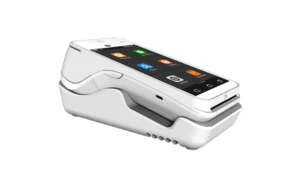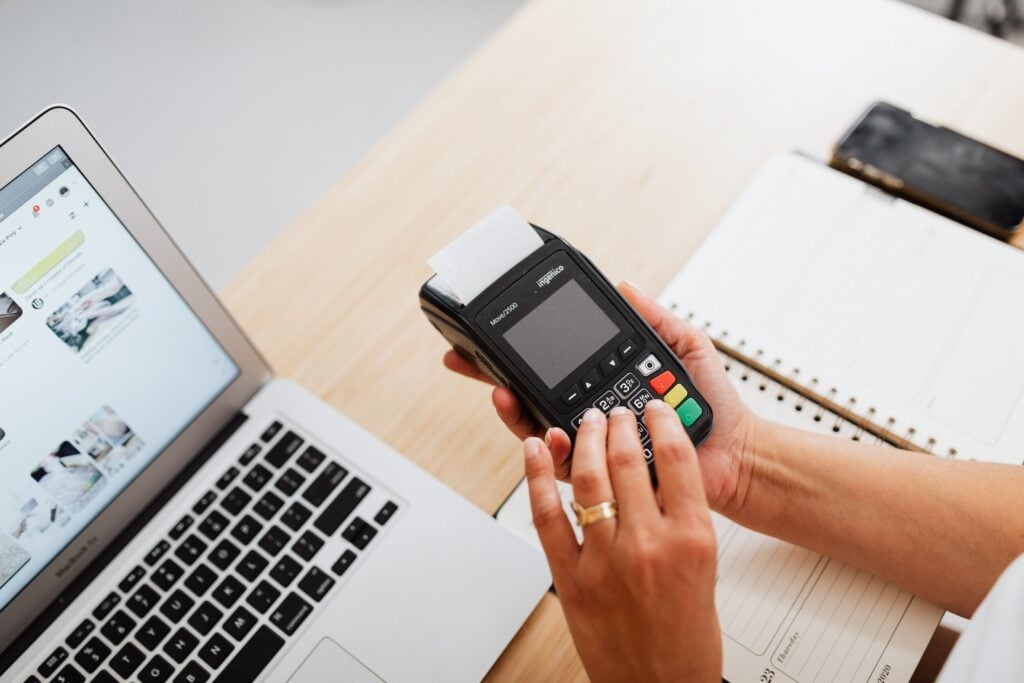
People’s need for speed nowadays enables them to decide whether they trust a payment device in a matter of seconds. A smooth tap, a clear screen, and a secure transaction often matter more than a long list of features.
If you want your payment device MVP (Minimum Viable Product) to succeed, you may need to build confidence before you build complexity. Here is a little walkthrough on how you can create a payment device MVP that earns trust from users, merchants, investors, and pilot partners.
Start With Real Payment Problems Instead of Product Ideas
Most payment startups fall by the wayside not because they are doing something wrong per se, but mainly because the idea comes first when developing a gadget or a solution rather than taking time to understand the actual payment pain points of users. So start with the analysis and find out where the obstacles lie – it might be, for example, a slow checkout process, a transaction error, or some merchant workflow that doesn’t go smoothly.
You may have to understand how the modern payment infrastructure is integrated in today’s financial ecosystem through connected services. Work and speak to retailers, service providers, and your customers to find out what frustrations they have hidden in the guise of speed. A powerful MVP isn’t the one that runs after each feature, but it’s the one that gets rid of one major issue in a clear and outstanding way.
Build Security Into Every Decision From Day One
Your customers’ trust can easily vanish after one payment security failure, which is why protecting your operations has to begin before your first prototype is complete. Build security into every layer by minimizing stored payment data, encrypting communications, securing firmware updates, and protecting device access.
With a firm grasp of what PCI DSS and EMV requirements really are (early) helps you avoid costly redesigns while creating safer transactions. The PCI Security Standards Council recommends security throughout the product lifecycle, helping payment technology providers reduce risks and protect customer data.
Choose Partners Who Connect Hardware, Software, And Brand Experience
Developing a trusted payment device, with all the competitors these days, requires more than strong engineering. Your target users need to experience the product as a complete journey, from the physical feel of the device to the clarity of every screen interaction.
A reliable enclosure, for instance, cannot compensate for providing confusing software; also, a seemingly smooth interface cannot overcome poor hardware design. That is why, by bringing together specialists in your industrial design, firmware, branding, and manufacturing, you create a more consistent product experience where every detail supports user confidence and long-term adoption. Working with technology partners such as tether.com can also help your teams explore solutions that align hardware innovation with secure digital payment experiences.
Design An Interface That Reduces Customer Doubt
Payment anxiety often comes from uncertainty rather than some hitches in your tech installations. Users nowadays want immediate affirmation that their transaction started correctly and finished successfully.
Your MVP needs to communicate each of these actions clearly. You can use savvy digital tools to produce readable fonts, recognizable payment symbols, simple instructions, and visible progress indicators. Confirmation screens have to appear quickly without overwhelming users with technical information.
Also, accessibility is one of today’s matters that you need to mark well. Large touch targets, high contrast displays, multiple language options, and intuitive navigation improve confidence for both customers and employees. According to the Nielsen Norman Group, reducing cognitive load allows users to complete digital tasks more accurately and with greater confidence.
Prototype Quickly Then Test In Real Business Environments
In many environments nowadays, laboratory testing alone cannot fully predict customer or user behaviors. Your MVP needs to be exposed to real checkout counters, busy retail locations, food service operations, transportation hubs, or healthcare facilities.
You’ll have to watch how your workers interact with the device or prototype during peak hours. After that, measure transaction completion time, user mistakes, support requests, and abandoned purchases. Record where customers hesitate before tapping or inserting their cards.
Each pilot has to answer specific questions, like:
-
Can first-time users complete their transactions without assistance?
-
Does the device remain responsive and usable during continuous operation?
-
Do merchants understand all status messages without much or additional training?
Collect qualitative feedback alongside measurable performance data. Small observations often reveal improvements that dramatically increase customer confidence.
Build Hardware That Supports Manufacturing From The Beginning
A sleek prototype may impress investors, but it can only succeed when you can produce it reliably and affordably. This is why you need to build your payment device with manufacturing in mind from the start, including the enclosure, components, connectors, and internal systems.
You need to secure and use only reliable parts instead of looking at tag prices, assess supplier stability, and prioritize designs that support easier repairs and upgrades to keep up with growing needs. As today’s electronics supply chains remain under pressure for advancement, early planning for durability, sourcing, and compliance can help you avoid costly delays when scaling from prototype to actual production.
Create A Compliance Checklist Before Your Pilot Launch
Compliance these days needs to move alongside development instead of just following its edicts. Preparing documentation early, for instance, can keep your pilot organized and help you simplify future certification work.
Also, you may need to make sure your checklist includes:
-
PCI DSS responsibilities
-
EMV planning requirements
-
Secure firmware update process
-
Encryption validation
-
Hardware security review
-
Accessibility considerations
-
Needed and updated electrical credentials
-
Privacy documentations
-
Incident response protocol and blueprint
-
Field testing records
Treat this checklist as a living document. Every design revision has to include a compliance review before moving into the next development stage.
Measure Trust Instead Of Only Measuring Transactions
Keeping tabs on your transaction volume tells only part of your product story. With user trust, however, you produce repeat usage, positive referrals, and stronger merchant relationships.
You need to track some metrics, like successful first-time transactions, support ticket frequency, merchant satisfaction, customer confidence ratings, payment completion speed, and dependable uptime. These are some indicators that will let you know whether your MVP feels competent enough in everyday business environments. Combine your analytics with user interviews after every pilot testing.
You can even ask some merchants what created confidence, what caused hesitation, and what they would change before recommending your solution to another consumer.
Products and brands that consistently improve from user feedback usually reach stronger product-market fit than those relying only on engineering assumptions.
Turn Early Confidence Into Long-Term Adoption
If you want to build a payment device MVP that users can trust, it is not about adding every possible feature. It is actually about removing uncertainty at every customer interaction, from the first prototype to the final transaction.
You need to keep on listening, testing, refining, and let every improvement strengthen all your users’ confidence. Later, you will know that trust becomes your strongest competitive advantage, and your most valuable product feature.