In the current data-driven economy, organizations are increasingly focused on moving from a fragmented system to an intelligent and real-time decision-making platform. This has seen enterprise architects play a critical role in integrating cloud technologies, AI, and business intelligence into a cohesive ecosystem. Among such IT professionals leading this change is Surender Kusumba, a seasoned enterprise architect recognized for delivering scalable data solutions.
Surender Kusumba is a professional who has dedicated 23 years to working with Fortune 500 organizations to deliver change to their data systems and business results. The technology that he is knowledgeable about includes Oracle Fusion ERP, Salesforce, SAP, Snowflake, AWS, and major analytics technologies such as Tableau and Power BI, among others. This shows that he is dedicated to linking technology and business performance.
Transforming Enterprise Data into Real-Time Intelligence
The method of enterprise architecture developed by Kusumba indicates that an organization needs to shift away from its existing systems of reporting, where different systems of reporting are used, and instead develop complete intelligent systems. He develops systems where data can freely pass between different systems, giving immediate insights, since he believes data is a dynamic resource rather than a static one. The approach was seen to be effective when Kusumba developed the HIGLAS Datalakehouse Integrations project for GDIT. The system was developed in a modular and scalable way to address the issues faced by healthcare organizations when they have to manage their financial operations and actual financial information. The system was able to reduce data processing time by 40%, thus giving them faster access to insights and accuracy in finance. It was able to allow them to perform predictive analysis, enabling them to see changes that would occur in the future and thus improve their decision-making process.
Solving Data Fragmentation at Scale
Another major issue that big organizations face today is data fragmentation, which exists in various systems. The integration of Oracle Fusion ERP, EPBCS, Incorta, and cloud technologies into a data lakehouse solution was what Kusumba utilized to solve this problem. The organization was able to create a centralized data architecture with a governed data management approach, which led to:
- 99.99% data accuracy
- The organization reduced manual work hours by about 600 hours per month
- The organization developed a unified enterprise data system.
The transformation process was greatly influenced by automation systems. Kusumba developed effective ETL systems to reduce manual work needs while increasing efficiency and reliability.
Leadership and Delivery Excellence
The technical work carried out by Kusumba has received recognition, along with his ability to effectively manage complex projects and supervise teams with individuals from different departments. He has effectively managed teams with 25 workers to deliver solutions to different industries, such as healthcare, finance, telecommunication, and manufacturing, among others. Agile methodologies, along with the implementation of the delivery framework, has enabled organizations to attain improved speed and quality of products, and increased levels of adoption. This strategy, implemented by GDIT, has ensured 90 percent satisfaction among users, along with a 75 percent improvement in adoption within a period of six months, thus portraying how important it is to match what users want with what is delivered from a technical perspective.
Advancing Enterprise Architecture with AI and Emerging Technologies
The technology that enterprises have now started to adopt creates new business opportunities for Kusumba, who specializes in developing systems based on Artificial Intelligence, which can process data streams in real-time.
The areas where the technological advances have a positive impact on the financial and analytical industries include:
- Automated reporting systems
- Real-time anomaly detection
- Natural language interfaces for interacting with enterprise data
Kusumba believes that it is essential for an organization to have an architectural framework in place, including data governance and system design, for its technology solutions to be effective.
In Conversation with Surender Kusumba
In a recent conversation with TechBullion, Surender Kusumba revealed insights into his philosophy, technical approach, and vision for the future.
Q1. You have built an extraordinary career trajectory over the past two decades. How has your core philosophy as an enterprise architect evolved as technology has shifted from traditional databases to cloud and AI?
A: Early in my career, the focus was primarily on data storage and basic reporting. Today, my philosophy is centered on unified intelligence. It is no longer just about moving data; it is about designing an ecosystem where cloud services, AI, and business intelligence are structurally integrated. An architect’s true job is to bridge complex technical challenges with tangible business value.
Q2. You are known for consistently delivering solutions that reduce maintenance costs by 20% and increase system efficiency by 10%. How do you achieve these metrics across different Fortune 500 companies?
A: It comes down to strategic enterprise transformation. I focus on establishing a clear enterprise data architecture vision and roadmap before writing a single line of code. By standardizing platforms, retiring redundant legacy systems, and automating manual processes, we naturally drive down maintenance costs while boosting overall system performance.
Q3. Let’s talk about your work at GDIT on the HIGLAS Datalakehouse project. Healthcare financial management is notoriously complex. How did you approach modernizing the HIGLAS Datalakehouse?
A: Healthcare finance requires absolute precision and massive scale. I designed a modular and scalable architecture specifically tailored for those demands. We moved away from rigid legacy structures and implemented an environment that could process vast amounts of financial and operational data dynamically, ensuring that the system could scale as the agency’s needs grew.
Q4. The results of that Data architecture were staggering—reducing data processing time by 40%. What did that reduction enable the business to do?
A: That 40% reduction was a game-changer. It enabled real-time insights that were previously considered impossible. Instead of waiting days for financial reconciliation, stakeholders could view operational data instantly. Furthermore, it allowed us to implement predictive analytics capabilities, which directly enhanced financial accuracy and contributed to highly effective cost management.
Q5. At Southern Company, you faced a different challenge: integrating multiple disparate data sources like Oracle Fusion ERP, EPBCS, and Incorta. How did you unify these into a single ecosystem?
A: Large enterprises often suffer from data fragmentation. I architected a unified data lakehouse. This meant bringing all those disparate sources—along with various cloud platforms—into one cohesive environment. The lakehouse model allows us to handle both structured and unstructured data, creating a single source of truth for the entire enterprise.
Q6. That implementation achieved an unprecedented 99.99% data accuracy rate. In a massive enterprise, how is that level of accuracy even possible?
A: It is possible through relentless automation and strict data governance. I designed automated ETL (Extract, Transform, Load) pipelines that eliminated the manual touchpoints where human errors typically occur. By automating these pipelines, we not only secured that 99.99% accuracy rate but also reduced manual engineering effort by 600 hours per month.
Q7. Your expertise spans BI On-Premise to Cloud, Cloud to On-Premise, and Cloud to Cloud models. Why is this versatility so critical for modern enterprises?
A: Very few large organizations operate entirely in one environment. They have legacy on-premise systems holding critical historical data, alongside modern cloud applications. An enterprise architect must know how to build secure, low-latency bridges between these environments. My frameworks ensure that regardless of where the data lives, the business experiences a seamless, unified intelligence layer.
Q8. You have been a strong advocate for integrating AI and Machine Learning into enterprise systems. How are you applying Generative AI to streamline finance processes?
A: I treat AI integration as a foundational architectural discipline, which is why I pursued advanced certifications like the OCI GenAI Cloud Professional. In finance, we use GenAI to automate complex reporting, detect anomalies in real-time, and allow business users to query financial data using natural language. But for GenAI to work without hallucinations, the underlying data architecture must be perfectly structured and governed.
Q9. You also utilize cutting-edge technologies like Kafka and PySpark. How did you apply these for enterprise solutioning design?
A: Enterprise’s sheer volume and velocity of data required next-generation solutions. I utilized Kafka for real-time streaming and PySpark for heavy big data processing. Using these tools, I developed an innovative transmission framework that became the foundation for their enterprise-wide data integration strategies.
Q10. What made that transmission framework developed so successful across the enterprise?
A: Reusability. Instead of building custom data integrations from scratch for every new project, I established reusable architectural components. This drastically accelerated future development cycles across the organization because teams could leverage a proven, secure foundation.
Q11. Security is paramount, especially in the highly regulated healthcare and finance sectors you work in. How do you ensure compliance while pushing technological boundaries?
A: Security cannot be an afterthought. I design role-based access controls (RBAC) and strict security implementations directly into the data lakehouse and ETL pipelines. By establishing these frameworks at the foundational level, we ensure technical excellence and regulatory compliance, creating standards that multiple organizations have since adopted.
Q12. Beyond technology, you are known for your leadership, managing teams and resources. How did you change the delivery culture using Agile methodologies?
A: I integrated Agile in a way that demanded immediate quality. I ensured that new features were not just developed, but fully automated and tested within the exact same sprint cycle. This eliminated technical debt and ensured that what we delivered to the business was immediately functional and reliable.
Q13. That Agile approach led to a 90% user satisfaction rate and a 75% increase in user adoption. Why did users respond so positively?
A: Users respond to reliability and speed. When they see that a system is responsive to their needs, works flawlessly upon release, and actually makes their daily jobs easier, adoption naturally skyrockets. It is about delivering continuous, measurable value.
Q14. You also place a heavy emphasis on documentation and training. Why is this so important to your architectural process?
A: An architecture is only as good as the people operating it. My comprehensive documentation practices and training sessions for both end-users and technical teams empower organizations to maximize their technology investments. It creates a lasting impact that extends far beyond my immediate project deliverables.
Q15. You frequently partner with business groups on software requirements. Why is it vital for an architect to step outside the IT department?
A: Because an enterprise architect must understand business objectives just as well as technology imperatives. If I don’t partner with the business groups, I risk building a technically perfect system that solves the wrong problem. Aligning software requirements with strategic business goals is what sets a true enterprise architect apart.
Q16. Finally, looking at the landscape of enterprise technology today, what is the next major frontier you are preparing your clients for?
A: The next frontier is fully autonomous enterprise intelligence. We are moving toward systems that don’t just predict outcomes but automatically execute complex business processes based on those predictions. The architectures I am building today—integrated lakehouses, real-time streaming, and native AI integration—are the foundational blueprints for that autonomous future.
Conclusion
The works of Surender Kusumba demonstrate the changing face of enterprise architects in a world where digital evolution is happening at a fast pace. His ability to leverage technical and executional capabilities has enabled the transformation of complex data environments into scalable and intelligent systems of the future. His areas of focus on integration, automation, and innovation can therefore serve as a guideline for organizations looking to create a data-driven enterprise of the future.
About Surender Kusumba
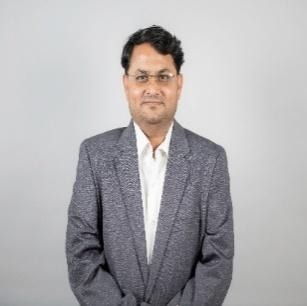
Surender Kusumba is an experienced and seasoned enterprise architect and technocrat with significant expertise in data solutions, having over 23 years of experience in delivering high-performance and scalable enterprise architectures to Fortune 500 companies. His areas of expertise include Oracle Fusion ERP, Snowflake, AWS, BI, and AI-ML-based analytics solutions.
He has led and delivered large-scale digital transformation projects across industries, namely healthcare, finance, telecommunications, and manufacturing, with consistent and significant improvements in system efficiency, data precision, and operational performance. Kusumba is recognized as an influential leader in the field of enterprise data architecture and continues to make significant contributions to the domain through the adoption and implementation of cloud, automation, and other technologies, namely Generative AI.