Singapore has built a strong position as a regional hub for electronics, automation, precision engineering, marine, medical technology, and advanced manufacturing. Behind many of these industries is a common requirement: reliable custom parts delivered with consistent quality, short lead times, and clear communication between engineering, procurement, and production teams.
As product cycles become shorter and supply chains become more demanding, manufacturers are paying closer attention to how custom components are produced. For many companies, precision laser cutting has become a practical way to produce prototypes, metal parts, panels, brackets, fixtures, enclosures, labels, and specialty components without the delays often associated with traditional tooling or overseas sourcing.
Why Local Precision Manufacturing Matters
Singapore’s precision engineering sector contributes around S$14 billion annually to the economy, according to the Economic Development Board. Yet despite this scale, many manufacturers still rely on overseas suppliers for custom components — a sourcing pattern that introduces meaningful delays whenever a design changes.
For engineering teams, even a small revision can affect the entire production schedule. A bracket may need a revised hole position. A stainless steel cover may require a new cutout. A prototype panel may need to be tested before moving into batch production. When these parts are sourced from distant suppliers, a minor update can add one to three weeks to the cycle — accounting for revised drawings, shipping, inspection, and rework.
Local precision processing reduces that gap considerably. Working with a nearby supplier allows engineers to review drawings faster, clarify tolerance requirements, inspect samples, and adjust designs before committing to larger production runs. It also reduces the risk of miscommunication when materials, finishing requirements, or assembly details are involved.
Laser cutting is especially useful in this environment because it supports both one-off prototypes and repeat production batches. It allows companies to move from drawing to part faster, while maintaining the accuracy required for industrial and commercial applications.
The Role of Laser Cutting in Modern Manufacturing
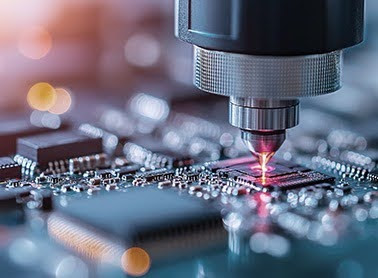
Laser cutting is widely used because it produces clean edges, fine details, and repeatable profiles across a range of materials. For sheet metal applications, it processes stainless steel, aluminium, mild steel, brass, copper, and other commonly used industrial materials.
In Singapore, companies use laser-cut parts for equipment panels, electrical enclosures, machine guards, mounting brackets, signage components, marine hardware, automation fixtures, display structures, and custom fabrication projects. The process suits both simple flat profiles and more complex parts that later require bending, welding, polishing, engraving, or assembly.
This makes laser cutting particularly valuable for electronics and semiconductor equipment, where dimensional accuracy and repeatability are important. It also serves industrial automation well, where brackets, frames, covers, and fixture parts often need to be customized around sensors, motors, conveyors, and production equipment.
For companies sourcing metal cutting services in Singapore, the main value is not only the cutting process itself — it is the ability to translate a drawing into a usable part with the right material, thickness, tolerance, finish, and delivery schedule.
From Prototype to Production
One of the biggest advantages of laser cutting is flexibility. Traditional processes such as stamping or die cutting can be efficient for high-volume production, but they typically require tooling. That upfront tooling cost is often impractical for early-stage development, small batches, replacement parts, or frequently updated components.
Laser cutting removes this barrier. Engineers can submit a drawing, test a prototype, make adjustments, and move into a larger batch when the design is confirmed. This is useful for startups, product development teams, R&D departments, and manufacturers that regularly iterate on part designs.
For example, an automation company may need five test brackets for a new machine layout. A marine supplier may need a stainless steel panel with custom cutouts. An electronics company may need a thin metal cover, shield, or mounting plate. In these situations, speed and flexibility can be more valuable than committing to fixed tooling early.
Multi-Process Support Reduces Coordination Risk
In most real manufacturing projects, cutting is only the first step. A part may need to be bent, welded, deburred, polished, engraved, marked, or assembled before it is ready for use. When each process is handled by a different supplier, coordination becomes more difficult — drawings get sent multiple times, specifications can be interpreted differently, and delays compound between each production step.
This is why multi-process support is becoming more important in custom manufacturing. A supplier that can handle cutting, bending, welding, finishing, and marking within one workflow reduces handoff errors and improves overall efficiency. For procurement teams, it also simplifies vendor management: instead of coordinating with four or five separate shops, they work with one production partner that understands the full part requirement from the start.
Supporting Singapore’s Key Industrial Sectors
Singapore’s manufacturing base includes industries that require both precision and responsiveness. Electronics and semiconductor companies need accurate components for equipment, fixtures, housings, and process support parts. Automation companies require custom frames, brackets, guards, sensor mounts, and machine panels. Marine and offshore suppliers need corrosion-resistant metal parts for demanding environments. Medical and cleanroom projects may require controlled finishes, stainless steel parts, and reliable documentation.
In each of these sectors, small details matter. Material choice, bend allowance, hole position, surface finish, and edge quality can all affect whether a part works correctly in its final application. Beyond cutting the file, a strong fabrication partner reviews the drawing, checks manufacturability, confirms material suitability, and helps identify issues before production begins — a step that can prevent costly rework when parts need to fit into assemblies or when tolerances are tight.
Why Precision Services Are Becoming More Strategic
The role of fabrication suppliers is changing. In the past, many companies treated custom cutting as a routine purchasing task. Today, it is increasingly part of a broader product development and supply chain strategy.
Shorter lead times help companies respond faster to customer requirements. Local production reduces dependency on long-distance logistics. Flexible batch sizes allow teams to test before scaling. Multi-process support reduces errors between stages. These advantages are particularly important for businesses in electronics, automation, and specialty manufacturing — sectors where product cycles are short and supply chain disruptions carry real cost.
Choosing the Right Laser Processing Partner
When selecting a laser cutting or precision fabrication supplier, companies should look beyond the cutting machine itself. Important factors include material experience, drawing review capability, tolerance control, finishing support, communication speed, and the ability to handle both prototypes and repeat production.
A strong supplier should be able to answer practical questions before production starts: What material is best for this application? Is the drawing suitable for cutting? Will the part require bending or finishing after cutting? Are there sharp corners, narrow bridges, or tolerance conflicts that may cause problems? Can the supplier support urgent prototypes as well as recurring batches?
These questions make the difference between a part that looks correct on paper and a part that performs correctly in real use.
Conclusion
Precision laser cutting has become an important support process for product development, industrial maintenance, automation, electronics, marine projects, and custom manufacturing across Singapore. As local manufacturers continue to face pressure on lead times and supply chain reliability, access to fast, accurate, and flexible fabrication services becomes a genuine competitive factor.
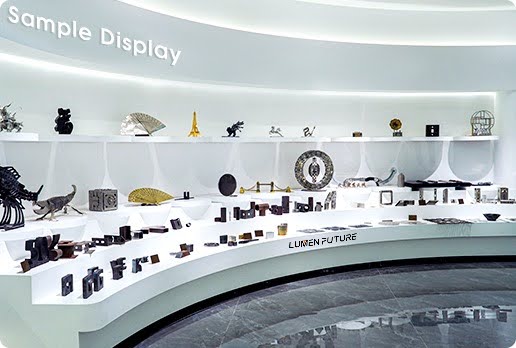
For engineering and procurement teams that need custom parts, prototypes, or production support, Lumen Future provides local laser processing and precision fabrication services in Singapore — helping teams turn drawings into finished parts with fewer coordination steps and clearer production control.