
How Real-Time Data Is Changing the Digital Football Experience

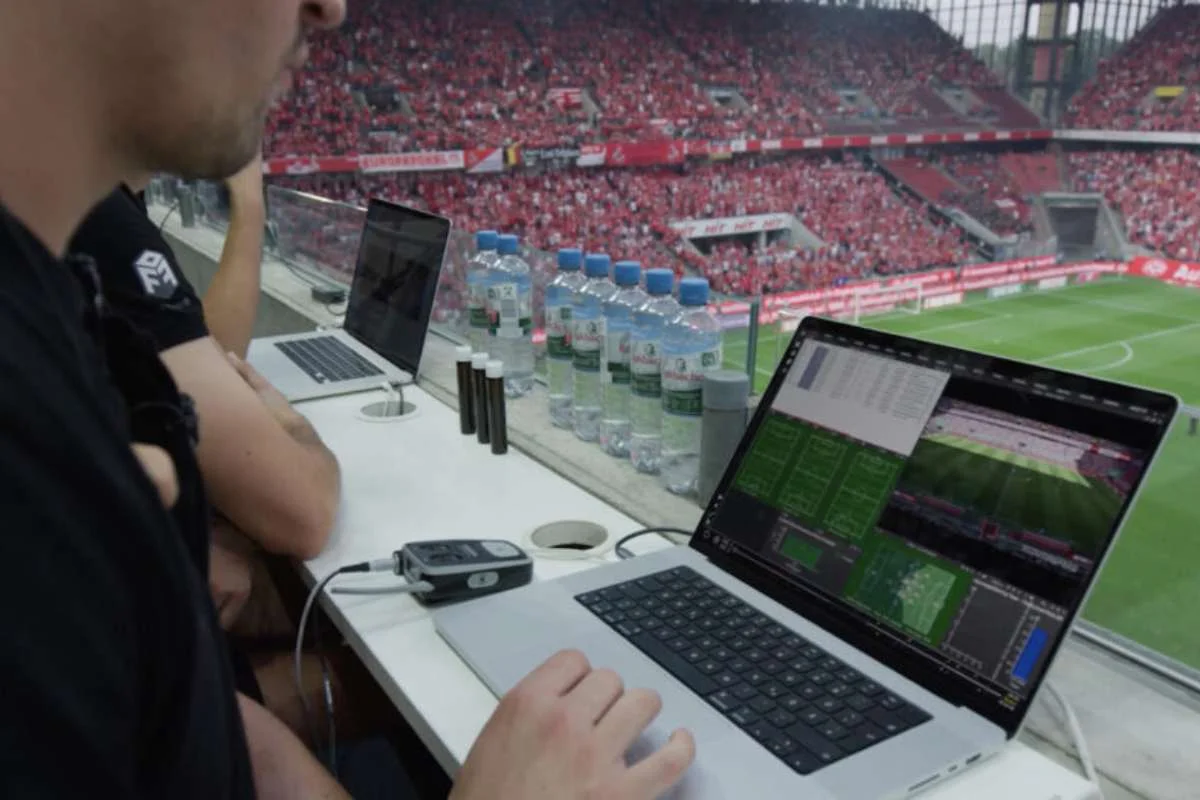
Football fans no longer need to watch an entire match to follow what happens on the pitch. Live scores, match statistics, mobile notifications and changing betting odds provide constant updates throughout a game. Behind these services is a network of data providers, software platforms and digital infrastructure that turns football events into information available across different devices.
The technology has changed how supporters experience matches, how sports platforms deliver content and how betting markets respond to developments on the pitch. Understanding how these systems work also explains why live information is not always perfectly synchronized.
From the football pitch to a digital platform
Every live football update begins with an event at the stadium. A goal, substitution, yellow card or penalty creates information that can be recorded and distributed to digital services.
Sports data providers collect match information through different methods, including trained observers, official data sources and automated tracking technologies. The available methods depend on the competition, the provider and the type of information being collected.
Once an event has been recorded, the data can be processed and transmitted to platforms through application programming interfaces, commonly known as APIs.
These interfaces allow websites and mobile applications to receive updated information without collecting every match event themselves. A football app, for example, can use an external data service to display scores, player statistics and match timelines.
The process appears straightforward to users, but each stage introduces technical requirements. Information must be captured correctly, delivered reliably and presented in a format that the receiving platform can interpret.
Why real-time data matters beyond live scores
The digital football experience now involves much more than checking the result of a match. Different services use the same underlying events to provide distinct features.
A sports news website might automatically update its match coverage after a goal. A fantasy football platform may recalculate player points based on newly recorded events. Statistical applications can incorporate additional match information into performance indicators and visualizations.
Sports betting services represent another application of this technology.
When the score changes, betting operators may adjust the odds available for different outcomes. Information about red cards, penalties and other important developments can also influence market prices.
Platforms focused on betting information provide an additional way to follow these developments. For example, Best of Bets brings together football betting information, live scores, odds and bookmaker comparisons. Such services illustrate how match data can be combined with other information within a single digital experience.
However, the underlying information does not determine every platform’s response. A live-score application and a betting operator may receive similar match updates while processing them for entirely different purposes.
Why live streams and match updates are not always synchronized
One of the most noticeable characteristics of digital football coverage is that different services can show different moments of the same match.
A mobile notification might announce a goal while a television broadcast still shows the attacking move that led to it. Similarly, a betting market may change before someone watching an online stream has seen the incident responsible.
This happens because match data and broadcast pictures travel through separate technical systems.
Live video passes through production equipment, encoding processes, distribution networks and playback devices. Each stage can introduce latency, meaning a delay between the original event and its appearance on screen.
Match data follows a different route, typically involving event collection, processing and transmission to connected services.
The UK Gambling Commission explains that broadcast latency varies and that people attending sporting events generally have access to more timely information than viewers following television or online coverage.
Consequently, a service described as live does not necessarily display events at the exact moment they occur.
For users, the important distinction is between receiving timely information and receiving information without any delay. The latter cannot be assumed simply because a platform offers live coverage.
How live football information influences betting markets
Live betting provides a particularly clear example of why data processing matters.
Unlike pre-match betting, in-play markets operate while the sporting event is taking place. The likelihood of different outcomes changes as the match develops, requiring operators to reassess their prices.
A goal can significantly affect the probability of a team winning. A red card might influence expectations about possession, goals and the remaining course of the match.
However, live betting odds are not calculated from the current score alone. Operators can incorporate additional match information, probability models and their existing financial exposure when setting prices.
They may also temporarily suspend markets during significant incidents. This allows incoming information to be processed before betting becomes available again.
Another important distinction concerns bet confirmation. Selecting an available price does not necessarily mean that a bet has been accepted. In-play transactions may involve a processing delay, during which prices or market availability can change.
These mechanisms demonstrate why accurate data and clearly communicated market status are just as important as rapid updates.
They also highlight why a perceived delay in a broadcast should not be treated as a reliable betting advantage.
Data accuracy is just as important as delivery speed
Speed receives considerable attention in sports technology, but fast information is not necessarily correct information.
Consider a goal that is initially recorded before being disallowed following a video assistant referee review. A platform may need to revise the score, update its match timeline and correct any statistics affected by the original decision.
If these changes are not processed consistently, different parts of an application might temporarily display conflicting information.
This makes data validation an essential part of digital sports infrastructure.
Providers need methods for identifying questionable information, processing corrections and maintaining consistency between related events.
The reliability of real-time sports data APIs therefore depends on more than update speed. Data sources, validation procedures and the ability to maintain stable services also matter.
For platforms handling large amounts of live information, dependable processing is particularly important during major sporting events, when user activity and the demand for updates can increase sharply.
A technically fast platform offers limited value if its information is regularly incomplete, inconsistent or incorrectly displayed.
Building a better experience for football fans
From a user’s perspective, the technical complexity behind live football information should not make an application difficult to understand.
Clear presentation plays a central role. Match scores, event timelines and player statistics should be easy to distinguish, while updates need to appear in a logical sequence.
Notifications also require careful consideration. Receiving an alert about every minor event may overwhelm users, while missing an important development can undermine the value of a live service.
Different audiences also have different requirements.
Someone checking a final score needs relatively little information. A supporter following a match without video may appreciate a detailed event timeline. A user examining football statistics might need access to historical results, team performance data and individual player records.
Betting-related interfaces have additional responsibilities because they must communicate changing prices, market availability and transaction status clearly.
Across these applications, effective design means presenting relevant information without suggesting greater precision or certainty than the underlying data can provide.
The future of real-time football technology
The development of sports technology is not simply a race to deliver updates faster.
Modern football platforms must manage growing quantities of data while making that information understandable and reliable. More detailed event tracking, advanced statistical analysis and automated content generation create opportunities for richer digital services.
At the same time, each additional feature creates new demands for data quality, system integration and interface design.
The broader challenge is connecting information from the pitch to the services people actually use, without losing accuracy or transparency along the way.
Live scores, football analytics, streaming platforms and betting markets demonstrate different possibilities within the same technological ecosystem. Their functions may differ, but they share a dependence on dependable data and responsive systems.
For football fans, the result is a match experience that extends far beyond the stadium or television screen. For technology providers, the real measure of progress is not merely how quickly information arrives, but how accurately and clearly it can be turned into something useful.







Comment