For decades, CCTV cameras have served a single purpose: recording footage that businesses review only after an incident occurs. Millions of cameras quietly capture data every day, yet most of that information remains unused.
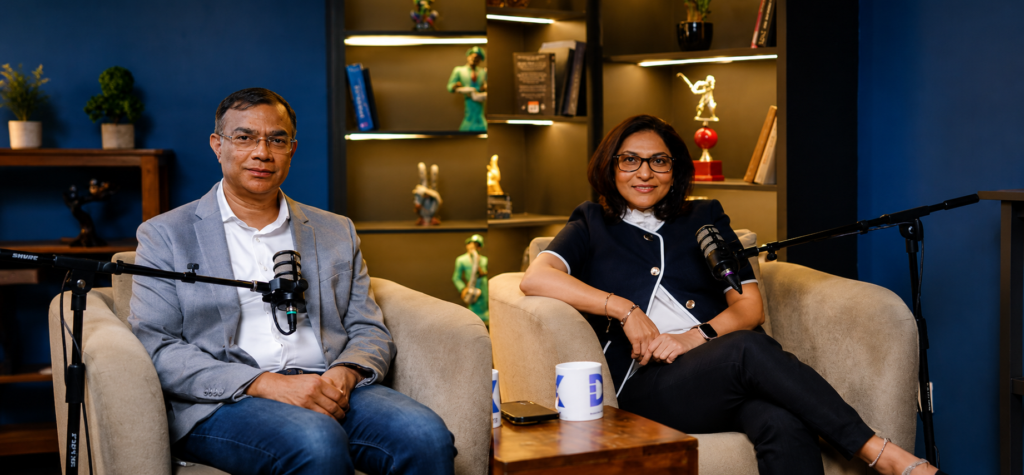
When Rajul Tandon and Neerja Kumar looked at the problem, they saw an opportunity hiding in plain sight.
What if every CCTV camera could do more than record? What if it could help businesses make better decisions in real time?
That question became the foundation of Enalytix, an AI-powered video analytics company that transforms existing CCTV infrastructure into a business intelligence engine. Instead of requiring businesses to invest in new hardware, the platform helps organizations unlock operational insights from the cameras they already have.
Today, Enalytix works across retail, QSR, manufacturing, logistics, transportation, and smart infrastructure, helping businesses use video data to improve operations, increase efficiency, and make faster decisions.
“The future of CCTV isn’t surveillance. It’s intelligence. Businesses already have the eyes, we’re building the brain behind them.” — Rajul Tandon, Founder & CEO, Enalytix
Turning Cameras Into Decision-Making Tools
The idea sounds simple, but the implications are significant.
Every day, businesses struggle with questions around customer traffic, staff productivity, operational compliance, queue management, inventory movement, safety monitoring, and conversion performance. Traditionally, answering those questions required multiple systems, manual reporting, or periodic audits.
Enalytix approaches the challenge differently.
Using AI-powered video analytics, computer vision, and real-time dashboards, the company converts video streams into actionable business insights. Instead of simply watching what happened, organizations can understand why it happened and respond immediately.
For retailers, that could mean understanding footfall patterns and conversion opportunities. For restaurants, it could mean monitoring customer wait times and operational compliance. For manufacturing facilities, it could mean identifying safety risks before they become incidents.
The goal is not to collect more data. The goal is to make existing data useful.
A Shift Happening Across Retail
One of the sectors embracing this shift most rapidly is retail.
Historically, retailers relied on manual reporting, periodic audits, and fragmented operational data to understand store performance. Today, that approach is changing as brands increasingly seek real-time visibility into what is happening on the ground.
Enalytix recently analyzed trends across the retail ecosystem and found a growing appetite for operational intelligence. Retailers are no longer looking at CCTV cameras solely as surveillance tools. They are beginning to view them as sources of business insights that can help optimize staffing, improve customer experience, measure campaign effectiveness, and increase conversions.
This evolution reflects a broader industry mindset. The conversation is moving beyond security and toward business outcomes.
Building Trust Through Data
A strong example of this transformation can be seen in Enalytix’s work with leading fashion retailer Mufti.
The retailer implemented Enalytix’s AI-powered people counting and analytics solution across its store network to improve footfall visibility and operational decision-making.
The deployment highlighted a challenge that exists across much of the retail industry: trust in data.
Store teams, regional managers, and head office teams often rely on different sources of information, creating discrepancies and slowing decision-making. By providing accurate footfall analytics alongside visual verification, Enalytix helped create a trusted source of truth that could be used across the organization.
According to Neerja Kumar, this is where the real value of AI analytics emerges.
“One of the biggest challenges businesses face isn’t the absence of data. It’s the lack of trust in it. When organizations have access to accurate, verifiable insights, the conversation shifts from validating information to acting on it.” — Neerja Kumar, Co-founder & COO, Enalytix
The outcome is not simply better reporting. It is faster decision-making, stronger operational alignment, and a greater ability to respond to market conditions in real time.
Building for Business, Not for Buzzwords
While AI continues to dominate technology conversations, Rajul and Neerja have deliberately focused on solving practical business problems rather than chasing trends.
The company’s philosophy is rooted in a simple belief: businesses already possess enormous amounts of untapped intelligence. The challenge lies in extracting value from it.
That perspective has shaped Enalytix’s growth strategy from the beginning. Rather than asking customers to overhaul their infrastructure, the company focuses on helping them derive more value from existing investments.
It is a pragmatic approach, one that resonates particularly well in industries where operational efficiency and measurable outcomes matter more than technological novelty.
The Road Ahead
As AI adoption accelerates across industries, the role of video analytics is expected to expand far beyond surveillance.
Businesses are increasingly looking for real-time intelligence that helps them predict issues, optimize operations, and improve performance. Video data represents one of the largest untapped sources of that intelligence.
For Rajul Tandon and Neerja Kumar, the opportunity is not simply about building better software. It is about changing the way businesses think about the infrastructure they already own.
The cameras are already there.
The question is no longer what they can see.
The question is what businesses can learn from them.