It’s likely that you scanned a QR code just this week. Maybe it was to access a restaurant’s menu, a parking meter, or a wi-fi at a friend’s house. The habit only takes two seconds, so most of us don’t even think about it much.
However, there is a risk in that quick scan.
A fake code is indistinguishable from a real one, and a QR code also hides its destination. As a consequence, people now want a scanner that is quick and reveals information prior to anyone opening anything.
A free online QR code scanner can do both. This article describes how, with actual numbers on the risk and a few steps you can use today.
Why QR Code Scanning Still Frustrates People
QR codes are everywhere these days, yet scanning them is not always smooth. Each phone handles them differently, and the steps vary by phone brand. Some people even end up installing a separate app to read one code.
Here are some common issues that arise:
- Scanner apps ask you to give multiple permissions, and some require signing up.
- A code saved as a screenshot or photo is hard to read with a live camera.
- The blurriness or dimness of pictures leads to failed reads.
The typical instance is a friend sending a ticket as a picture. You cannot point your phone at the same screen you are holding. So you ask the friend to resend it, or you search for an app. Both options seem slow.
Where QR Codes Come From
The format is not as new as what most people think.
The QR code was invented in 1994 by Denso Wave, a Japanese company that makes parts for automobiles. The company made it to track vehicle parts during assembly.
Data is stored in one direction in a regular barcode. But in a QR code, it is stored as a grid, both across and down. That design allows for a lot more data to be stored in that one code, which is why one square can contain a link, a Wi-Fi password (https://techbullion.com/beginner-friendly-guide-to-change-your-cox-wifi-password/)or a payment request.
The Safety Problem Is Growing
Speed matters, but safety always matters more. A printed web link shows its address. A QR code does not. You scan first and find out later.
Attackers know this, and they use it. The attack even has a name. “Quishing.”
According to a press release issued by ACCESS Newswire on 3 June 2026, the number of quishing incidents has increased by 146% in the first quarter of 2026. It says almost 18.7 million cases were recorded in March alone, based on threat intelligence data.
The same press release also provides us with some real examples. Stickers were found on Denver, Colorado parking meters that were fake QR codes. These fake codes led to a bogus payment request of $6.99.
A report by the National Fraud and Cybercrime Reporting Center in the UK also revealed that there were at least over 2 incidents a day regarding quishing, each costing around £10,000.
The same trend is evident with other security vendors as well. According to the security awareness company Keepnet, 12% of all phishing attacks in 2025 included a QR code. These numbers form a pattern when added together. Attackers go where people stop checking.
So, a good practice is to check the contents of a code before opening it.
How an Online QR Code Scanner Helps
An online scanner not only solves the speed problem but also provides an added layer of security. QR-code-scanner.io (https://qr-code-scanner.io/)is a good example.
Here is how it works.
Faster Scanning Without an App
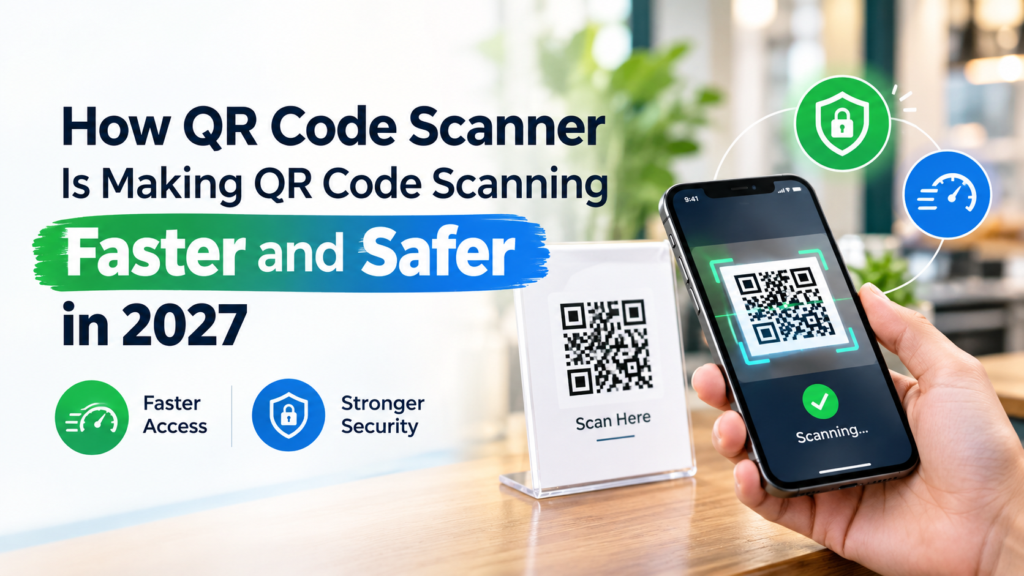
The tool runs totally in your browser. Our testing revealed it requires no app, no sign-up and no registration. It works quite well on phones, tablets, laptops, desktops and every other device we tested.
You get two ways to scan, which are as follows.
- Upload an image: The tool supports reading JPG, JPEG, PNG, WebP and BMP files. Alternatively, you can drag a file into the box or paste it by pressing Ctrl+V.
- Use a camera: Turn on camera mode, allow access and hold the code in front of the phone or webcam.
This resolves the screenshot issue that we talked about earlier. You save the picture and drop it in, then read the result. The tool beeps when it reads a code, which means that the scan was successful.
Safer Scanning With a Preview
Next comes the part that matters for safety. The online tool shows the decoded content in an output box before opening anything.
This allows you to see what is inside the code and helps prevent your device from being exposed to phishing and malware.
Previews also help to establish trust. The ACCESS Newswire release cites a report in which 48% of users named content previews as the top factor that raises their trust in QR codes. People feel better when they can see the destination right after scanning.
Two smaller features provide further help as well. The decoded results can be downloaded as a TXT file. And the site claims it does not store or share your data.
What You Can Scan
A scanner is only useful if it can read the codes you encounter in your everyday life. This one is capable of handling:
- Website links
- Wi-Fi credentials
- Business cards in vCard and MeCard format
- Payment QR codes
- Event tickets
- Product packaging codes
The site also has support for QR Code Model 1 and 2, Micro QR and rMQR formats. For a payment code or a Qi-Fi password, seeing the raw content first is a small step that saves a lot of trouble in the long run.
Simple Habits for Safer Scanning
A preview is helpful only if you read it. These habits only take a few seconds, so don’t miss them.
- Always read the complete URL in the preview before clicking on it.
- Check for strange spellings or additional words in the domain name.
- Look for stickers that are placed over the original physical codes.
- Verify the amount and the payee before you act on a payment code.
- Ignore codes that arrive in unexpected emails or messages.
Do note that no scanner can guarantee that every link is safe. A preview provides information, but you still make the call. Still, it is good practice to always check.
What This Means Heading Into 2027
QR codes keep showing up on menus, tickets, packaging, and payment screens. Attack numbers keep rising at the same time. Both trends reach your phone every time you scan.
The fix is small. Pick a scanner that works in your browser, reads from an image or a camera, and shows the content first. Then read what it shows before you tap anything.