Healthcare is rapidly shifting from traditional systems to digital-first experiences, and medicine delivery apps are at the center of this transformation.
What once required visiting a pharmacy, waiting in long queues, or managing physical prescriptions can now be done within minutes through a mobile device.
This evolution is not just about convenience; it’s about improving accessibility, efficiency, and patient outcomes across different demographics.
From urban users managing busy schedules to elderly individuals and patients in remote areas, medicine delivery apps are solving real-world healthcare challenges. They are bridging the gap between patients, pharmacies, and healthcare providers by creating a seamless digital ecosystem.
As technology continues to evolve, these apps are becoming more intelligent, reliable, and user-centric, reshaping how people access essential healthcare services in their daily lives.
Key Ways Medicine Delivery Apps Are Transforming Healthcare
There are several ways in which medicine delivery apps are changing healthcare:
1. Instant Access to Medicines Anytime, Anywhere
One of the most significant benefits of medicine delivery apps is their ability to provide round-the-clock access to essential medications. Users no longer have to rely on nearby pharmacies or worry about operating hours.
Instead, they can browse medicines, upload prescriptions, and place orders anytime from their homes. This convenience is especially valuable for patients managing chronic conditions who require consistent medication without interruption.
This is where medicine delivery app development services play a crucial role in building platforms that ensure seamless navigation, real-time inventory updates, and secure transactions.
By eliminating physical barriers, these apps empower users to take control of their healthcare, making the entire process faster, more reliable, and highly accessible regardless of their location or time constraints.
2. Faster Deliveries During Emergencies
Time is a critical factor in healthcare, especially during emergencies. Medicine delivery apps address this challenge by offering fast and reliable delivery options, ensuring that essential medications reach users without delay.
Many platforms provide same-day or even express delivery services, reducing the stress and risk associated with urgent health situations.
This speed is powered by advanced logistics systems, optimized delivery routes, and real-time tracking features. Users can monitor their orders and receive timely updates, creating a sense of reliability and trust.
Whether it’s late at night or during unexpected health issues, these apps ensure that access to medicines is no longer limited by time or distance, significantly improving patient outcomes in critical moments.
3. Improved Accessibility for Remote and Elderly Users
Accessibility has always been a major challenge in healthcare, particularly for people living in rural areas or elderly individuals with mobility limitations.
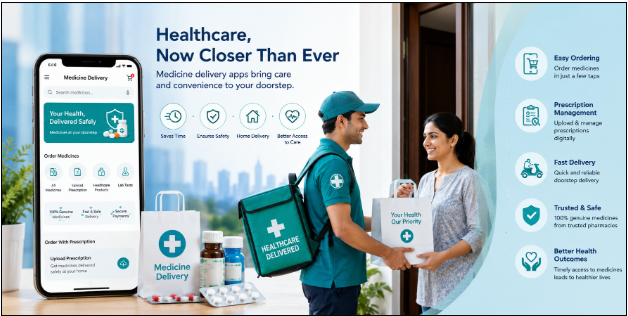
Medicine delivery apps are effectively solving this issue by bringing essential healthcare services directly to users’ doorsteps. With simplified interfaces and easy navigation, even non-tech-savvy users can place orders without difficulty.
Businesses aiming to create such inclusive platforms often hire mobile app developers who specialize in building user-friendly and accessible applications.
Features like voice search, large text options, and intuitive layouts ensure that users of all age groups can interact with the app comfortably. This approach not only improves accessibility but also enhances overall user satisfaction and engagement.
4. Digital Prescription Management
Managing paper prescriptions can be inconvenient and prone to errors or loss. Medicine delivery apps simplify this process by allowing users to upload, store, and manage prescriptions digitally.
This feature ensures that important medical documents are always accessible and can be reused for future orders without the need for repeated visits to healthcare providers.
Pharmacists can verify prescriptions online, ensuring compliance with regulations and maintaining patient safety. Additionally, users can keep a digital record of their medical history, which can be useful during consultations.
This shift toward digital prescription management not only improves efficiency but also reduces dependency on manual processes, making healthcare interactions smoother and more organized.
5. Transparent Pricing and Better Affordability
Cost transparency is another major advantage offered by medicine delivery apps. Users can easily compare prices across different brands, explore generic alternatives, and choose the most cost-effective options. This level of transparency empowers users to make informed decisions about their healthcare spending.
Many apps also provide discounts, subscription plans, and cashback offers, making medicines more affordable for long-term treatments. For patients who require regular medication, these savings can make a significant difference.
By combining convenience with cost efficiency, medicine delivery apps are not only improving access but also making healthcare more financially manageable for a wider audience.
6. Integration with Telemedicine Services
Medicine delivery apps are no longer limited to just delivering medicines. Many platforms now integrate telemedicine services, allowing users to consult doctors, receive prescriptions, and order medicines within a single application. This integration creates a seamless and unified healthcare experience for users.
Patients can avoid unnecessary clinic visits and access professional medical advice from the comfort of their homes.
This is particularly beneficial for minor health concerns, follow-up consultations, or situations where physical visits are not feasible. By combining consultation and delivery services, these apps are redefining how healthcare is accessed and delivered in the digital age.
7. Enhanced User Experience with Smart Features
Modern medicine delivery apps leverage advanced technologies such as artificial intelligence and data analytics to enhance user experience. These features enable personalized recommendations, automated refill reminders, and intelligent search options that make the app more intuitive and user-friendly.
Real-time tracking and notification systems keep users informed about their orders, reducing uncertainty and improving trust.
Additionally, predictive analytics can help users manage their medication schedules more effectively. These smart capabilities not only improve convenience but also encourage users to stay consistent with their treatments, leading to better health outcomes over time.
8. Strong Data Security and Privacy Measures
Healthcare data is highly sensitive, making security a top priority for medicine delivery apps. These platforms implement advanced encryption technologies, secure payment gateways, and strict data protection protocols to ensure user information remains safe.
Compliance with healthcare regulations further strengthens trust and reliability. Users can confidently share their medical details, knowing that their privacy is protected.
Strong security measures not only prevent data breaches but also enhance the credibility of the platform, making it a trusted choice for users who value both convenience and confidentiality.
9. Strengthening the Overall Healthcare Ecosystem
Medicine delivery apps are creating value not just for users but for the entire healthcare ecosystem.
Local pharmacies can expand their reach beyond physical locations, while healthcare providers can offer better support through integrated systems. Logistics partners also benefit from increased demand and streamlined operations.
This interconnected ecosystem ensures that all stakeholders work together efficiently, improving service delivery and patient satisfaction.
By digitizing traditional processes, medicine delivery apps are contributing to a more organized and responsive healthcare system that benefits everyone involved.
10. Future Innovations in Medicine Delivery Apps
The future of medicine delivery apps is driven by continuous innovation.
Technologies like drone delivery, IoT-enabled healthcare devices, and AI-driven diagnostics are expected to further enhance the capabilities of these platforms. These advancements will make medicine delivery faster, smarter, and more efficient.
As these apps evolve, they will move beyond reactive healthcare to predictive and preventive solutions. Users will receive proactive health insights, automated reminders, and personalized care recommendations.
This shift will redefine the role of medicine delivery apps, positioning them as essential tools in the future of digital healthcare.
Conclusion
Medicine delivery apps are transforming healthcare by making it more accessible, efficient, and user-centric. They eliminate traditional barriers, improve patient convenience, and create a seamless connection between users and healthcare providers.
For businesses and investors, this space offers significant growth opportunities. Building a scalable and feature-rich medicine delivery app can help you tap into a rapidly expanding market. The future lies in creating solutions that not only deliver medicines but also enhance the overall healthcare experience for users.
Read More From Techbullion