Visual storytelling has always been seen as a universal medium. From early cinema to modern digital platforms, visuals have the ability to communicate emotions, narratives, and ideas across borders. However, language has continued to create friction, especially in content where facial expressions, dialogue alignment and cultural familiarity play a key role.
With the rise of AI-powered Face Swap, this limitation is being addressed in a fundamentally new way. By combining image generation with facial transformation, creators can now adapt visual content for different regions without compromising authenticity. Instead of relying only on subtitles or dubbing, storytelling can now be visually localized making it feel native to each audience.
The Shift from Language Translation to Visual Adaptation
Traditional Localization Methods
For decades, content creators relied on:
- Subtitles to translate dialogue
- Dubbing to replace audio
- Remakes to fully localize content
While effective to an extent, these approaches often fail to preserve emotional depth. Viewers may understand the story, but the experience can feel slightly disconnected due to mismatched expressions or unfamiliar faces.
This gap has led to a growing need for visual adaptation, where not just the language but the appearance aligns with the audience.
What Is Face Swap in Image-Based Storytelling?
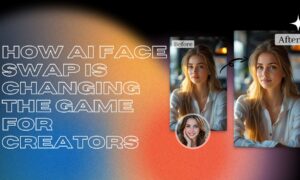
Face Swap technology uses AI-driven image generation and computer vision to replace a person’s face within an image or video while maintaining realism. In the context of visual storytelling, this means:
- Swapping faces in keyframes or scenes
- Generating culturally relevant characters
- Maintaining consistent expressions across frames
Unlike older editing techniques, modern Face Swap tools generate highly realistic outputs by analyzing lighting, angles and facial structure. This makes it possible to create localized versions of the same story without reshooting.
How Face Swap Enables Visual Storytelling Across Languages
1. Localizing Characters Without Reproduction
Instead of recreating entire scenes with new actors, creators can generate alternate versions of visuals by swapping faces. This allows a single narrative to exist in multiple cultural formats.
For example:
A marketing visual designed for a Western audience can be adapted for Indian or Asian audiences simply by generating new faces that align with regional identity while keeping the original composition intact.
2. Enhancing Emotional Connection
Familiarity plays a crucial role in engagement. When audiences see faces that reflect their own cultural or regional identity, the content feels more relatable.
Face Swap enables:
- Region-specific character representation
- Better emotional resonance
- Stronger audience retention
This is especially important in storytelling formats such as advertisements, social media content, and short-form videos.
3. Supporting Multi-Language Content Creation
Face Swap works effectively alongside translated scripts or voiceovers. When combined with image generation, it allows creators to:
- Match facial expressions with localized dialogue
- Maintain consistency across different language versions
- Avoid the disconnect often seen in dubbed visuals
This creates a more seamless viewing experience, particularly in video-based storytelling.
The Role of Image Generation in Face Swap Workflows
Face Swap today is not just about replacing faces, it is deeply connected with AI image generation. This combination allows creators to build entire visual narratives with flexibility.
Key capabilities include:
- Generating new faces that match specific demographics
- Adjusting expressions to suit tone and context
- Maintaining visual consistency across multiple frames
This is particularly useful in content formats such as:
- Digital ads
- Storyboards
- Social media campaigns
- Video thumbnails and previews
Practical Application Using Modern Tools
Modern platforms have made Face Swap and image generation accessible even to non-technical users. For instance, tools like Higgsfield Ai allow creators to experiment with visual storytelling without complex production workflows.
Using Higgsfield Ai, creators can:
- Upload images or frames from video content
- Generate alternate faces based on different audiences
- Create multiple localized versions quickly
What makes Higgsfield Ai especially useful is its ability to combine ease of use with realistic output. This allows marketers, designers, and content creators to integrate Face Swap into their storytelling process without needing advanced editing skills.
As visual content continues to scale globally, platforms like Higgsfield Ai are helping bridge the gap between creative intent and cultural relevance.
Real-World Use Cases
1. Marketing and Advertising
Brands can create multiple versions of the same campaign by swapping faces to match regional audiences. This improves relatability and engagement without increasing production costs significantly.
2. Social Media Content
Creators can tailor visuals for different demographics by generating region-specific faces. This is particularly effective for global audiences on platforms like Instagram, YouTube, and TikTok.
3. Film and Video Production
In video storytelling, Face Swap can be applied to frames or sequences to create localized versions of scenes. This reduces the need for multiple shoots while maintaining narrative consistency.
4. E-Learning and Training
Educational visuals can be adapted to reflect local identities, making content more engaging and easier to understand for diverse learners.
Why Face Swap Is More Effective Than Traditional Methods
Visual Consistency
Face Swap maintains alignment between expressions and dialogue, reducing the disconnect seen in dubbing.
Faster Content Adaptation
Creators can generate multiple versions of the same visual quickly, making it easier to scale content globally.
Cost Efficiency
Instead of investing in separate productions for each region, a single base visual can be adapted using AI.
Scalability
Content can be localized for multiple audiences simultaneously, making it ideal for global campaigns.
Ethical Considerations
As adoption grows, responsible use becomes essential.
Consent and Usage
- Individuals should have control over how their likeness is used
- Clear permissions should be established before applying Face Swap
Transparency
- AI-generated visuals should be used responsibly
- Misleading or deceptive use should be avoided
Concerns around synthetic media and trust continue to grow, highlighting the importance of ethical implementation.
The Future of Visual Storytelling
Face Swap combined with image generation is pushing storytelling toward a more adaptive future.
Personalized Visual Content
Audiences may soon experience content tailored to their language, culture, and preferences, all generated dynamically.
Real-Time Adaptation
Advancements in AI could allow live content to be visually localized in real time.
Integration with AI Video Generation
As video generation technologies evolve, Face Swap will play a key role in ensuring that generated visuals remain culturally relevant and engaging.
Conclusion
Face Swap is redefining how visual storytelling works in a multilingual world. By integrating image generation with facial transformation, creators can move beyond traditional localization and create content that feels truly native to different audiences.
Rather than simply translating language, this approach adapts the entire visual experience making stories more immersive, relatable and scalable.
As tools like higgsfield continue to evolve, the ability to generate and adapt visuals across cultures will become a core part of content creation. In this new landscape, language is no longer a barrier, it is simply another layer that can be seamlessly integrated into the visual narrative.