When temperatures rise, many homeowners and businesses look for ways to cool indoor spaces without sending energy bills through the roof. Traditional air conditioning can be effective, but it often uses a lot of electricity, especially during long periods of hot weather. Evaporative coolers offer another option, particularly in dry climates where moisture in the air is low. If you have ever wondered how do evaporative coolers work, the answer comes down to a simple natural process: evaporation.
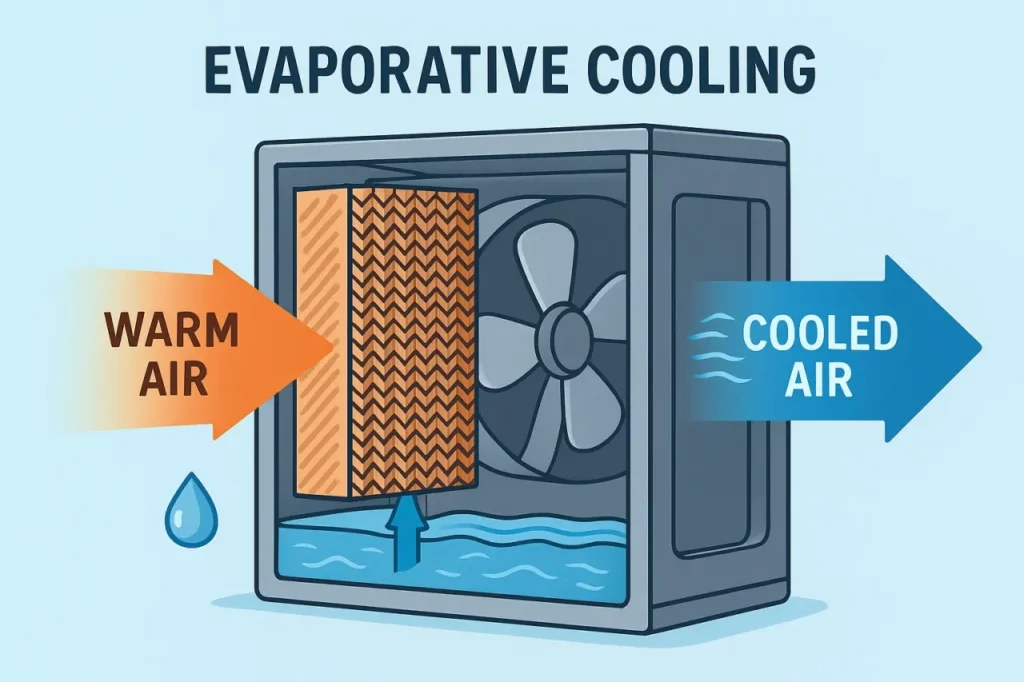
Evaporative coolers use water and airflow to reduce air temperature. Instead of relying on refrigerant and compressors, they pull warm air through water-saturated pads. As the water evaporates, it absorbs heat from the air, creating a cooler breeze that is then circulated through the space. This process can be highly efficient when the system is properly sized, maintained, and used in the right conditions.
What Is an Evaporative Cooler?
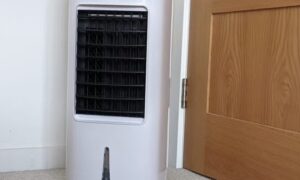
An evaporative cooler, sometimes called a swamp cooler, is a cooling system that uses water evaporation to lower air temperature. It is commonly used in homes, workshops, garages, warehouses, patios, greenhouses, and commercial facilities. Unlike standard air conditioners, evaporative coolers do not recycle the same indoor air. They continuously bring in fresh outdoor air, cool it, and push stale indoor air out through open windows, vents, doors, or exhaust systems.
This makes them especially useful in spaces where ventilation matters. Because they use fewer mechanical components than traditional air conditioners, evaporative coolers are often simpler to operate and may cost less to run.
Main components usually include:
- A fan or blower
- Cooling pads or media
- A water pump
- A water reservoir or supply line
- A housing or cabinet
- Air vents or ducts
- Controls or thermostat settings
These parts work together to move air, distribute water, and support steady evaporation.
How Do Evaporative Coolers Work?
To understand how evaporative coolers work, think about what happens when you step out of a pool on a dry, breezy day. As water evaporates from your skin, it pulls heat away, making you feel cooler. Evaporative coolers use the same principle on a larger scale.
The process usually follows these steps:
- Warm outdoor air enters the cooler.
- A pump sends water over cooling pads.
- The warm air passes through the wet pads.
- Some of the water evaporates into the air.
- Evaporation absorbs heat and lowers the air temperature.
- A fan pushes the cooled air into the building.
- Warm indoor air exits through openings or exhaust points.
The cooler does not create cold air in the same way an air conditioner does. Instead, it lowers the temperature by using the natural cooling effect of evaporation. The result is a steady flow of cooler, fresher air.
Why Dry Climates Improve Efficiency
Evaporative coolers work best in areas with low humidity. Dry air can absorb more moisture, which allows more evaporation to happen. More evaporation means more heat is removed from the air. That is why these systems are popular in desert and semi-arid regions.
When humidity is high, the air is already holding a lot of moisture. Since it cannot absorb much more water, evaporation slows down. When evaporation slows, cooling performance drops. This does not mean evaporative coolers never work in humid areas, but they are usually less efficient there than in dry climates.
The best conditions for evaporative cooling usually include:
- Hot outdoor temperatures
- Low relative humidity
- Good airflow
- Proper ventilation
- Clean cooling pads
- Consistent water supply
In dry conditions, evaporative coolers can provide noticeable temperature drops while using much less electricity than compressor-based air conditioning.
How Airflow Supports Better Cooling
Airflow is one of the most important factors in evaporative cooler efficiency. These systems are designed to move large amounts of fresh air. For the cooler to work well, cooled air must be able to enter the space while warmer indoor air exits.
A common mistake is treating an evaporative cooler like a traditional air conditioner and closing every window and door. Standard AC systems usually require enclosed spaces. Evaporative coolers need the opposite. They require controlled ventilation.
To improve airflow:
- Open windows slightly on the opposite side of the building.
- Use vents or exhaust fans when needed.
- Keep interior doors open to improve air movement.
- Avoid blocking supply vents.
- Make sure the cooler is properly positioned.
- Use the right fan speed for the space.
Good airflow helps prevent moisture buildup and keeps cooled air moving. It also makes the space feel more comfortable because moving air helps the body release heat more effectively.
Energy Efficiency Compared to Air Conditioning
One of the biggest advantages of evaporative coolers is energy efficiency. Traditional air conditioners rely on compressors, refrigerant, condenser coils, and evaporator coils. These systems can provide powerful cooling, but they often require significant electricity.
Evaporative coolers use a simpler system. Most of the energy goes toward running the fan and water pump. Since there is no compressor, electricity use is often much lower. This can make a noticeable difference for homeowners and businesses trying to reduce cooling costs.
Evaporative coolers may offer:
- Lower monthly utility bills
- Reduced electrical demand
- Fewer complex mechanical parts
- Lower operating costs in dry climates
- Fresh air circulation
- Effective cooling for open or semi-open spaces
However, efficiency depends on climate and usage. In a humid region, a traditional air conditioner may be more effective. In a dry region, an evaporative cooler can often provide comfort at a fraction of the energy cost.
Factors That Affect Evaporative Cooler Performance
Several factors determine how efficiently an evaporative cooler works. Climate is the most obvious, but it is not the only one. The system must be correctly sized, installed, and maintained.
Important performance factors include:
- Humidity: Lower humidity improves evaporation.
- Temperature: Hot air can benefit more from evaporative cooling.
- Cooling pad condition: Dirty or worn pads reduce performance.
- Water flow: Pads must stay evenly saturated.
- Fan capacity: The fan must move enough air for the space.
- Ventilation: Air must have a clear path in and out.
- Unit size: An undersized cooler may struggle to cool the area.
- Placement: Proper location improves air intake and distribution.
- Water quality: Hard water can cause mineral buildup.
- Maintenance: Clean systems work more efficiently.
A well-maintained evaporative cooler in the right climate can perform very efficiently. A neglected or poorly placed unit may use energy without delivering the expected comfort.
Maintenance Tips for Efficient Operation
Maintenance plays a major role in how well evaporative coolers perform. Since these systems use water, airflow, and cooling media, buildup and wear can reduce efficiency over time.
Basic maintenance may include:
- Cleaning or replacing cooling pads
- Checking the water pump
- Cleaning the water reservoir
- Removing mineral deposits
- Inspecting the fan and motor
- Checking belts on belt-driven models
- Ensuring water lines are clear
- Looking for leaks
- Cleaning intake screens
- Draining and winterizing the unit before freezing weather
Cooling pads are especially important. If they are clogged with dust, dirt, or minerals, air cannot pass through easily. If they are not evenly wet, evaporation becomes uneven, and cooling performance drops.
For areas with hard water, mineral buildup may happen faster. In those cases, more frequent cleaning or water treatment may help extend the life of the system.
Common Uses for Evaporative Coolers
Evaporative coolers can be used in many settings. They are especially helpful where fresh air and lower operating costs are priorities.
Common uses include:
- Homes in dry climates
- Garages and workshops
- Warehouses and factories
- Auto repair shops
- Outdoor patios
- Restaurants with open-air seating
- Greenhouses and agricultural buildings
- Gyms and recreation centers
- Event spaces
- Loading docks
Portable evaporative coolers are useful for spot cooling. Fixed systems can cool entire homes, buildings, or large commercial areas. Ducted systems can distribute cooled air to multiple rooms, while direct-discharge units are often used in open workspaces.
FAQ About Evaporative Coolers
How do evaporative coolers work in simple terms?
They pull warm air through wet cooling pads. As water evaporates, it removes heat from the air. A fan then blows the cooled air into the space.
Do evaporative coolers use less electricity than air conditioners?
Yes, in many cases. They usually use less electricity because they do not rely on a compressor. Most of the power is used by the fan and the water pump.
Do evaporative coolers work in humid climates?
They can work, but they are less effective when the humidity is high. Dry air allows more evaporation, which creates better cooling.
Do I need to open windows when using an evaporative cooler?
Yes. Evaporative coolers need airflow. Slightly open windows, vents, or doors allow warm indoor air to leave as cooled fresh air enters.
Do evaporative coolers add moisture to the air?
Yes. They cool by evaporating water, so they add humidity. This can be helpful in dry climates but may be uncomfortable in already humid areas.
How often should cooling pads be replaced?
It depends on usage, water quality, and pad type. Many pads should be checked seasonally and replaced when they become clogged, brittle, moldy, or mineral-coated.
Can an evaporative cooler cool an entire house?
Yes, if it is properly sized and installed. Whole-house systems can be effective in dry climates with adequate ventilation.
Why does my evaporative cooler smell musty?
A musty smell may come from dirty pads, standing water, mold, or poor maintenance. Cleaning the unit and replacing old pads usually helps.
How to Get the Best Results from an Evaporative Cooler
Getting the most from an evaporative cooler depends on using it correctly. Even a high-quality system will not perform well if airflow is restricted or maintenance is ignored.
For better results:
- Use evaporative cooling when outdoor humidity is low.
- Open windows or vents enough to create airflow.
- Keep cooling pads clean and saturated.
- Run the fan long enough to circulate fresh air.
- Adjust openings to guide airflow where cooling is needed.
- Clean the reservoir regularly.
- Inspect the unit before peak cooling season.
- Choose the correct cooler size for the space.
- Use portable units for targeted cooling.
- Consider professional installation for larger systems.
It is also helpful to run the cooler during the cooler parts of the day to flush hot indoor air out of the building. In some homes and businesses, evaporative cooling works best when started before indoor temperatures become too high.
Final Thoughts on Efficient Evaporative Cooling
Understanding how evaporative coolers work makes it easier to see why they can be such an efficient cooling option. They use the natural process of evaporation, supported by steady airflow and a water supply, to lower air temperature without the heavy energy demand of traditional air conditioning.
For homes and businesses in dry climates, evaporative coolers can provide fresh air, lower utility costs, and reliable comfort. They are especially effective in open, ventilated, and high-airflow environments. While they may not be ideal for humid regions or spaces that require strict humidity control, they can be an excellent choice when conditions are right.
The key to efficiency is proper use. Choose the right size, maintain the system, allow enough ventilation, and keep the cooling pads clean. With the right setup, evaporative coolers can deliver comfortable cooling while helping reduce energy costs.