
How Do 4K Camera Glasses Transform Outdoor Photography?

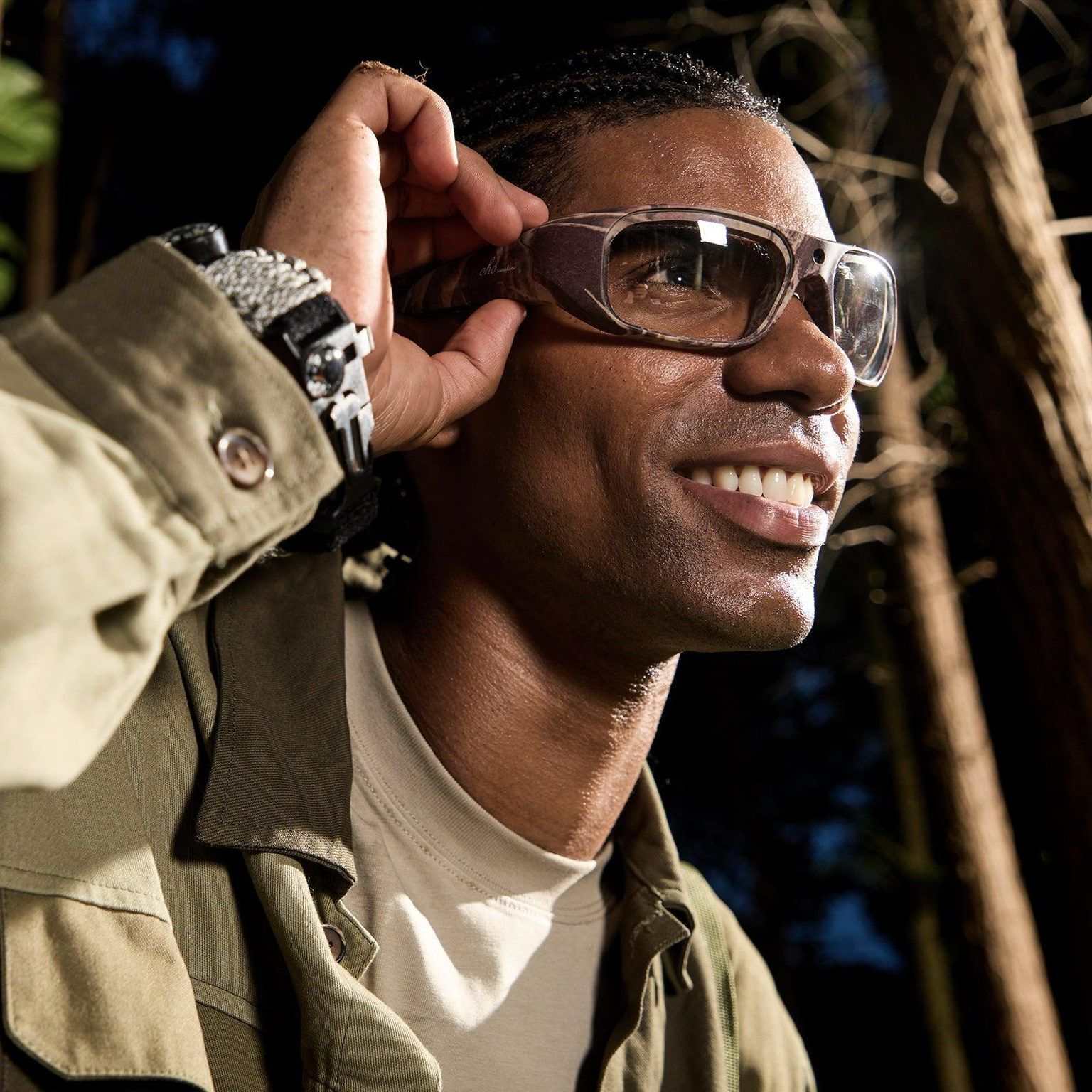
Photography has always chased the perfect moment, but carrying bulky gear has long been the trade-off between capturing life and actually living it. From film cameras to DSLRs to smartphone lenses, each leap in technology promised something closer to effortless documentation — yet nothing quite closed the gap between observer and participant. That gap is now narrowing fast, thanks to 4K camera glasses.
These wearable devices embed high-resolution cameras directly into eyewear frames, letting outdoor enthusiasts record stunning footage without ever reaching for a device. Whether you’re scaling a mountain trail, carving through a bike park, or wandering a foreign city, 4K camera glasses capture exactly what your eyes see — hands-free, in vivid detail. The result is a fundamentally different kind of photography: spontaneous, immersive, and deeply personal.
This guide explores everything you need to know about these remarkable tools. We’ll break down the technology behind them, unpack their core advantages for outdoor shooting, walk through practical usage strategies, cover essential maintenance habits, and compare lens technologies that shape your visual experience. If you’re ready to rethink how you capture the outdoors, read on.
What Are 4K Camera Glasses? Understanding the Technology
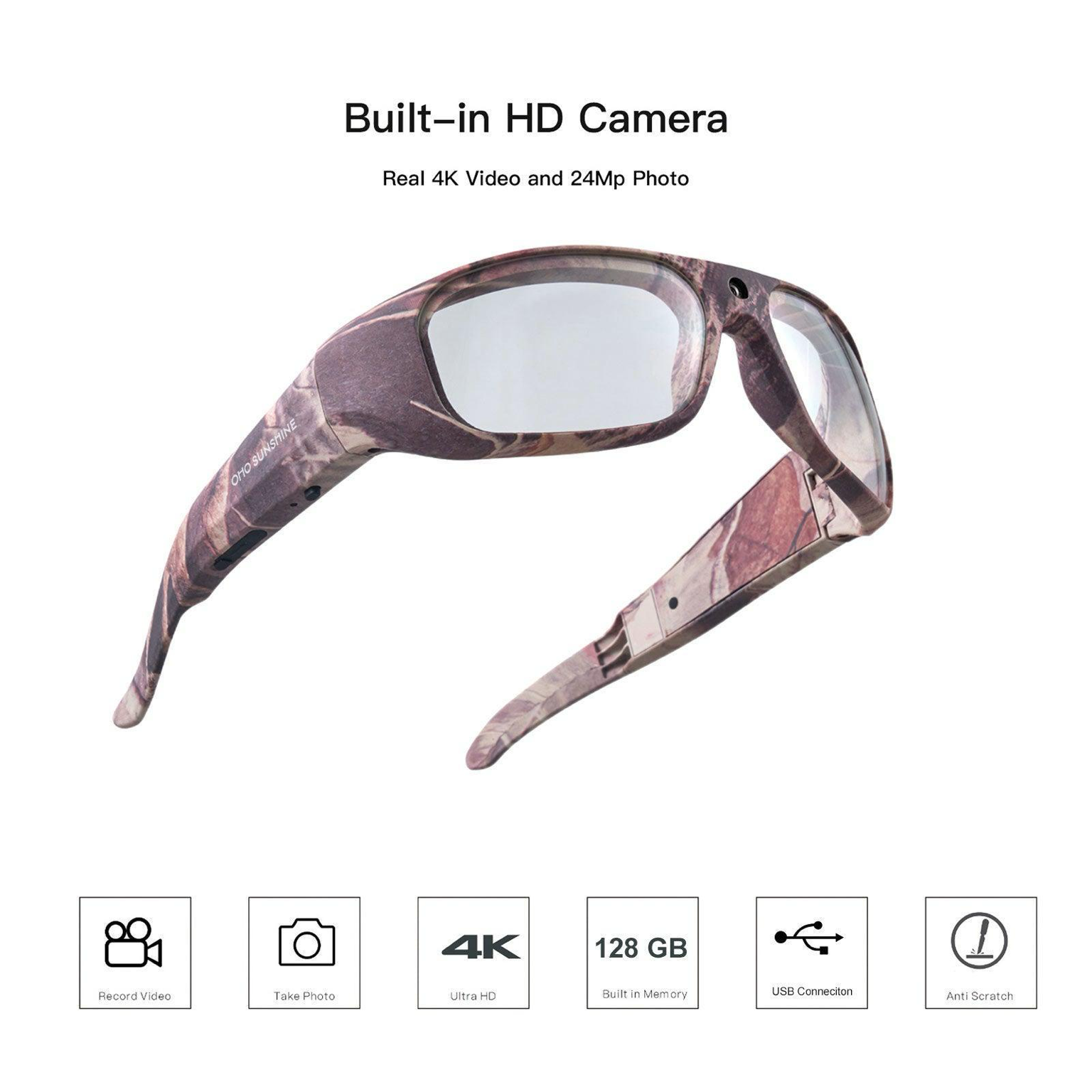
4K camera glasses are wearable devices that embed ultra-high-definition cameras directly into standard eyewear frames, capturing footage at a resolution of 3840×2160 pixels — four times sharper than full HD. At their core, these glasses combine a miniaturized camera module, onboard storage or wireless connectivity, and a rechargeable battery, all engineered to sit comfortably on your face without the bulk of traditional recording equipment. The camera lens typically sits within or beside the frame bridge, aligned closely with your natural line of sight to deliver authentic first-person perspective footage. Early iterations of wearable cameras were clunky, low-resolution, and short on battery life. Today’s 4K camera glasses represent a dramatic leap forward, borrowing advances from smartphone imaging, action camera miniaturization, and smart eyewear design. Features like image stabilization, wide-angle lenses, and voice or touch controls make them genuinely practical for outdoor environments where rough terrain, changing light, and physical movement would otherwise ruin a shot. For hikers, cyclists, travelers, and adventure photographers, they represent a compelling alternative to helmet cams or handheld devices.
The Core Advantages: How 4K Camera Glasses Revolutionize Outdoor Shots
The most immediate advantage of 4K camera glasses is hands-free operation. Unlike smartphones or action cameras that demand physical handling, these glasses let you move naturally through any environment while recording continuously. Scrambling up a rocky trail, paddling through rapids, or weaving through a crowded market — none of these moments require you to stop, reach for a device, or break your rhythm. The camera simply captures what you’re experiencing as you experience it.
That first-person perspective is genuinely transformative. Traditional photography creates a distance between the photographer and the scene; you’re always slightly removed, framing a moment rather than inhabiting it. Camera glasses collapse that distance entirely, producing footage that feels visceral and immediate — the kind of immersive POV content that resonates deeply with viewers because it mirrors how human vision actually works.
Resolution matters enormously in outdoor settings, where light behaves unpredictably. The 4K standard delivers enough pixel density to retain sharp detail even when footage is cropped, stabilized in post-production, or viewed on large displays. Bright alpine snow, dappled forest light, golden-hour coastlines — scenarios that routinely challenge lower-resolution cameras — are handled with noticeably greater clarity and color fidelity at 4K. Action sports photographers benefit from this when freezing fast motion, while travel photographers appreciate the rich detail captured in architectural or landscape scenes. The combination of resolution, spontaneity, and seamless integration with physical activity makes 4K camera glasses a genuinely powerful tool for anyone who wants their outdoor footage to match the intensity of the experience itself.
Practical Guide: How to Use Camera Glasses Effectively in Outdoor Settings
Before heading out, a quick pre-shoot checklist saves you from missing critical moments. Confirm battery charge is above 80%, verify your storage card has sufficient space, and test the recording trigger — whether voice command or touch control — so activation becomes second nature in the field. Syncing the internal clock also ensures your footage timestamps align correctly when organizing files later.
Optimizing Camera Settings for Different Environments
Environment dictates settings. In bright alpine or beach conditions, lower your exposure compensation slightly to prevent blown highlights while keeping whites crisp. For shaded forest trails or overcast days, bump ISO sensitivity modestly and shoot at 30fps to maintain smooth, well-exposed footage without excessive noise. Fast-moving activities like mountain biking or skiing demand 60fps or higher to freeze motion cleanly, while slower-paced travel or hiking suits 24fps for a cinematic feel. Wide-angle mode works best for most outdoor scenarios, capturing peripheral context that makes POV footage feel truly immersive rather than tunnel-visioned.
Positioning and Angles for Best Results
Because the camera follows your head, deliberate movement replaces deliberate framing. Keep your chin slightly tucked when walking to avoid excessive sky in the frame — a common mistake that wastes resolution on empty space. Smooth, intentional head turns read far better on screen than rapid glances, so practice scanning scenes slowly. When photographing landmarks or landscapes, pause and face the subject directly rather than glancing sideways, giving viewers a stable, centered composition.
Integrating with Outdoor Activities
Different activities call for different strategies. Cyclists benefit from locking their gaze along the trail ahead, letting the glasses capture natural riding lines without jerky camera movement. Hikers should narrate softly when recording — ambient voice adds authenticity and context to footage. At outdoor events or markets, a slow deliberate walk through crowds produces compelling documentary-style sequences. Across all activities, shorter recording bursts of three to five minutes preserve battery and make post-production editing significantly more manageable than hours of continuous footage.
Maintenance Mastery: Best Practices for Your Camera Glasses
Cleaning and Care Routines
Outdoor use exposes your glasses to sweat, dust, rain, and sunscreen — all of which degrade both lens clarity and camera performance over time. After every session, wipe the camera lens gently with a microfiber cloth using circular motions, never paper towels or clothing fabric, which introduce micro-scratches that distort footage. For stubborn smudges, a single drop of lens-safe cleaning solution on the cloth does the job. Store your glasses in a hard-shell case rather than tossing them into a bag where frame pressure or sharp objects can crack the housing around the camera module.
Battery and Storage Management
Battery longevity depends heavily on charging habits. Avoid draining the battery completely before recharging — lithium cells last significantly longer when kept between 20% and 80% charge. Before long trips, charge fully and carry a compact power bank for mid-day top-ups. For storage cards, format them directly through the glasses rather than your computer, which clears fragmented data more thoroughly and reduces write errors. Keep a second card on hand during extended outings so a full card never interrupts a critical recording moment.
Software Updates and Troubleshooting
Firmware updates frequently resolve stabilization bugs, improve low-light processing, and unlock new frame rate options — check the manufacturer’s app or website monthly. If footage appears choppy or the camera fails to trigger, a factory reset often clears software conflicts faster than manual troubleshooting. Connectivity drops between glasses and paired apps typically stem from Bluetooth interference; toggling airplane mode briefly re-establishes a clean pairing. For polarized camera glasses specifically, inspect lens coatings periodically for delamination, which appears as rainbow-colored patches and signals it’s time for lens replacement before it affects recording quality.
Lens Technology Deep Dive: Photochromic vs. Polarized Camera Glasses
Choosing the right lens technology is as important as the camera specs themselves, since what your lens does to incoming light directly affects what the sensor records. Two technologies dominate the high-performance end of camera glasses: photochromic lenses and polarized lenses, each solving a different optical challenge in outdoor environments.
Photochromic lenses automatically darken in bright sunlight and clear in low-light conditions, responding to UV intensity within seconds. For outdoor photographers moving between environments — emerging from a shaded forest onto an exposed ridgeline, or transitioning from a dark canyon into open desert — this adaptability is invaluable. The camera sensor benefits because the lens continuously moderates incoming light, reducing the dramatic exposure swings that cause blown highlights or underexposed shadows in footage. Variable weather days, where cloud cover shifts unpredictably, are where photochromic camera glasses genuinely outperform static-tint alternatives.
Polarized camera glasses take a different approach, filtering horizontally reflected light waves to eliminate glare from water, snow, and wet pavement. For fishing, kayaking, skiing, or coastal hiking, this glare reduction isn’t just a visual comfort — it allows the 4K sensor to capture true surface detail that would otherwise be washed out by reflective interference. Colors appear richer, water becomes transparent rather than mirror-like, and snow textures gain dimensionality rather than blending into a white mass.
The practical recommendation: choose photochromic lenses for activities spanning multiple light environments within a single outing, and opt for polarized lenses when your primary setting involves intense, consistent glare sources. Some premium 4K camera glasses, including options from ohosunshine, now combine both technologies, offering polarized photochromic lenses that adapt and filter simultaneously — the most versatile option for serious outdoor photographers who refuse to compromise on either adaptability or clarity.
The Future of Outdoor Photography Through Wearable Camera Technology
4K camera glasses have fundamentally changed what outdoor photography can be. By embedding ultra-high-definition recording directly into wearable eyewear, they eliminate the friction between living a moment and capturing it — delivering spontaneous, immersive footage that traditional cameras simply cannot replicate. The hands-free freedom, authentic POV perspective, and sheer resolution quality combine to produce outdoor content that genuinely reflects the intensity and beauty of real experience.
Throughout this guide, we’ve covered the technology powering these devices, the core advantages that set them apart for action sports, travel, and everyday adventure, and the practical strategies that help you get the most from every outing. Proper maintenance — consistent cleaning, smart battery habits, and timely firmware updates — ensures your investment performs reliably for years. And choosing the right lens technology, whether photochromic for variable conditions or polarized for glare-heavy environments, sharpens both your vision and your footage quality.
Wearable camera technology is still accelerating. Improved sensors, longer battery life, and smarter AI-assisted stabilization are already on the horizon, promising even more capable devices in the near future. For anyone passionate about outdoor photography, now is the ideal moment to embrace this shift. The best shot isn’t always the one you planned — it’s the one you were ready for.







Comment