How Digital Payments Are Reshaping Pakistan’s Economy: The Cashless Revolution of 2026
Pakistan is entering a new phase of financial transformation as technology continues to change the way people earn, spend, save, and transfer money. From small retailers and freelancers to large companies and online businesses, digital financial solutions are becoming an increasingly important part of everyday economic activity. In 2026, the rapid adoption of digital payments in Pakistan is helping create a more connected, convenient, and technology-driven financial environment.
The shift away from traditional cash transactions is not simply about convenience. It is also influencing business operations, financial inclusion, e-commerce, consumer behavior, and the overall structure of Pakistan’s digital economy. As smartphones, mobile banking, online shopping, and instant transfers become more common, digital payments are gradually becoming an essential component of modern commerce.
The Rise of a Cashless Economy in Pakistan
Cash has traditionally played a central role in Pakistan’s economy. Consumers have relied on physical currency for everything from grocery shopping and transportation to utility bills and business transactions. However, increasing smartphone penetration and improved access to digital financial services are changing these habits.
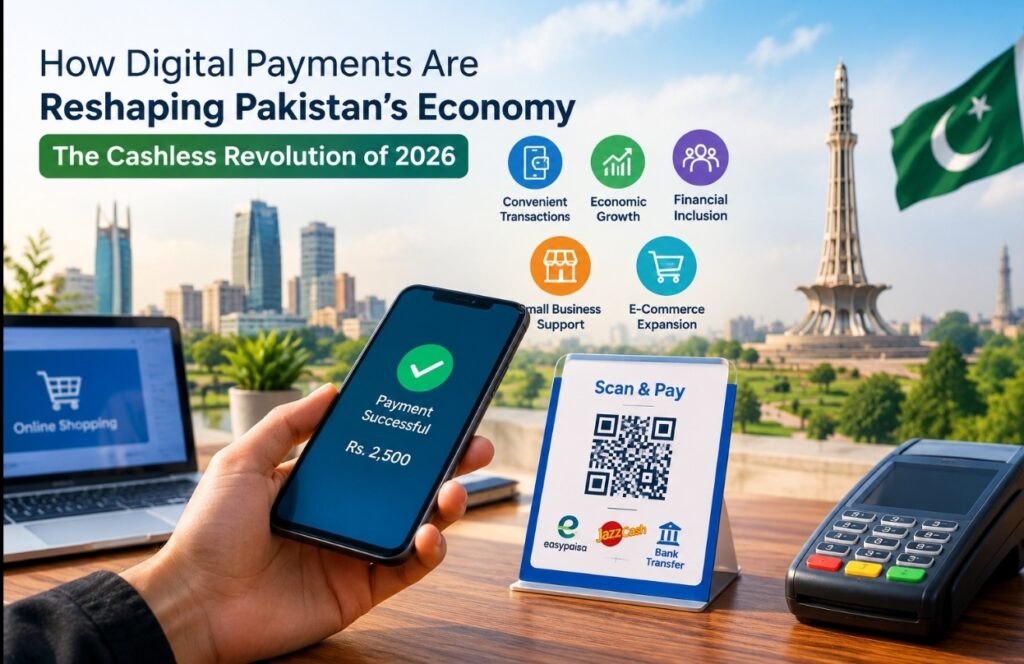
Today, customers can transfer money, pay bills, purchase products, and send payments through mobile applications and online banking platforms. Digital wallets and QR-based payment solutions are also making it easier for merchants to accept electronic payments without requiring complicated infrastructure.
This transition is creating a more flexible payment environment where consumers have multiple options instead of depending entirely on physical cash.
Why Digital Payments Matter for Economic Growth
The growth of digital transactions can have a significant impact on economic activity. When payments become faster and easier, businesses can potentially complete transactions more efficiently and serve customers across wider geographical areas.
For example, an online seller in Lahore can receive an electronic payment from a customer in Karachi without requiring a physical meeting. Similarly, freelancers can receive payments digitally while managing their businesses remotely.
The increasing use of digital payments in Pakistan can therefore support new business models and make economic participation more accessible to individuals who may not have previously operated through traditional financial channels.
Expanding Financial Inclusion
Financial inclusion is one of the most important potential benefits of digital payment technology. Traditional banking services may not always be easily accessible to people in remote areas or individuals who find conventional banking processes complicated.
Mobile-based financial services can reduce some of these barriers. With an internet-enabled smartphone and a suitable financial application, users can perform various transactions without regularly visiting a physical bank branch.
This can be particularly useful for freelancers, home-based entrepreneurs, small retailers, students, and individuals who receive payments from customers or family members.
As digital financial services become easier to use, more people can participate in formal financial activities and access tools that support better money management.
Helping Small Businesses Grow
Small and medium-sized businesses are an important part of Pakistan’s economy, and digital payments can provide several practical advantages for these businesses.
A merchant who accepts electronic payments can serve customers who do not carry cash. Digital transaction records can also make it easier to monitor sales, track incoming payments, and maintain financial records.
For small online businesses, having convenient payment options can be especially valuable. Social media sellers, independent brands, freelancers, and home-based businesses can receive payments from customers without needing a traditional physical store.
This flexibility can lower some barriers to entrepreneurship and allow small businesses to focus more on their products and customers.
The Connection Between Digital Payments and E-Commerce
Pakistan’s e-commerce sector is also closely connected to the growth of electronic payments. Online shopping depends on convenient and trustworthy ways for customers to pay for products and services.
As consumers become more comfortable with online transactions, businesses can create smoother purchasing experiences. Customers can browse products, place orders, and complete payments without visiting a physical location.
The expansion of digital payments in Pakistan can therefore help online businesses reach customers beyond their immediate geographic area. A small business operating from one city can potentially sell products to buyers across the country when digital ordering and payment systems are available.
This is particularly important for entrepreneurs who want to establish online businesses with relatively limited physical infrastructure.
Faster and More Convenient Everyday Transactions
Convenience remains one of the strongest reasons consumers are adopting digital payment methods. Paying bills, transferring money, purchasing products, and sending funds to family members can often be completed through a smartphone.
Instead of waiting in queues or carrying physical currency, users can complete many transactions remotely. This saves time and can make financial activities easier for people with busy schedules.
Businesses can also benefit from faster payment collection. Electronic transactions may reduce the administrative effort associated with handling and counting physical cash, especially when transaction volumes increase.
Improving Financial Record Keeping
Another important advantage of digital payments is the availability of electronic transaction records. Cash transactions can be difficult to organize if businesses do not maintain proper documentation.
Digital transactions generally provide records that can help merchants and entrepreneurs understand their financial activity. These records can support budgeting, accounting, cash-flow management, and business planning.
For growing businesses, having organized financial information can make it easier to identify sales trends and understand where money is coming from and where it is being spent.
Challenges Facing Pakistan’s Digital Payment Ecosystem
Despite its significant potential, the transition toward digital payments is not without challenges. Cybersecurity is one of the most important concerns. As more financial activity moves online, users need protection against scams, phishing attempts, unauthorized transactions, and account theft.
Digital literacy is another challenge. Some consumers may be unfamiliar with mobile financial applications or may not know how to identify fraudulent payment requests.
Internet accessibility can also influence adoption. Users in areas with unreliable connectivity may continue to depend on cash because digital services are not always convenient or consistently available.
For this reason, the future development of digital payments will require not only technological innovation but also consumer education, strong security systems, and wider digital accessibility.
The Future of Digital Finance in Pakistan
The future of Pakistan’s financial ecosystem is likely to become increasingly digital. Mobile banking, QR payments, online wallets, instant transfers, and other financial technologies can continue changing how consumers and businesses interact.
Emerging technologies may also improve fraud detection, payment security, and personalized financial services. As financial technology develops, businesses may gain access to better tools for managing transactions and understanding customer behavior.
However, successful digital transformation requires trust. Consumers need confidence that their money and personal information are protected. Financial service providers must therefore prioritize security, transparency, reliability, and user education.
How Businesses Can Prepare for the Digital Shift
Businesses that want to benefit from the changing payment landscape should consider offering multiple secure payment options. Customers have different preferences, and providing convenient alternatives can improve the overall purchasing experience.
Businesses should also educate employees about digital payment security and maintain proper records of electronic transactions. Regularly reviewing payment processes can help identify potential security weaknesses and improve operational efficiency.
For online businesses, integrating reliable payment methods into websites and social-commerce platforms can also help reduce friction during checkout and encourage customers to complete purchases.
Conclusion
Pakistan’s payment landscape is changing rapidly, and digital technology is becoming an increasingly important part of the country’s economic future. From financial inclusion and small-business development to e-commerce and everyday consumer transactions, digital payment systems are influencing multiple areas of economic activity.
The growth of digital payments in Pakistan demonstrates how technology can create new opportunities for consumers, entrepreneurs, and businesses. While challenges such as cybersecurity, digital literacy, and internet accessibility still need attention, continued innovation and responsible adoption can help build a stronger digital financial ecosystem.
As Pakistan moves further into the cashless era, businesses and consumers that understand and adapt to these changes can be better prepared for the opportunities created by the country’s evolving digital economy.