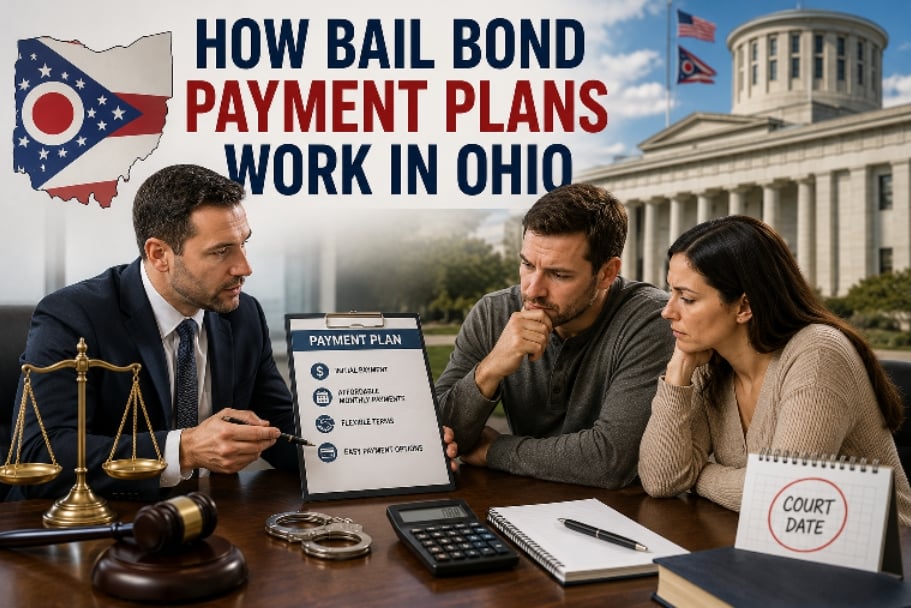
An arrest often happens without warning, leaving families to make important legal and financial decisions within a matter of hours. While emotions naturally become the immediate focus, one of the biggest concerns is often the bail amount established by the court. Depending on the nature of the charges and other legal considerations, bail can range from a few hundred dollars to tens of thousands of dollars, making it difficult for many individuals to pay the full amount immediately.
Fortunately, many Ohio bail bond agencies offer payment plans that help qualified clients spread the financial obligation over time instead of paying everything upfront. These payment arrangements make it possible for many defendants to secure release from custody while maintaining financial stability for their families.
Understanding how bail bond payment plans work, what determines eligibility, and what responsibilities come with a payment agreement can help families navigate an already stressful situation with greater confidence.
Understanding the Purpose of Bail in Ohio
Before discussing payment plans, it is important to understand the role bail plays within Ohio’s criminal justice system.
Bail is a financial guarantee ordered by the court that allows a defendant to remain out of jail while awaiting future court appearances. Rather than remaining incarcerated until the case concludes, eligible individuals may secure release after satisfying the conditions established by the judge.
The primary purpose of bail is not punishment. Instead, it serves as an assurance that the defendant will return for every required court hearing. If all court obligations are met, the legal process continues while allowing the defendant to remain with family, continue working, and prepare an appropriate legal defense.
When determining bail, judges typically consider several important factors, including:
- The seriousness of the alleged offense
- Criminal history
- Previous failures to appear in court
- Employment status
- Family and community ties
- Public safety concerns
- Likelihood of appearing for future hearings
Every criminal case is unique, meaning no two bail decisions are exactly alike.
Why Payment Plans Are Important
Many families simply do not have immediate access to thousands of dollars following an unexpected arrest.
Medical expenses, rent, mortgage payments, insurance, groceries, childcare, and other household obligations often consume monthly budgets. Having to produce a significant amount of money within a few hours can create additional stress during an already emotional situation.
Payment plans provide greater financial flexibility by allowing qualified clients to pay according to an agreed schedule rather than making one large payment immediately. Individuals seeking flexible bail bond payment plans can learn more about the available financing options before beginning the bonding process. This option helps reduce financial hardship while allowing the defendant to return home sooner.
For many families, this means maintaining employment, caring for children, attending medical appointments, and working with legal counsel while awaiting future court proceedings.
How Bail Bond Payment Plans Typically Work
Although payment policies vary between bail bond companies, the overall process generally follows several common steps.
Initial Contact
The process usually begins when a family member, friend, or the defendant contacts the bail bond agency after learning the bail amount.
During this initial conversation, important information may include:
- Defendant’s full legal name
- County jail location
- Booking number
- Criminal charges
- Bail amount established by the court
- Court information
- Contact details
Providing accurate information allows the bail bond company to begin reviewing the case and determine available options.
Reviewing Financial Information
Once the case information has been gathered, the bail bond company generally reviews the financial circumstances of the person requesting assistance.
Information commonly considered includes:
- Employment history
- Monthly income
- Length of employment
- Residence stability
- Financial obligations
- Credit history when applicable
- Available collateral if necessary
This review helps determine whether the applicant qualifies for a payment arrangement and what terms may be appropriate.
Creating the Payment Agreement
If approved, both parties enter into a written agreement outlining the payment terms.
The agreement typically explains:
- Initial payment required
- Remaining balance
- Installment schedule
- Due dates
- Accepted payment methods
- Responsibilities of both parties
- Consequences of missed payments
Reading every section carefully before signing helps ensure everyone understands their financial obligations.
Factors That Affect Payment Plan Approval
Not every payment arrangement looks the same because each case involves different financial circumstances and legal considerations.
Several factors commonly influence approval.
Bail Amount
Higher bail amounts generally involve greater financial responsibility. Larger bonds may require a higher initial payment or additional financial documentation before approval.
Employment Stability
Applicants with consistent employment often demonstrate a greater ability to maintain regular installment payments throughout the agreement.
Financial Resources
Income, existing debt, monthly expenses, and overall financial stability help determine what payment schedule may be realistic.
Collateral
Some situations may require collateral to reduce financial risk.
Examples include:
- Vehicles
- Real estate
- Jewelry
- Business assets
- Other valuable property
Collateral requirements vary depending on the circumstances of the case and the bail bond company.
Criminal Charges
The seriousness of the alleged offense and the defendant’s legal history may also influence payment terms.
Responsibilities After Signing a Payment Agreement
Obtaining release through a payment plan involves ongoing responsibilities beyond making scheduled payments.
Defendants are expected to:
- Attend every scheduled court hearing.
- Follow all release conditions ordered by the judge.
- Notify the bail bond company of address or phone number changes.
- Avoid committing additional criminal offenses.
- Maintain communication throughout the legal process.
Likewise, the individual financially responsible for the payment agreement should continue making payments according to the agreed schedule until the balance has been satisfied.
Failure to meet these obligations can create additional legal or financial complications.
Why Court Attendance Matters
One of the most important responsibilities after release is appearing for every required court date.
Payment plans do not replace or reduce this obligation.
If a defendant fails to appear, the court may issue a bench warrant and initiate additional legal proceedings. Missing court appearances may also affect the financial agreement associated with the bond.
Staying informed about hearing dates and complying with all court instructions helps avoid unnecessary complications.
Advantages of Bail Bond Payment Plans
Payment plans provide several practical benefits during difficult legal situations.
Reduced Financial Pressure
Families are not forced to gather a large amount of money immediately following an arrest.
Faster Release
Having financing options available often allows defendants to begin the release process sooner.
Employment Protection
Returning home more quickly allows defendants to continue working and supporting their families while awaiting trial.
Better Legal Preparation
Remaining out of custody provides additional opportunities to consult attorneys, gather documents, and prepare an effective defense.
Family Stability
Parents may continue caring for children, elderly relatives, and other family responsibilities while complying with court requirements.
Common Misunderstandings
Several misconceptions surround bail bond payment plans.
Some people assume everyone automatically qualifies for financing. In reality, approval depends upon financial qualifications and the policies of the bail bond company.
Others believe payment plans eliminate court obligations. This is incorrect. Every defendant remains legally responsible for appearing in court and complying with all release conditions.
Another misunderstanding is that every payment plan follows identical terms. Payment schedules, collateral requirements, and approval criteria differ between companies and individual cases.
Preparing Before Contacting a Bail Bond Company
Families can often make the process smoother by gathering accurate information before requesting assistance.
Helpful information includes:
- Defendant’s legal name
- Jail location
- Booking number
- Bail amount
- Criminal charges
- Court information
- Identification
- Employment information
- Contact details
Having these details available allows the process to move more efficiently while reducing unnecessary delays.
Conclusion
Unexpected arrests place tremendous emotional and financial pressure on families. Understanding how bail bond payment plans work in Ohio allows individuals to make informed decisions during an already stressful time. While approval requirements and payment terms vary depending on the circumstances, payment plans provide many families with a practical solution for securing a defendant’s release without requiring the full financial obligation immediately.
Before signing any agreement, applicants should carefully review all payment terms, understand their responsibilities, and remain committed to complying with every court requirement. Staying informed, maintaining communication, and meeting both financial and legal obligations can help ensure the process moves as smoothly as possible while the case progresses through Ohio’s legal system.
Frequently Asked Questions
1. Who qualifies for a bail bond payment plan in Ohio?
Eligibility varies by bail bond company and is typically based on factors such as the bail amount, employment status, financial stability, credit history (if reviewed), and the level of risk associated with the case. Some situations may also require collateral.
2. Do I have to pay the full bail amount upfront?
Not necessarily. Many bail bond companies offer payment plans that allow qualified clients to make an initial payment and pay the remaining balance through scheduled installments, making the process more affordable.
3. What information is needed to apply for a payment plan?
Applicants are generally asked to provide the defendant’s full legal name, jail location, booking number, bail amount, criminal charges, contact information, and, in some cases, proof of income or employment.
4. Can collateral be required for a bail bond payment plan?
Yes. Depending on the bail amount and the circumstances of the case, a bail bond company may request collateral such as a vehicle, real estate, jewelry, or other valuable assets to help secure the bond.
5. What happens if the defendant misses a court appearance?
Failing to appear in court can result in a bench warrant, forfeiture of the bail bond, and additional legal consequences. It may also create financial liability under the terms of the bail bond agreement.
6. Can payment terms vary between bail bond companies?
Yes. Every bail bond company establishes its own payment policies, approval requirements, installment schedules, and collateral guidelines. Families should carefully review the agreement before signing.
7. Why are bail bond payment plans beneficial for families?
Payment plans help reduce the immediate financial burden of an unexpected arrest by allowing qualified clients to spread payments over time. This flexibility can help defendants return home sooner, continue working, support their families, and prepare for upcoming court proceedings while meeting their legal obligations.