
How AI Is Reshaping the Future of Premium Ground Transportation

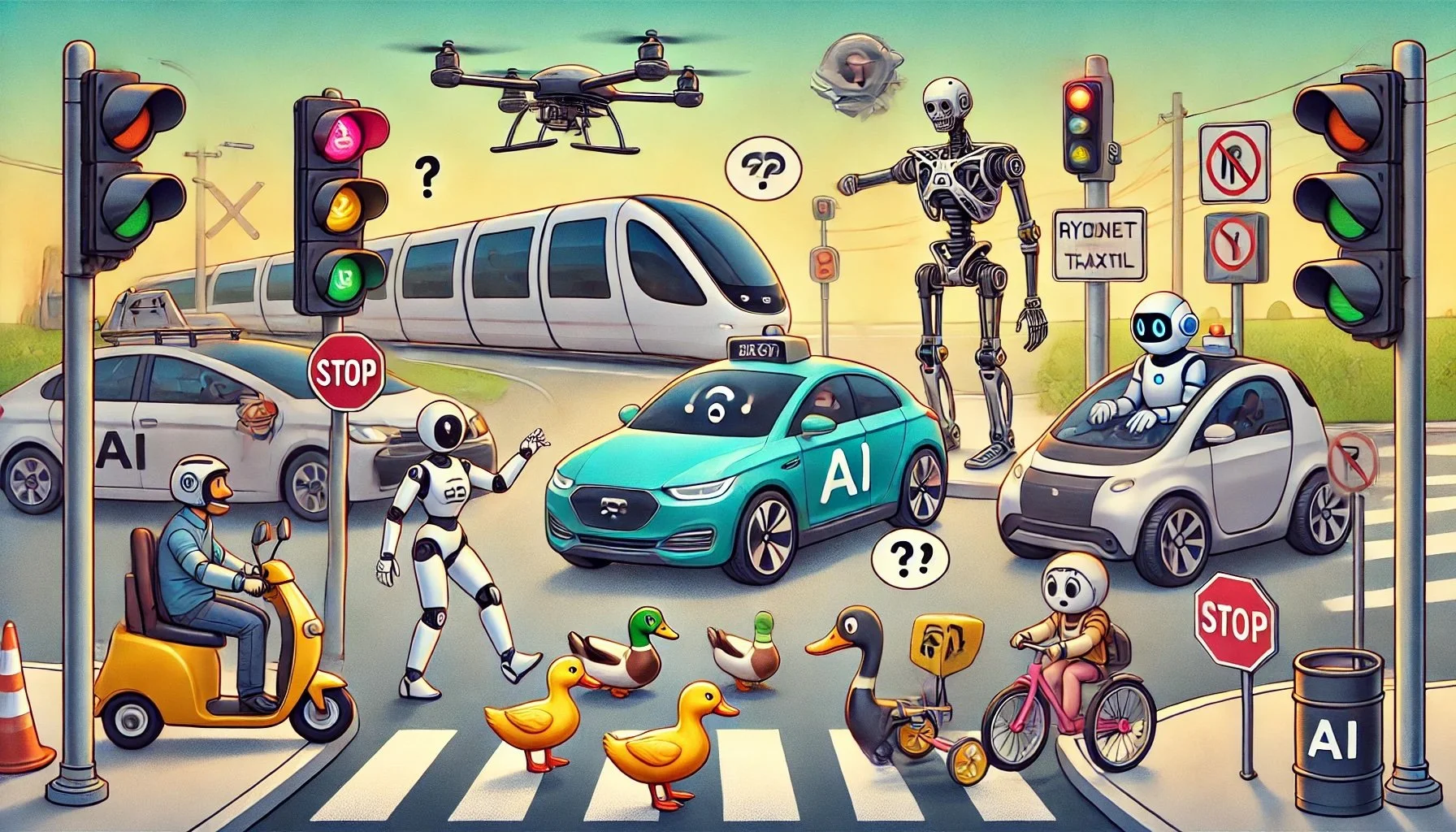
The companies leading tomorrow’s transportation industry won’t simply own the best vehicles, they’ll own the smartest decisions.
“We Keep Talking About Self-Driving Cars, But We’re Looking in the Wrong Direction”
Ask someone how artificial intelligence is changing transportation, and chances are they’ll mention self-driving cars.
It’s understandable. Autonomous vehicles dominate headlines, attract billions in investment, and spark endless debates about when or if they’ll become part of everyday life.
But here’s the interesting part.
While the world has been watching the future through the windshield, another revolution has quietly been unfolding behind the dashboard.
It isn’t happening on public roads with driverless cars.
It’s happening inside dispatch centers, reservation platforms, fleet management systems, airport monitoring software, and customer experience platforms.
Artificial intelligence is already transforming premium ground transportation—not by replacing chauffeurs, but by making every decision before a passenger even opens the vehicle door.
Most travelers never notice it.
And that’s exactly the point.
The best technology rarely asks for attention. It simply makes everything work better.
The Ride Begins Long Before the Engine Starts
Think back to the last time you booked airport transportation.
You probably checked your flight, packed your luggage, confirmed your reservation, and expected someone to arrive exactly when promised.
From your perspective, that seemed simple.
Behind the scenes, however, dozens of moving pieces were already working together.
Your flight might change gates.
Weather could delay your arrival.
Traffic patterns could shift unexpectedly.
Construction might close the fastest route.
Another passenger’s delayed pickup could affect driver availability.
Years ago, each of those situations required someone to manually monitor updates, make phone calls, rearrange schedules, and hope nothing else changed.
Today, artificial intelligence processes much of that information continuously.
Instead of reacting after problems appear, modern transportation platforms attempt to predict them before they affect the passenger.
That’s a subtle difference.
But it’s transforming an entire industry.
Luxury Has Quietly Changed Its Meaning
There was a time when luxury transportation meant polished leather interiors, professional uniforms, and premium vehicles parked outside luxury hotels.
Those things still matter.
But they no longer define the experience.
Today’s travelers judge luxury differently.
Luxury is landing after a delayed flight and discovering your chauffeur already adjusted the pickup time.
Luxury is receiving an updated arrival notification before you realize traffic has worsened.
Luxury is never wondering where your vehicle is.
Luxury is confidence.
And confidence comes from information.
Artificial intelligence helps create that confidence by connecting thousands of small data points that humans simply can’t analyze fast enough.
Ironically, passengers may never realize AI played a role at all.
They simply describe the experience as “everything went smoothly.”
Technology Didn’t Replace Human Service – It Raised the Standard
One of the biggest misconceptions surrounding artificial intelligence is that its purpose is replacing people.
In reality, the strongest transportation companies are using AI for something much more valuable.
They’re using it to remove friction.
Think about everything that distracts transportation professionals from delivering exceptional service.
Constant schedule adjustments.
Traffic monitoring.
Route optimization.
Flight tracking.
Vehicle availability.
Driver assignments.
Customer communication.
When these repetitive operational decisions become more intelligent, chauffeurs gain something incredibly valuable.
Time.
Instead of worrying about logistics every minute, they can focus on what technology still struggles to replicate:
Professional judgment.
Adaptability.
Hospitality.
Emotional intelligence.
Passengers remember how they were treated far longer than they remember the route taken to the airport.
AI can’t replace genuine hospitality.
But it can remove many of the obstacles that prevent professionals from delivering it consistently.
The Real Competition Isn’t Another Transportation Company
For decades, transportation businesses competed on fairly predictable factors.
Who had the newest fleet?
Who offered lower prices?
Who served more cities?
Those questions still matter but they’re no longer enough.
Today’s competition happens somewhere entirely different.
It happens inside software.
Imagine two transportation companies with identical luxury SUVs, experienced chauffeurs, and similar pricing.
One manually dispatches every reservation.
The other uses intelligent systems that predict airport delays, monitor vehicle health, analyze traffic in real time, optimize chauffeur assignments, and proactively communicate with passengers.
From the customer’s perspective, both companies own luxury vehicles.
But only one consistently delivers a luxury experience.
Technology has quietly become one of the strongest differentiators in premium transportation.
Not because customers ask about algorithms.
Because they notice reliability.
Why Airports Became AI’s Greatest Classroom
Few environments expose operational weaknesses faster than airports.
Every day, thousands of flights arrive early.
Others arrive late.
Some change terminals.
Some change gates.
Weather shifts.
Runways close.
Security lines fluctuate.
Passenger arrival times become unpredictable.
For transportation providers, every unexpected change creates a ripple effect.
One delayed pickup doesn’t just affect one passenger.
It can influence an entire day’s schedule.
This is where artificial intelligence delivers measurable value.
Instead of monitoring dozens of airline websites manually, intelligent systems continuously interpret live flight data and identify schedule changes within seconds.
The goal isn’t simply faster information.
It’s faster decisions.
Passengers experience fewer delays because companies begin adjusting long before the aircraft reaches the gate.
Data Is Quietly Becoming the Industry’s Most Valuable Asset
Transportation companies used to measure success with visible assets.
Fleet size.
Luxury vehicles.
Office locations.
Driver experience.
Today, another asset may be even more valuable.
Information.
Every completed reservation teaches something.
Which routes experience unexpected congestion on Thursday afternoons?
Which airports generate the highest executive travel demand?
Which pickup windows consistently require additional scheduling flexibility?
How long do travelers typically need after international arrivals?
Where do recurring business travelers usually go after landing?
One reservation reveals very little.
Hundreds of thousands begin revealing patterns.
Artificial intelligence identifies these patterns far faster than traditional reporting methods.
The result isn’t simply better analytics.
It’s a better decision.
And better decisions create better experiences.
The Modern Business Traveler Expects More Than Transportation
Consider a consultant flying into San Francisco for a day filled with investor meetings.
Landing on time is only one part of the schedule.
Every appointment depends on everything else working exactly as planned.
The vehicle needs to arrive promptly.
Traffic needs continuous monitoring.
Meeting locations may change throughout the day.
Unexpected delays need immediate solutions.
This is why many professionals now choose flexible transportation solutions such as a car service san francisco rather than relying on multiple individual ride requests throughout the day.
The value isn’t simply having a luxury vehicle available.
It’s removing dozens of small decisions so attention stays focused on business instead of logistics.
That’s where technology becomes invisible.
Passengers don’t remember sophisticated dispatch software.
They remember arriving prepared instead of stressed.
How AI Is Reshaping the Future of Premium Ground Transportation
“AI Can Predict Traffic But It Still Can’t Read the Room”
Imagine stepping into a luxury vehicle after one of the most stressful days you’ve had in months.
Maybe your flight was delayed twice. Maybe an important client meeting didn’t go as planned. Maybe you’ve just spent twelve hours crossing time zones and all you want is silence.
No algorithm knows whether you’d rather talk or enjoy a quiet ride.
A machine can’t notice that you’re carrying more luggage than expected and offer assistance before you ask. It won’t recognize that you’re rushing to make a dinner reservation or instinctively adjust the cabin temperature because you’ve just walked through a humid summer afternoon.
These moments aren’t programmed.
They’re human.
And that’s exactly why conversations about artificial intelligence replacing chauffeurs often miss the bigger picture.
Technology is exceptional at processing information. People are exceptional at understanding people.
The future of premium transportation isn’t about choosing one over the other. It’s about allowing each to do what it does best.
Every Great Journey Depends on Hundreds of Invisible Decisions
Passengers experience a journey as one continuous event.
Transportation companies experience it as hundreds of micro-decisions.
Should the chauffeur leave five minutes earlier because downtown traffic is building faster than usual?
Would another vehicle be better suited because luggage requirements changed?
Is it smarter to reroute around a sporting event that wasn’t originally on the schedule?
Should another chauffeur cover the next reservation to avoid delays later in the afternoon?
These decisions happen constantly.
For years, they relied almost entirely on dispatcher experience.
Today, artificial intelligence acts like an experienced operations partner, processing thousands of variables simultaneously while humans make the final judgment.
That partnership matters.
Technology offers speed.
Experience provides context.
Together, they create reliability.
The Quiet Revolution Happening Inside Fleet Management
Luxury transportation isn’t just about passengers.
It’s also about vehicles that operate almost continuously across cities, airports, hotels, and business districts.
Keeping those vehicles performing at a premium level requires extraordinary coordination.
Maintenance schedules.
Fuel efficiency.
Cleaning cycles.
Tire wear.
Brake performance.
Battery health.
Vehicle rotation.
Historically, many maintenance decisions happened after warning signs appeared.
Modern fleet management is shifting toward prediction instead of reaction.
Artificial intelligence can analyze historical performance data, identify unusual operating patterns, and recommend inspections before a small issue becomes an expensive repair.
This approach doesn’t simply reduce costs.
It reduces disruptions.
Because from a passenger’s perspective, the best maintenance program is the one they never notice.
Trust Is Built Long Before Someone Becomes a Customer
When people discuss artificial intelligence, they often focus on efficiency.
But one of AI’s greatest contributions may actually be trust.
Think about how travelers evaluate a transportation company.
They don’t immediately ask what software powers dispatch operations.
Instead, they ask themselves much simpler questions.
Will someone actually be waiting when I arrive?
Will I receive updates if my flight changes?
Can I rely on this company during an important business trip?
Will everything happen exactly as promised?
Every accurate notification.
Every proactive update.
Every perfectly timed pickup.
Every consistent experience quietly reinforces confidence.
Passengers rarely remember individual pieces of technology.
They remember reliability.
Over time, reliability becomes a reputation.
And reputation becomes trust.
The Companies Winning Tomorrow’s Market Think More Like Technology Businesses
For decades, transportation companies invested primarily in physical assets.
New vehicles.
Expanded fleets.
Additional offices.
Luxury amenities.
Those investments still matter.
But the industry’s competitive edge is increasingly being shaped by digital infrastructure rather than physical infrastructure.
The companies moving ahead aren’t necessarily those buying the most vehicles.
They’re the ones building smarter operating systems.
They invest in intelligent dispatch platforms.
Integrated reservation systems.
Real-time communication.
Predictive analytics.
Cybersecurity.
Cloud-based operations.
Customer intelligence.
In many ways, premium transportation companies are beginning to resemble software companies that happen to operate luxury vehicles.
That shift changes everything from customer expectations to long-term business strategy.
Technology Should Feel Invisible
One of the greatest compliments any technology can receive is that nobody notices it.
Passengers don’t celebrate algorithms.
They celebrate arriving relaxed.
They don’t admire machine learning models.
They appreciate never wondering whether someone will show up.
The purpose of artificial intelligence isn’t to impress customers.
Its purpose is to remove uncertainty.
When technology performs well, passengers stop thinking about transportation altogether.
Their attention returns to what matters most, the meeting they’re preparing for, the family they’re visiting, the event they’re attending, or simply enjoying the journey.
That quiet confidence is what modern luxury increasingly looks like.
The Responsibility That Comes With Smarter Systems
As artificial intelligence becomes more influential, transportation companies also inherit greater responsibility.
Passengers share sensitive information every day.
Travel schedules.
Business meetings.
Home addresses.
Corporate travel patterns.
Airport itineraries.
That information helps create personalized experiences but only when handled responsibly.
Technology should never come at the expense of privacy.
The organizations that earn lasting customer trust will be those that treat data with the same professionalism they expect from their chauffeurs.
Innovation without responsibility creates hesitation.
Innovation with transparency creates confidence.
As AI becomes more deeply integrated into premium mobility, ethical data practices will become just as important as technological advancement itself.
Why Hospitality Will Always Be the Industry’s Greatest Innovation?
Ask frequent travelers what they remember most after an exceptional journey.
Very few will mention the reservation platform.
Almost nobody will remember the dispatch software.
Instead, they’ll remember the chauffeur who greeted them by name.
The driver who adjusted the pickup after monitoring their delayed flight.
The quiet professionalism during an early morning airport transfer.
The reassurance that someone had already solved problems before they even knew those problems existed.
Technology can make those moments easier to deliver.
But it doesn’t create them.
People do.
Companies that understand this distinction will continue leading the premium transportation industry, regardless of how advanced artificial intelligence becomes.
Organizations like Chauffeur Everywhere reflect this evolving philosophy by combining intelligent operational systems with the professionalism, discretion, and consistency that travelers continue to value. Rather than allowing technology to replace the human element, the goal is to let innovation strengthen it.
Looking Beyond Artificial Intelligence
The transportation industry has always evolved alongside technology.
Horse-drawn carriages gave way to automobiles.
Paper maps became GPS navigation.
Phone reservations became mobile applications.
Artificial intelligence is simply the next chapter.
But unlike previous innovations, AI isn’t changing only how vehicles move.
It’s changing how decisions are made.
It helps companies predict instead of react.
Personalize instead of standardize.
Prevent instead of recover.
Most importantly, it allows transportation providers to spend less time managing operations and more time focusing on people.
And perhaps that’s the greatest irony of all.
The smarter technology becomes, the more valuable genuine human service becomes.
Final Thoughts
The future of premium ground transportation won’t be defined by autonomous vehicles arriving at the curb without a driver.
It will be defined by something much less dramatic—but far more meaningful.
A traveler lands after a delayed flight.
Their chauffeur is already there.
The route has already been adjusted.
Traffic has already been avoided.
The meeting will still begin on time.
The passenger never sees the algorithms, predictive models, or intelligent software working behind the scenes.
They simply step into a vehicle and think:
“That was effortless.”
In the end, that may be the highest achievement artificial intelligence can offer, not replacing the human experience, but making it feel remarkably effortless.






Comment