LOS ANGELES, Calif. — For hospitality operators along the coastlines of Miami, California, and the Gulf Coast, running outdoor dining patios offers stunning guest experiences alongside severe environmental wear. High airborne sodium chloride levels, dense morning fog, and heavy ocean mist create an aggressive setting that destroys unoptimized lighting fixtures. On coastal hotel patios, standard consumer accent lights typically show surface pitting, internal rust, and electrical shorts within 3 to 6 months. This rapid degradation forces venues into replacing their lamp inventory up to four times per year, driving up capital expenditures and creating endless maintenance tasks.
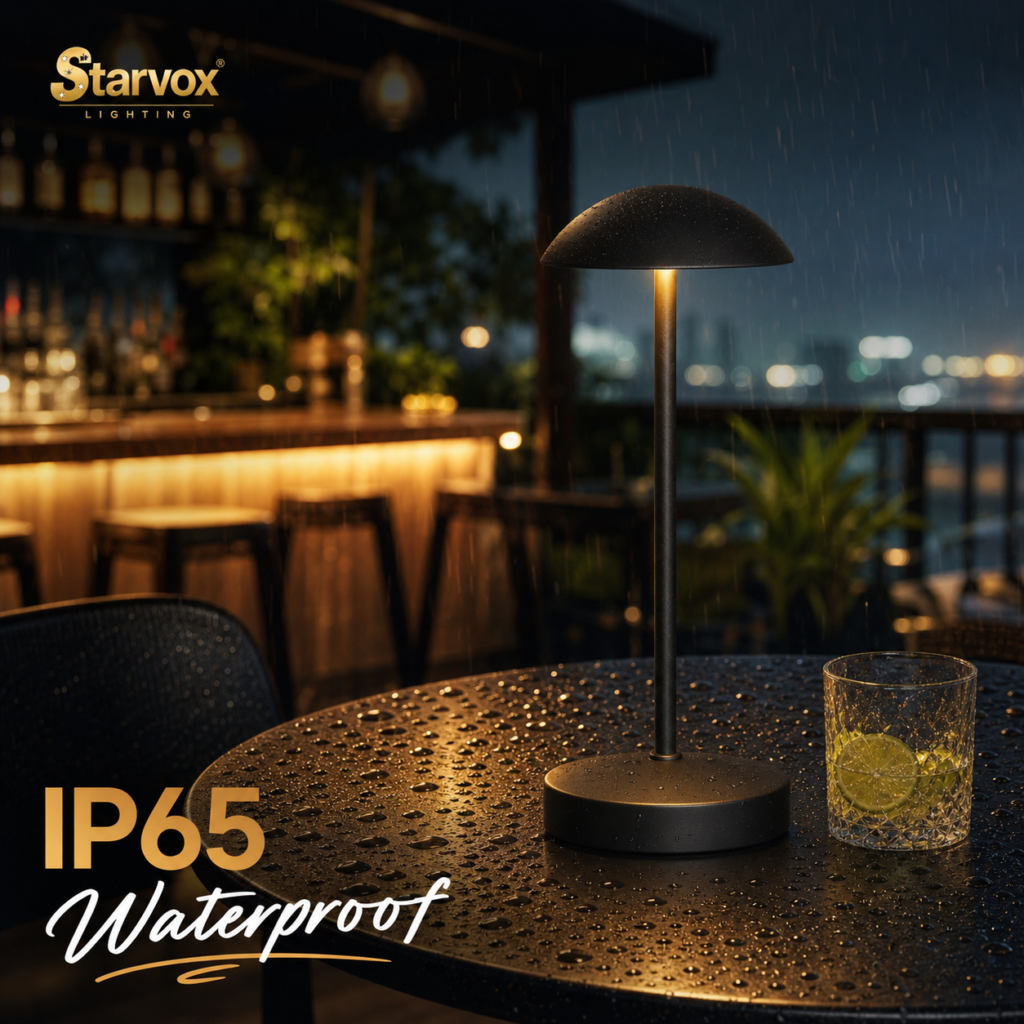
To solve these high replacement costs, multi-unit resort buyers and food and beverage directors are deploying commercial-grade waterproof cordless lamps. Installing a certified IP65 cordless lamp system gives oceanfront venues a reliable defense against coastal weather. By shifting away from temporary retail fixtures and adopting purpose-built salt resistant table lamps, coastal properties protect their operating budgets while providing clean, warm table illumination. This technical briefing reviews the financial impact of sea-spray corrosion, breaks down IP rating standards, and explains how commercial hardware fleets ensure long-term stability for coastal hotel outdoor lighting.
1. The Financial Impact of Coastal Salt Air on Hotel Lighting
Evaluating the true cost of coastal hotel outdoor lighting requires looking beyond initial purchase prices to analyze total cost of ownership (TCO). Microscopic saltwater spray carried by ocean breezes settles directly onto patio fixtures. On non-sealed units, this salt film penetrates charging ports, casing joins, and power switches, triggering electrochemical corrosion across internal circuit boards.
When hotels deploy low-grade lighting on oceanfront patios, they face a continuous cycle of inventory replacements. Replacing 20 to 30 tables of lighting multiple times a year adds thousands of dollars in extra hardware costs. When combined with staff hours spent troubleshooting failed cords, changing corroded adapters, and resetting dark tables, unoptimized lighting becomes an unsustainable operational loss.
2. Ingress Protection Standards: IP44 vs. IP54 vs. IP65 Marine Resistance
Protecting outdoor hardware from premature failure requires choosing equipment built to rigorous engineering standards. Hospitality buyers must evaluate certified Ingress Protection (IP) ratings to ensure internal electronics stay isolated from salt air.
| Ingress Rating | Structural Dust & Moisture Protection Level | Marine & Coastal Environment Suitability |
| IP44 Standard | Basic splash protection; vulnerable to driven rain and dense mist. | Unsuitable; salt fog penetrates housing, causing failure within months. |
| IP54 Standard | Dust-protected; resists water splashes from any angle. | Limited; handles light inland rain but fails under heavy coastal exposure. |
| IP65 Commercial | Dust-tight seal; resists direct high-pressure water spray and heavy mist. | Optimal; protects internal components from salt spray and daily washdowns. |
A certified IP65 cordless lamp features specialized internal gaskets, sealed battery compartments, and precise housing seams. This marine-grade design ensures that heavy rainstorms, dense coastal fog, and routine pressure washdowns cannot enter the chassis. Choosing genuine IP65 hardware stops moisture-driven electrical failures, allowing coastal venues to maintain their lighting investments over multiple seasons.
3. Materials Engineering: Anodized Alloys vs. Consumer Plastics
Chassis material selection directly impacts hardware lifespan in high-salt settings. Low-cost plastic fixtures and painted sheet iron degrade quickly under coastal UV exposure and ocean mist. Plastic housings discolor and turn brittle, while thin iron shells rust, leaving unsightly corrosion marks on patio tables.
Commercial salt resistant table lamps use heavy CNC-machined metal alloys treated with anodized coatings or anti-corrosion powder finishes. These protective finishes prevent sodium chloride from reacting with the underlying chassis. Starvox manufactures its entire fleet with these durable metal finishes, offering over 30 design options. To view these finish options and review ROI case studies from coastal venues, operators can explore the online cordless table lamp catalog.
4. Operational Efficiency: Inductive Recharging Infrastructure
Upgrading to waterproof cordless lamps solves material corrosion issues, but venues also need efficient daily maintenance routines. Manually plugging individual charging cables into dozens of lamps every night takes up to 90 minutes of staff time, creating unnecessary labor expenses and causing mechanical wear on power ports.
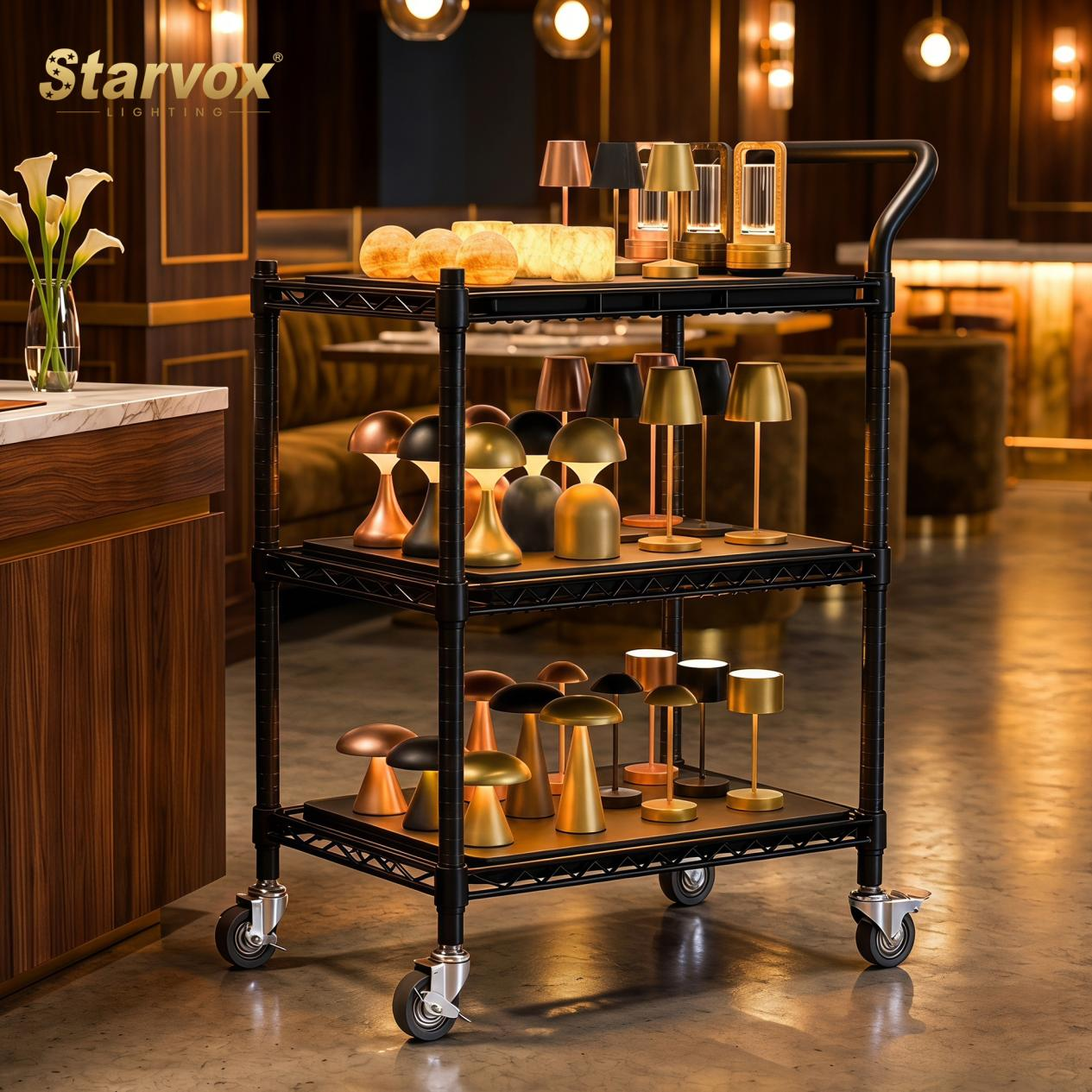
Starvox removes this daily handling friction through a centralized charging infrastructure. Staff collect the lamps from patio tables and place them onto a mobile trolley. Power transfers immediately through magnetic contact bays on the 5-minute inductive charging trolley, recharging the full inventory from a single outlet. This centralized workflow reduces daily handling time from 90 minutes down to under 5 minutes, delivering an 80% reduction in daily maintenance labor while removing cable port wear entirely.
5. Enterprise Hardware Performance and Supply Chain Security
To provide reliable illumination for extended shifts, every Starvox fixture includes a true-capacity 5000mAh lithium-polymer battery. This battery cell delivers over 60 hours of continuous light at full brightness, providing multi-day shift coverage without midday charging.
For corporate purchasing directors managing multi-property rollouts, sourcing hardware requires dependable supply chain support. Starvox manufactures its systems in an enterprise facility backed by an official Walmart ID, confirming that production lines meet strict quality audits and international safety standards, including UL, CE, and FCC certifications.
Starvox offers low minimum order thresholds starting at 36 units for stocked models, backed by domestic warehouse inventory. This logistics network provides 7-day delivery across the United States, allowing venues to equip properties without overseas freight delays. Every fleet system includes an official 12-month engineering warranty, giving operators long-term technical support.
6. Frequently Asked Questions: Coastal Hospitality Lighting
Q1: How fast does salt air corrode outdoor restaurant lighting?
In coastal environments like Miami or coastal California, airborne salt mist causes noticeable corrosion on standard consumer outdoor lighting within 3 to 6 months. Non-sealed power ports, thin metal housings, and basic switches develop rust and internal short circuits quickly, often forcing operators to replace their patio lighting up to four times per year.
Q2: What IP rating do waterproof cordless lamps need for coastal areas?
Coastal hospitality venues require a minimum rating of certified IP65 light corrosion resistance. While lower ratings like IP44 or IP54 protect against minor water splashes, they lack the airtight seals needed to block fine saltwater mist and driven coastal rain. An IP65 rating ensures the internal compartment remains dust-tight and protected against high-pressure water spray.
Q3: Can IP65 waterproof cordless lamps withstand direct ocean spray?
Yes, certified IP65 cordless lamps are engineered to withstand ocean mist, heavy salt spray, and routine high-pressure cleaning washdowns. The sealed chassis prevents salt-laden moisture from reaching internal circuit boards and battery cells, ensuring reliable operation on oceanfront dining patios.
Q4: What is the lifespan difference between IP44 and IP65 outdoor lamps?
In coastal settings, standard IP44 lamps often fail within 3 to 6 months due to moisture penetration and internal corrosion. In contrast, commercial-grade IP65 lamps built with anodized metal alloys are designed for multi-year daily service. Upgrading to IP65 hardware stops recurring replacement costs and lowers overall operating expenses. To review complete technical specifications, visit starvoxlighting.com/contact.
7. Summary & Enterprise Procurement Support
Protecting coastal dining patios from salt air corrosion requires replacing short-lived consumer items with engineered commercial equipment. Installing waterproof cordless lamps with certified IP65 ratings, CNC-machined anodized alloy bodies, and 5000mAh lithium batteries allows hospitality operators to prevent frequent fixture replacements and secure reliable illumination. Combined with a centralized inductive charging trolley, this systemized setup lowers daily maintenance handling by 80% while enhancing the guest dining environment.
U.S. Domestic Fulfillment & Enterprise Logistics
Minimum Order Quantity (MOQ): 36 units (In-Stock Fleet Configurations).
Fulfillment Timeline: Guaranteed 7-Day Domestic Delivery from U.S. Warehouse Reserves.
Warranty Protection: Full 12-Month Engineering Technical Support & Warranty Coverage.
Technical Specifications & Procurement Enquiries: Please submit formal project requests directly through the starvoxlighting.com/contact enterprise portal.
Media & Key Accounts Contact: Paul Xu — Director of Global Sales & Key Accounts Starvox Lighting Email: [email protected]