
How Advanced Trading Terminals Help Options Traders

Options trading involves much more than deciding whether the market will rise or fall. Before placing a trade, a trader may need to study the underlying asset, compare strike prices, track option premiums, check open interest and assess volatility. Once the position is open, the market can continue to change, requiring constant attention.
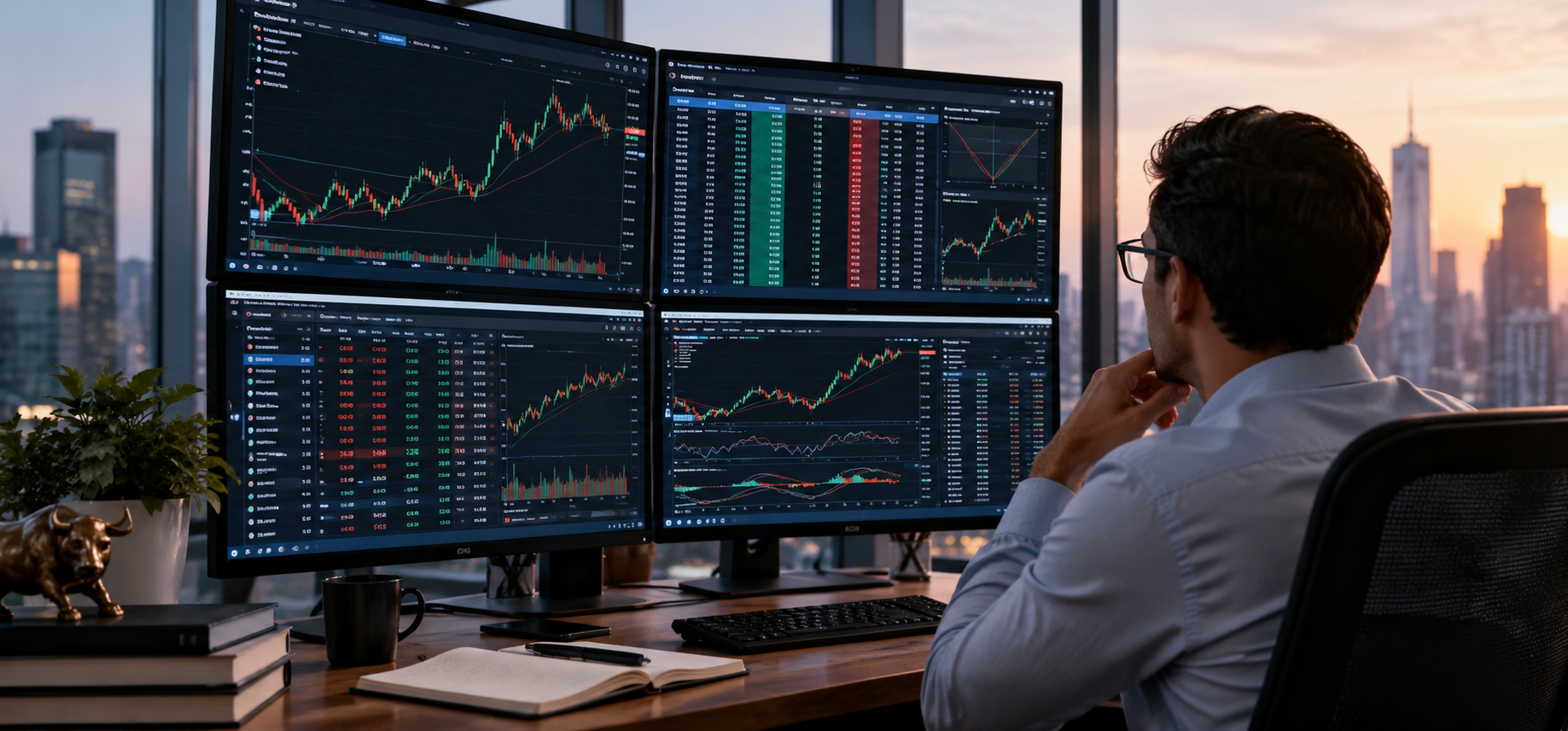
When charts, option data and positions are spread across different screens, the trading process can become slower and harder to follow. Advanced trading terminals are designed to solve this problem by creating a single workspace where traders can analyse the market, place trades and monitor positions.
They cannot predict where the market will go. But they can give traders a clearer and more efficient way to work with the information available to them.
Stay ahead of the markets with PEAK by Motilal Oswal.
Bringing Key Market Data Together
A trader may begin by looking at the price movement of an index or stock. The chart may suggest a trend, range or potential breakout. Next, the trader may check the option chain to compare nearby strikes. Changes in volatility, volume or open interest can provide further context.
Looking at each of these separately can make analysis feel fragmented.
An advanced trading terminal brings important market data into one place. Traders can move between live prices, charts, option chains, market depth and position details without repeatedly switching platforms.
This makes it easier to connect different pieces of information.
For instance, while tracking an index on a chart, a trader can simultaneously examine how call and put premiums at relevant strike prices are reacting. Instead of treating price action and options data as separate inputs, the trader gets a broader view of the market.
Making the Option Chain Easier to Read
The option chain is central to options trading, but it can also be overwhelming. With multiple strike prices, expiries and constantly changing figures, identifying relevant information quickly can be difficult.
Advanced terminals can make this process more intuitive.
Traders can navigate across strikes and expiries, compare calls and puts, and track changes in option premiums as the session progresses. Information such as open interest, volume and price movement can add useful context to the analysis.
The real advantage lies in faster interpretation. A well-designed interface helps traders focus on the contracts and data points relevant to their strategy instead of spending unnecessary time searching through information.
Using Charts to Understand Price Action
Data shows numbers. Charts show the journey behind those numbers.
For options traders, studying the underlying asset is essential because its movement can significantly influence an options position. An advanced terminal allows traders to view different timeframes and examine both the bigger trend and shorter-term price action.
A trader considering a bullish position, for example, may first study whether the underlying is holding above a support level, trading within a range or showing signs of a breakout. Similarly, a trader expecting weakness may analyse resistance levels and downward momentum.
No chart can guarantee an outcome. However, combining chart analysis with live options data can help traders build a more informed view before taking a position.
When Efficient Execution Matters
Markets can move quickly, particularly during volatile trading sessions. By the time a trader completes their analysis, the price they were watching may already have changed.
This is where an efficient trading interface becomes important.
Advanced terminals can simplify order placement by offering quick access to frequently traded contracts, watchlists and order-entry tools.
A trader with a clear strategy should be able to move from analysis to execution without navigating through a complicated process. A streamlined terminal helps reduce that friction while keeping the trader focused on the trade.
Handling Multi-Leg Strategies More Clearly
Options strategies often involve more than one contract. A spread, straddle or strangle may include multiple legs, each with its own strike price, premium and expiry.
Advanced trading terminals can present multi-leg positions in a more structured way. This allows traders to view the strategy as a whole while still understanding the role of each component.
As the underlying price changes, different legs may respond differently. A consolidated view can help traders monitor the combined impact rather than manually checking every contract.
A Workspace Built Around the Trader
Every trader has a different way of analysing the market.
A short-term trader may want charts and live premiums visible at all times. Another may focus more closely on open interest, volatility and multiple expiry dates. An advanced trading terminal can offer the flexibility to organise information based on individual trading needs.
Watchlists help traders keep selected stocks or indices in focus. Custom layouts can place frequently used tools within easy reach. Alerts can draw attention to important price levels without requiring constant screen-watching.
A personalised workspace can improve efficiency over time. When the most relevant information is readily available, traders can spend less time setting up their screen and more time analysing the market.
The Bottom Line
Options trading requires traders to process several moving variables at once. The underlying price, option premiums, liquidity, volatility and open positions can all influence a trading decision.
Advanced trading terminals help make this process easier to manage. By combining market data, analytical tools, order execution and position tracking within one workspace, they create a smoother trading experience.
In a market where conditions can shift quickly, the right trading setup can make a practical difference. An advanced terminal helps traders spend less time moving between tools—and more time focusing on the decisions that matter.





Comment