If you’re raising a Seed to Series B round in the next 4 to 8 weeks, seven marketplaces can help you find someone to build an investor-ready model: Paro, Upwork, Toptal, Fiverr, Kolabtree, Freelancer.com and Catalant. Paro suits founders who need an FP&A or CFO-level owner after the raise, Upwork suits a search you run yourself, Toptal suits vendor-screened talent, Fiverr suits a fixed deliverable, Kolabtree suits models that need scientific expertise, Freelancer.com suits a bid-and-milestone process, and Catalant suits a broader consulting project.
This order groups the options by use case. It isn’t a quality ranking.
Two terms come up throughout. FP&A means financial planning and analysis: the recurring work of forecasting, budgeting and explaining results. A CFO, or chief financial officer, leads financial strategy and helps explain the numbers to investors.
The most important decision isn’t which platform to use. It’s whether you need someone to build the model, someone to own it after the raise, or both.
Which marketplaces have financial modelers who have built models for a raise?
All seven marketplaces list people who build financial models, but none of them guarantees that a given candidate has built one for a raise at your stage. Use the platform to find candidates, then verify fundraising experience with each person directly.
Each entry below covers who the option suits, at least one fact checked in November 2026, the evidence to request and one ownership question to settle before you sign.
Paro
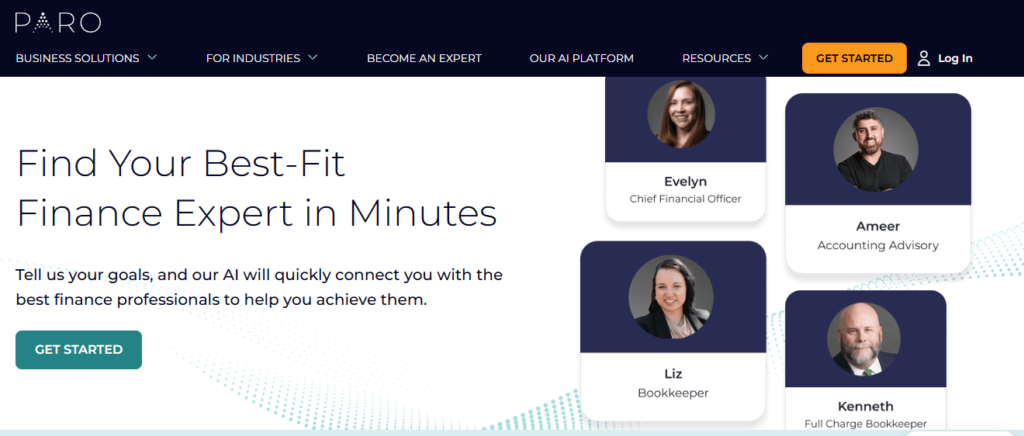
Paro suits founders who need the model to have an owner after the raise, not only a builder. Through Paro, founders can access fractional FP&A and CFO talent for ongoing forecasting, reporting and fundraising support.
Paro says many of its fractional CFOs come from Big Four, Fortune 500 and top CPA firms. Its services include fractional CFO and strategic advisory, controller leadership, accounting and bookkeeping, FP&A, tax and compliance, and staff augmentation for CPA firms.
Paro uses AI-driven matching, and its team shares top matches within days. That timing matters when your investor meetings are 4 to 8 weeks out.
Because Paro offers FP&A and CFO-level support separately, you can match the engagement to the job: routine forecast ownership, senior fundraising support or both.
Evidence to request: an anonymized model the candidate maintained after building it, plus a written explanation of a month where actual results differed from the plan.
Ownership question: who updates actuals each month, who explains variances to the board, and whether investor meeting attendance is included. Put those duties in the agreement.
Upwork
Upwork suits founders who will write the brief, screen proposals, interview candidates and manage the contract themselves.
As checked in November 2026, Upwork’s help center says an optional NDA is strictly between the client and the freelancer, and Upwork does not review, enforce or become a party to it. Default confidentiality terms still apply without a separate NDA, and they sit in Section 7 of its Terms of Service. That distinction matters before you share your cap table or financials.
Evidence to request: an anonymized model built for a comparable funding stage and client feedback that mentions fundraising work.
Ownership question: whether the proposal ends at handover or includes monthly updates at an agreed price.
Toptal
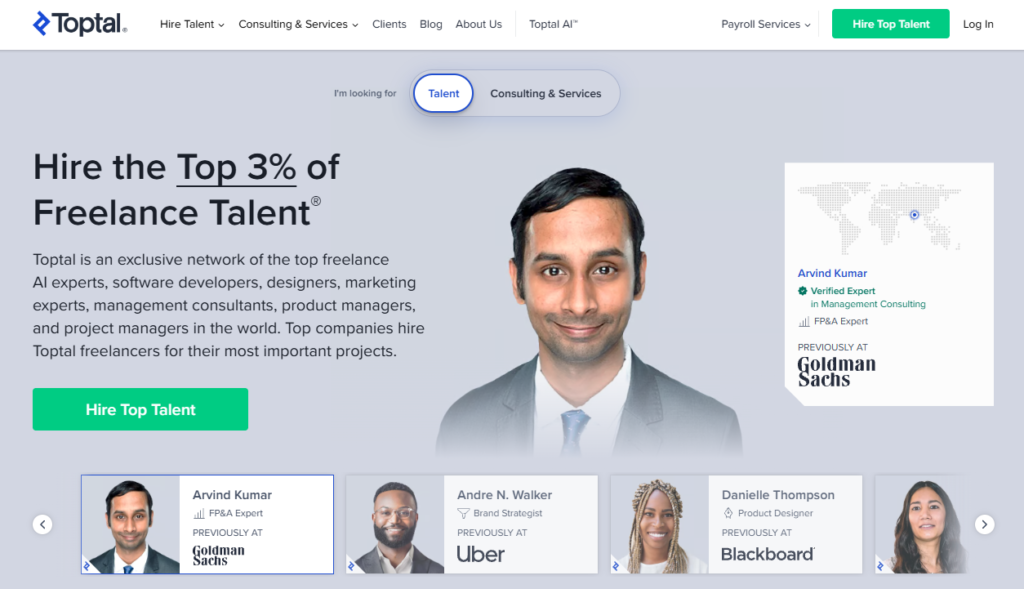
Toptal suits founders who want the vendor to screen candidates before introductions.
As checked in November 2026, Toptal’s finance page says fewer than 3% of the more than 200,000 people who apply to its network each year are accepted. That figure covers the whole network, not financial modelers specifically, so it doesn’t confirm a candidate’s experience at your stage.
Evidence to request: a stage-specific model example and founder references alongside the screening information.
Ownership question: whether the engagement can move from a model build to a retained monthly role, and on what terms.
Fiverr
Fiverr suits a defined deliverable, such as a three-scenario model with documented assumptions by an agreed date.
As checked in November 2026, Fiverr’s finance services category lists financial modeling alongside budgeting and forecasting. Fiverr Pro clients can also send freelancers legal documents, such as NDAs, to sign electronically before work begins.
Evidence to request: the exact Gig scope, the revision allowance and an anonymized sample of comparable work.
Ownership question: if the engagement ends at delivery, who will maintain the file afterward.
Kolabtree
Kolabtree suits a model that depends on specialist scientific or quantitative knowledge, such as clinical milestones or lab timelines.
As checked in November 2026, Kolabtree offers project-based and hourly payment, and its terms include a default confidentiality clause. You can also share your own NDA before disclosing project details.
Evidence to request: a proposal showing how the candidate would turn technical milestones into cash timing, plus a startup fundraising example. Check domain expertise and fundraising experience separately.
Ownership question: whether hourly work will cover monthly updates and review meetings, and how many hours that scope allows.
Freelancer.com
Freelancer.com suits founders who want to post a project, compare bids and release payment in stages.
As checked in November 2026, Freelancer.com’s Milestone Payment system lets you fund a milestone before work begins and release it once you approve the deliverable. An NDA project requires freelancers to sign a non-disclosure agreement before they bid, and a Sealed project hides bids from everyone except the client. Bid privacy and financial-data confidentiality are different protections.
Evidence to request: written acceptance criteria for each milestone, such as a completed and reviewed assumptions sheet.
Ownership question: whether any responsibility continues after the final milestone, and what a recorded walkthrough and handover must include.
Catalant
Catalant suits a broader assignment, such as building the model alongside a use-of-funds plan or a pricing analysis.
As checked in November 2026, Catalant says its project agreement sets out the timeline, approach, deliverables and fees, along with the terms that govern the engagement, including confidentiality.
Evidence to request: a scope matched to your needs, so you can judge the value of the broader consulting work.
Ownership question: who the named consultant is, whether a retained follow-on is available, and who maintains the model after the project ends.
Builder or owner: which do you need?
Choose a builder when you need a one-time modeling deliverable and someone on your team can maintain it afterward. Choose an ongoing FP&A or CFO engagement when forecasting and financial decisions need a named owner after the raise.
Most comparisons of these platforms sort them by price tier. Few separate building a model from owning it after the raise, yet that split decides which platform fits.
Model builder. A builder delivers assumptions, formulas, scenarios, documentation and a handover. Choose this route if a co-founder or operations lead will run monthly updates and can explain the numbers to investors.
FP&A owner. This role covers recurring actuals updates, budget-versus-actual analysis, revised forecasts and regular reviews. Actuals are the recorded results that replace forecast figures as each month closes. Naming one person for this work makes the responsibility clear.
CFO-level owner. This engagement can add fundraising strategy, board communication and financing guidance. Agree each responsibility separately, including the decisions the founder keeps. Define availability and bookkeeping duties rather than inferring them from a CFO title.
Test candidates the same way. Share an anonymized model and ask the candidate to explain it. Then ask them to change one assumption, such as a hiring date, and describe what happens to cash. For an ongoing owner, also ask what action they’d recommend and what information they’d need first.
Write the handover in before you start. Document responsibilities, the meeting schedule, backup arrangements, ownership of files and accounts, and the transition process. Specify who supplies monthly data, who checks it and who approves changes to assumptions. A recurring engagement still needs a clear handover if the person becomes unavailable or the contract ends.
What should an investor-ready model include?
An investor-ready model shows how revenue is generated, what the company spends, how much cash it needs and which milestones the raise funds. It should be easy for someone other than the builder to update and explain.
Runway is how long the company can operate before cash runs out. Forecasting cash receipts and payments shows how that timeline shifts under different assumptions.
Traceable assumptions. Keep inputs such as pricing, conversion rates, sales cycles, hiring dates, salaries and major vendor costs on one documented assumptions sheet, and note where each came from. Investors can then question an assumption without untangling formulas.
Cash and operating drivers. Tie revenue to inputs such as pipeline volume and sales headcount, and tie spending to the hiring plan. Model cash collections and payments separately from booked revenue so the forecast reflects payment timing. Reconcile the model to actual results each month.
Scenarios. Kruze Consulting’s scenario-analysis guidance, last updated February 12, 2026, describes creating at least three scenarios, typically a base, best and worst case. Treat them as planning cases, not predictions. Ask the modeler to show how delayed revenue or higher spending changes cash and the timing of decisions.
Linked statements, where needed. A linked income statement, balance sheet and cash flow projection may be useful, depending on your investors. Agree whether you need that detail before commissioning a full three-statement workbook, and make sure the person maintaining it can explain how the statements connect.
A maintainable handover. Ask for editable source files, clearly marked input cells, documented formulas, a version log and a recorded walkthrough. Tie the use of funds to operating milestones so readers can see what the raise is meant to achieve.
Plan the timeline backward. Work back from your investor meetings through data preparation, a first draft, founder review and handover. Prepare clean actuals, a headcount list and pipeline data before the build begins. If you’re still deciding on senior finance leadership, this guide on how to hire the right CFO for your startup covers the trade-offs.
How do you protect your financials when you share them?
Settle which confidentiality agreement applies, and who signs it, before you share any sensitive financials. Then share only what the assignment needs, in stages.
Keep four issues separate: confidentiality clauses in platform terms, an optional NDA, ownership of the model and payment protection. Each covers a different part of the engagement.
Know what each platform provides. Upwork has default confidentiality terms and an optional client-freelancer NDA that Upwork isn’t party to. Fiverr Pro lets clients send NDAs for electronic signature. Freelancer.com’s NDA projects require agreement before bidding. Kolabtree’s terms include a default confidentiality clause. Catalant’s project agreement covers confidentiality. For Paro and Toptal, confirm the NDA parties in the client agreement and any engagement documents.
Before shortlisting. Share anonymized samples with company names, customer names and cap-table details removed. Use them to judge a candidate’s approach before you disclose real numbers.
Before onboarding. Release historical financials only after the agreement is signed, and cap-table detail only if the scope needs it. Give named access to your accounting system or data room rather than shared logins. Ask in writing whether subcontractors or AI tools will touch your files, and agree any limits before work begins.
At handover. Agree how data will be returned or deleted, revoke access when the engagement ends and confirm who owns the final workbook. Payment milestones cover payment and delivery. They don’t control confidentiality or data access.
These are purchasing safeguards, not security certifications. Have qualified counsel review the governing terms, parties, exceptions and work-product rights before you rely on an agreement. This is general guidance, not legal advice.
Comparison table
Marketplace
Best for
Vetting
Engagement type
Who holds the NDA
Paro
An FP&A or CFO-level owner after the raise
AI-driven matching; Paro says many fractional CFOs come from Big Four, Fortune 500 and top CPA firms
Matched fractional engagement; scope agreed in writing
Confirm parties in the client agreement and engagement documents
Upwork
A founder-managed search
Client reviews profiles, samples and references
Contract managed by the client
Optional NDA is between client and freelancer; default terms in Section 7 of the Terms of Service
Toptal
Vendor-screened finance talent
Fewer than 3% of 200,000+ yearly applicants accepted, network-wide
Vendor-introduced freelance engagement
Confirm parties in the client agreement
Fiverr
A defined modeling deliverable
Client reviews seller credentials and comparable work
Gig with agreed delivery and revisions
Fiverr Pro clients can send NDAs for e-signature
Kolabtree
Models needing scientific or quantitative expertise
Check domain knowledge and fundraising experience separately
Per project or hourly
Default confidentiality clause in its terms; custom NDAs possible
Freelancer.com
A bid-and-milestone process
Client reviews portfolios and sets milestone criteria
Awarded project with Milestone Payments
NDA projects require freelancers to sign before bidding
Catalant
A broader finance consulting assignment
Client checks consultant background and proposed scope
Project agreement
Project agreement includes confidentiality terms
The rows follow the same use-case order as the entries above. They are conditional use cases, not rankings.
How we chose
We compared marketplaces against six criteria, using public service pages, help documentation and agreement descriptions. Facts were checked in November 2026.
Relevant work: whether the platform lists financial modeling or FP&A expertise.
Evidence a founder can request: samples, references or screening information.
Recurring responsibilities: whether an engagement can continue after the model is delivered.
Engagement structure: project, hourly, milestone or matched fractional engagement.
Confidentiality documentation: default terms, optional NDAs and who signs them.
Handover requirements: what a founder should expect to receive at the end.
This is desk research. No candidates were interviewed, no engagements were tested and the list isn’t exhaustive. Paro’s placement for ongoing support reflects its FP&A and CFO service descriptions, not an independent performance comparison.
To compare proposals, give every shortlisted candidate the same brief. Specify the scenarios, delivery date, file and handover requirements, monthly update duties and confidentiality terms, and ask them to price the initial build separately from any recurring work.
FAQ
How long does an investor-ready model take?
It depends on the model’s scope and how clean your data is. Work backward from your investor meetings, leaving time for data preparation, a first draft, founder review and handover. Treat a 4 to 8 week window as a planning constraint, and confirm availability and deadlines with each candidate.
Do I need a fractional CFO or a modeler?
A modeler fits if you need a one-time deliverable and someone on your team can update and explain it. A fractional CFO or FP&A owner fits if forecasting, board reporting and investor questions need a named owner after the raise. Many founders need both: a build now and an owner afterward.
Should the modeler sign an NDA?
Yes, before you share real financials or cap-table detail. Check whether the platform’s default terms already cover confidentiality, whether the platform is a party to any NDA, and who signs it. Have counsel review the terms if the information is sensitive.













Comment