The Middle East real estate market has undergone a powerful qualitative transformation over the past two years. Increased transparency, institutionalization of investments, and the introduction of technology are gradually changing the very logic of the industry. Whereas previously access to specific properties and transaction speed were key factors, today data, in-depth analytics, process control, and predictability of results are becoming more important.
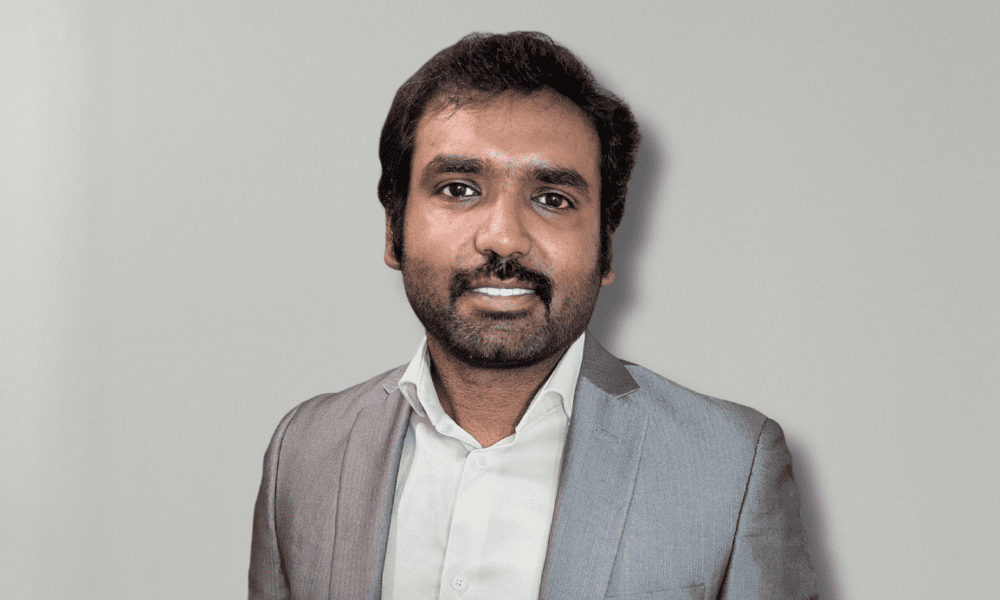
In this TechBullion interview, we discussed this with Valentin Kulikov, CEO of the international real estate agency Sunlocate Properties, a serial entrepreneur who is building a systematic and technological approach to real estate investments and scaling it across the MENA markets: first in the UAE and, more recently, in Oman.
Valentin, you have over 15 years of experience in retail chains and online retail. How did you manage to build a model that works successfully not only in the operational business but also in the service business — namely, real estate transactions?
My background in online retail taught me that any system must be manageable, scalable, and measurable. When I entered the real estate market in 2022, I saw that the market there operates according to a largely different logic: it is far from a unified system and is heavily dependent on the human factor and the expertise of individual brokers.
As a result, the client journey, from initial contact to the transaction and post-sales service, remains opaque and poorly managed — there is no unified logic for interactions or tools to predict them. This creates a «black box» effect, where even with high activity, it is impossible to accurately understand where the risk points are and how to influence them.
For me, this was a signal that the market needed to transition from a craft-based model to an industrial one. It was necessary to implement an approach in which real estate is viewed not as a set of transactions, but as a manageable system in which results can be controlled through data and processes.
Why, in your opinion, is the real estate industry becoming increasingly technologically advanced today? Is it simply a global trend, or is there demand from clients?
I think it’s both: the logic of global markets is changing, and with it, the behavior of international investors. For clients, real estate is no longer a standalone physical asset but a full-fledged part of a diversified portfolio, on par with stocks, bonds, and digital assets. This means that demands for transparency and manageability are also growing.
Investors are no longer prepared to make decisions based on recommendations or isolated expert forecasts. They need a clear framework: what the return will be in the next year or five, what risks may arise, and what exit scenarios exist. This is only possible if the market relies on big data and analytical models. As a result, the business of developers and brokers is transforming into a hybrid model that combines service and an analytical approach. At the same time, not only the quality of the property is becoming paramount, but also the data: its volume, structure, and long-term personalized strategies based on it.
So you’re not building a traditional agency, but a digital platform?
From the very beginning, we focused on creating a system, not just a brokerage company. This means we standardize processes, digitize them, and make them repeatable.
In the long term, this will allow us to create a technological platform where the key asset is not the property database, but the system for managing data and the customer experience.
This is a fundamentally different level of business, which allows for scaling not by expanding the team, property database, or new offices, but through the effectiveness of the system.
Speaking of a systems approach, I know you’re planning to patent your methodology called the Customer Happiness System. What’s its essence and what makes it unique from traditional customer experience management methods?
Working in the operational business, I noticed that classic CRM systems aren’t very effective over the long term. They only record events—calls, clicks, requests, purchases—but don’t provide a complete picture: how consistent is the customer’s behavior? How prone are they to repeat orders? And what is their real value to the business? In other words, CRM is a retrospective tool that doesn’t answer the fundamental question: «What happens next?»
So I gradually arrived at my own model, where customer experience isn’t an abstract category, but a measurable system of parameters that directly impacts business economics. In CHIS, the customer is viewed as an object with dynamic characteristics. We analyze not only the interaction itself, but also behavioral and economic parameters: including the stability of their actions, sensitivity to changing conditions, response to challenging situations, the level of effort they expend on the interaction, and its long-term value.All these parameters are combined into an integrated model that allows for not just recording the current state but also predicting future behavior. This provides a fundamentally new level of control over the customer experience, allowing businesses to more accurately predict customer behavior and change the customer interaction chain.

How do you apply this approach when working with international investors?
My CHIS methodology is applicable to virtually any business that deals with clients: logistics, pharmaceuticals, education, consulting, and others. In each of these businesses, it’s important to anticipate client behavior in advance and build a long-term strategy around it. This is especially true for companies with large networks and those entering new markets: here, you can’t rely on intuition, because scale requires a system. You must understand how each part of the system works and how it influences the outcome.
I’ve transferred this approach to real estate: I view the market as a controlled system with input data, processes, and a predictable outcome. Uncertainty has always been a key challenge for international investors. They are outside the regional market, don’t fully understand local processes, and can’t fully control the transaction process.
We make the process transparent at every stage, provide structured analytics, and demonstrate scenarios and risks — so that the client can see not only the current status but also the underlying logic. As a result, they feel in control of the situation, even when they’re in another country, and can make decisions more quickly and minimize risks.
In 2025, you opened a new Sunlocate office in Oman. Why did you choose this country for expansion?
In recent years, we’ve seen a shift toward a more mature and segmented model. While investors previously perceived the region as a single space, they are now beginning to differentiate markets by maturity, risk, and investment strategies.
Dubai remains a key hub and anchor for international investment thanks to its high liquidity, developed regulatory framework, and extensive data. At the same time, emerging markets like Oman are gradually becoming a more viable alternative, especially for those seeking to enter the growth stage, before peak prices.
In recent weeks, while the situation in the region remains volatile, the UAE and Omani markets have only proven their resilience to external factors.
Why did you choose Oman for expansion?
Oman is interesting because it is at an early stage of institutional development in the real estate market. We are seeing an increase in the number of transactions, the development of mortgage instruments, and the gradual opening of the market to foreign investors.
At the same time, there remains a shortage of high-quality supply and a lack of transparency in processes, especially in complex transactions involving international capital. This allows those who use a more technologically advanced and customer-focused model to gain a significant competitive advantage.
However, I would in no way compare Oman and the UAE to each other: they are simply different stages of the same investment cycle that complement each other well.
Can technology accelerate the development of such markets?
Yes, and this is one of the key factors. Technology reduces friction in transactions, speeds up processes, increases transparency, and standardizes interactions between participants. For emerging markets, this means the opportunity to more quickly transition to a mature model, bypassing some intermediate stages.
What will the real estate market look like in the coming years?
I believe real estate will ultimately become part of a managed investment ecosystem. Decisions will be made based on data, risks will be calculated in advance, and customer experience will become a key competitive advantage.
Companies that can combine technology, analytics, and a systems approach will define the rules of the game. And this is already happening.