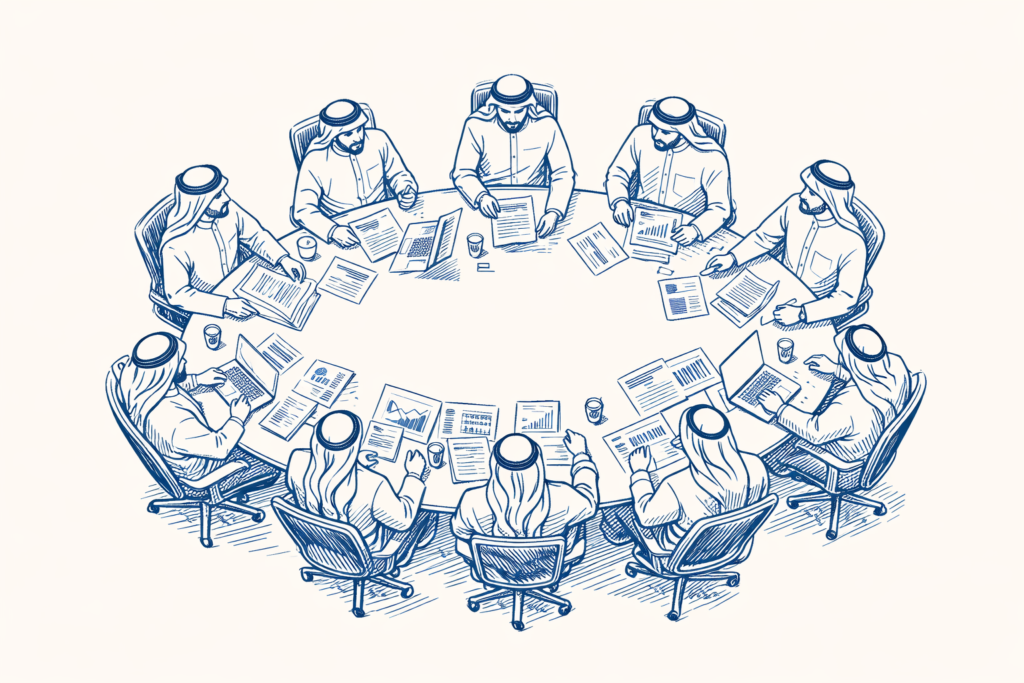
Business longevity is rarely accidental. It is built through structure, clarity, and discipline. In many organizations across the region, especially family-led enterprises, the conversation around family business governance and the evolving role of board secretary has shifted from optional best practice to a core strategic priority. Institutions like Hawkamah Institute for Corporate Governance have played a critical role in shaping this shift, turning governance from theory into a practical, operational advantage.
Why Governance Is No Longer a “Nice to Have”
Strong governance frameworks are no longer limited to listed corporations. Across the Middle East and North Africa, governance is increasingly recognized as a key driver of investor confidence, operational efficiency, and long-term sustainability. Hawkamah Institute for Corporate Governance was established specifically to promote transparency, accountability, and responsible business practices in the region, helping organizations align with global standards while remaining locally relevant.
What makes this shift particularly interesting is how governance is evolving beyond compliance. It is becoming a strategic tool that directly impacts decision-making, succession planning, and organizational resilience.
The Complexity Behind Family Businesses
Many regional economies depend on family-owned enterprises, but they have their own set of problems. These firms have to reconcile emotional dynamics with financial goals, unlike corporate entities.
Governance structures help organize this complicated situation. They make things clearer in areas like:
- Authority to make decisions
- Planning for succession across generations
- Ways to solve conflicts
- Clear roles and responsibilities for ownership and management
Governance institutions say that structured governance makes decisions easier, brings families closer together, and keeps things going from one generation to the next.
Even the most successful organizations might struggle when they change generations or expand their operations without this structure.
Governance as a Bridge Between Generations
One of the most overlooked aspects of governance is its role in continuity. As businesses grow, informal decision-making becomes inefficient and risky.
Governance frameworks introduce formal mechanisms such as:
- Family constitutions
- Advisory boards
- Clear ownership structures
- Defined roles for family and non-family executives
These mechanisms allow businesses to evolve without losing their identity. They create a balance between preserving legacy and enabling growth.
Research consistently shows that governance tools such as family councils and structured policies help align family values with corporate goals, thereby ensuring stability and long-term success.
The Strategic Importance of the Board
The board of directors is at the center of any governance architecture. It is the center of decision-making, setting the direction for strategy, overseeing management, and looking out for the interests of all stakeholders. But a powerful board needs the correct support system to work well. This is where governance stops being an idea and starts becoming real.
The Hidden Power Behind Effective Boards
People frequently measure how well a board works by the decisions it makes, but how good those judgments are depends a lot on how well it is prepared, how it is structured, and how information flows. This is when governance professionals come in. One of these sticks out as the key to making the board work well.
The Role That Holds Everything Together
The role of board secretary has changed significantly since it was limited to administrative support. Today, it is a strategic role that makes sure the board runs smoothly, clearly, and in accordance with the law.
A good board secretary helps with:
- Setting up meetings and agendas for the board
- Making sure that records and documents are correct
- Helping board members and management talk to each other
- Helping to meet rules and requirements for governance
- Making things more open and accountable
Companies that invest in this function usually have more organized conversations, make better decisions, and achieve better overall governance outcomes.
Governance institutes in the region have invested heavily in training and certifying board secretaries because they recognize how important they are to the effectiveness of boards and the success of businesses.
Governance as a Competitive Advantage
Governance is no longer only about staying safe. It’s about making something useful.
Companies with good governance structures usually:
- Bring in more money for investments
- Gain more confidence from stakeholders
- Make operations more efficient
- Get more long-term growth
This is especially true in competitive industries where trustworthiness and reputation are just as important as the products or services themselves.
Maturity is shown by good governance. It shows investors, partners, and customers that the business will continue.
Hawkamah’s Role in Shaping the Region
Hawkamah Institute for Corporate Governance has helped spread a culture of good governance throughout the region over the years. Its impact may be seen in both the public and private sectors, from training programs to policy frameworks.
Its purpose has always been clear: to help create strong systems of government that let businesses thrive in a global setting while remaining connected to the region’s reality.
It has helped businesses move from informal ways of doing things to formalized governance models with verifiable effects through workshops, certifications, and advisory programs.
Looking Ahead
How successfully businesses in the area adapt to increasingly complex situations will determine the future of business there. Governance will be crucial to this change. Family businesses will require better systems to support development and succession. Boards will need more organized support to address strategic problems. And professionals in governance will remain important for making organizations work better. What used to be a compliance requirement is now a strategic need. Governance is no longer going on behind the scenes. It affects choices, sets the tone for leadership, and in the end, it decides which groups will be successful in the long run.